Trump Approves $4.5 Million in Disaster Aid for West Virginia
Trump announces federal funding for West Virginia after severe storms, flooding, tornadoes and mudslides, following a call with Governor Patrick Morrisey.

WASHINGTON D.C. — Donald Trump said he approved $4.5 million in federal disaster aid for West Virginia after severe storms, tornadoes, flooding and mudslides battered the state.
The funding follows a call with Patrick Morrisey, the Republican governor of West Virginia, who won election in 2024 after serving as the state’s attorney general. Trump framed the approval as a direct response to damage that residents are still recovering from. He tied the announcement to his political support in a state he carried three times.
“I LOVE WEST VIRGINIA!” Trump said in the post, adding that West Virginia “is represented strongly by the Governor, Senators Jim Justice and Shelley Moore Capito, along with Members of Congress, Riley Moore and Carol Miller.”
Here is the full post on truthsocial: “I just spoke with Patrick Morrisey, the GREAT Governor of West Virginia, a State I love and WON BIG, with Record Setting Votes, three times, and told him I am approving 4.5 Million Dollars for severe storms, winds, tornadoes, flooding, landslides, and mudslides they experienced, and are still recovering from. West Virginia is represented strongly by the Governor, Senators Jim Justice and Shelley Moore Capito, along with Members of Congress, Riley Moore and Carol Miller. I LOVE WEST VIRGINIA! Trump” on August 3, 2026 at 4:24 PM ET.
This is Trump’s 12th message released today, and the last post was 11 minutes ago, and it is not part of a thread. On average, Trump produces 18 posts per day since his inauguration on January 20, 2025. The move fits a broader pattern in Trump’s recent messaging, with 51 of his 470 posts over the last 30 days classified as Domestic Policy posts.
The money directs federal dollars to a state that ranks among the poorest in the country by median household income. Households in flood-damaged counties stand to benefit most, since recovery grants can cover debris removal, road repairs and infrastructure that local governments often struggle to fund on their own. State taxpayers absorb less of the burden when Washington shoulders a share of the cleanup cost.
West Virginia has faced repeated flooding disasters in recent years, a pattern tied to its steep terrain and narrow river valleys. Deadly flooding in June 2016 killed 23 people and destroyed thousands of homes, one of the worst natural disasters in the state’s modern history. The state has drawn on federal disaster declarations multiple times since, and the latest approval continues that reliance on national support after severe weather.
Measured against major federal disaster responses, $4.5 million is a modest sum. Large hurricane recoveries in states such as Florida and Louisiana have drawn billions of dollars in federal assistance, and single wildfire seasons in California have cost the federal government far more. The West Virginia allocation reflects the smaller scale of the damage and the state’s smaller population of roughly 1.8 million residents.
The announcement signals how quickly a presidential call can translate into recovery funds for a disaster-hit community. Residents facing washed-out roads or damaged homes may see faster access to repairs when federal money flows. The pace of distribution depends on state and local agencies.
This has happened before. Presidents routinely announce disaster funding for individual states, and Trump has repeatedly paired such approvals with praise for local officials and voters. The approach converts a bureaucratic aid process into a personal, public gesture aimed at supporters.
The next steps rest with federal and state emergency agencies, which coordinate how the funds reach affected communities. A specific timeline for distributing the money has not been announced.
Federal disaster aid to West Virginia is not new, as happened before during earlier storm seasons. The June 2016 flood prompted a federal disaster declaration that unlocked assistance for dozens of counties, and recovery stretched on for years as communities rebuilt homes and schools. Leaders who secured that aid faced the long task of turning emergency dollars into lasting reconstruction, a challenge that outlasted the headlines announcing the money.
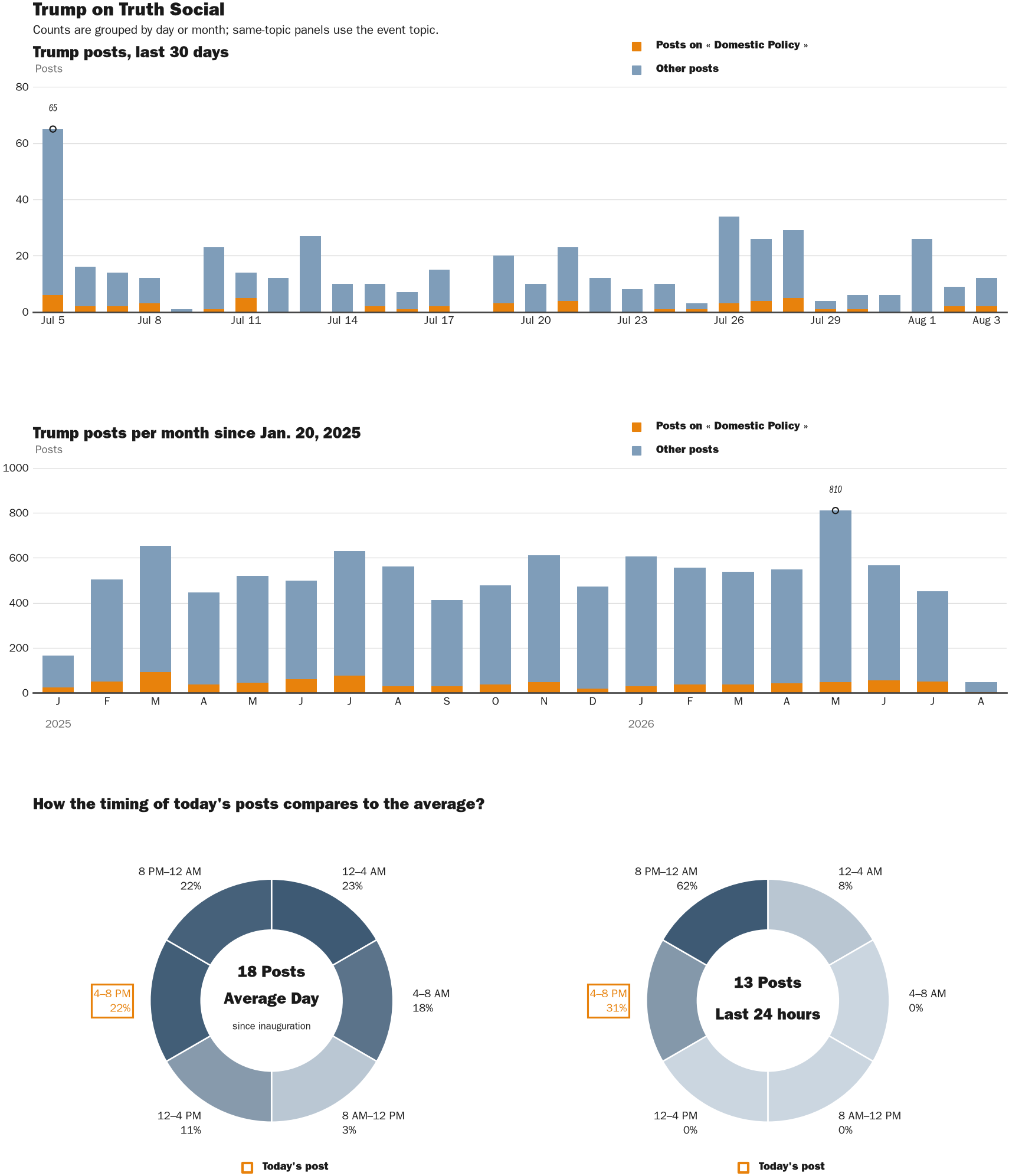

NewsFindr Chart Maker
Photo by Zenger real-time database of all Truth Social posts.
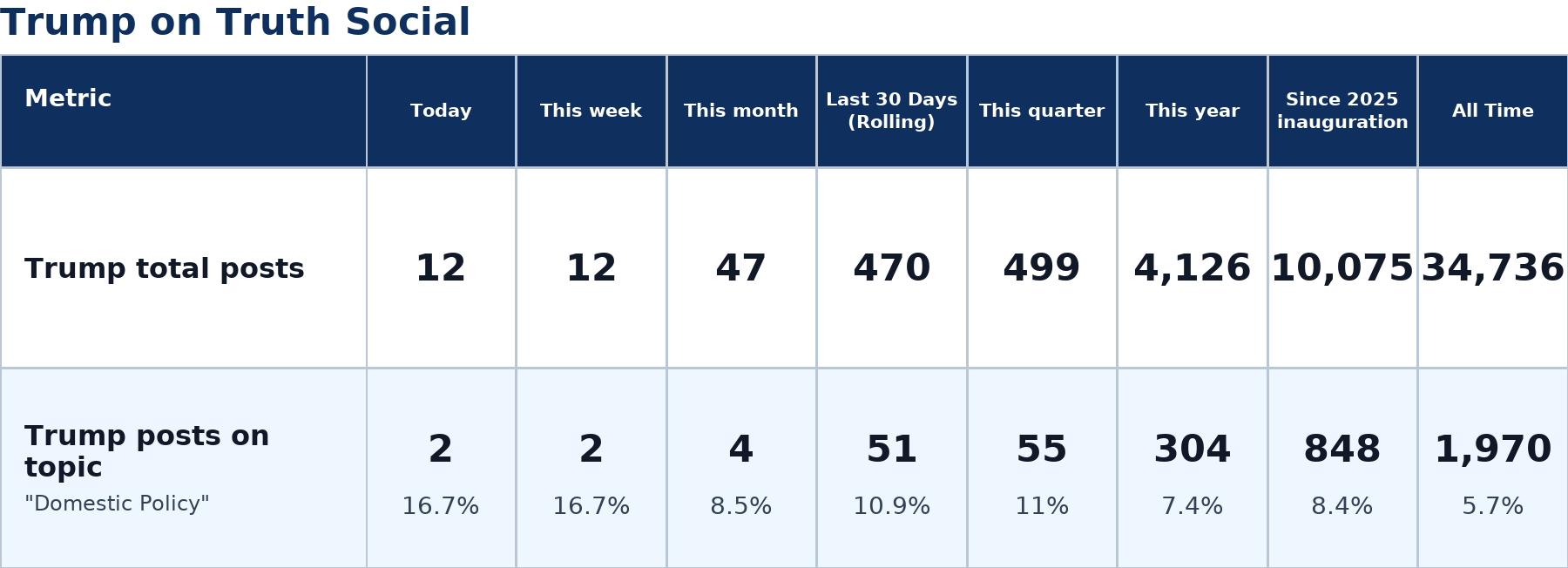
Zenger analysis
Photo by Zenger analysis