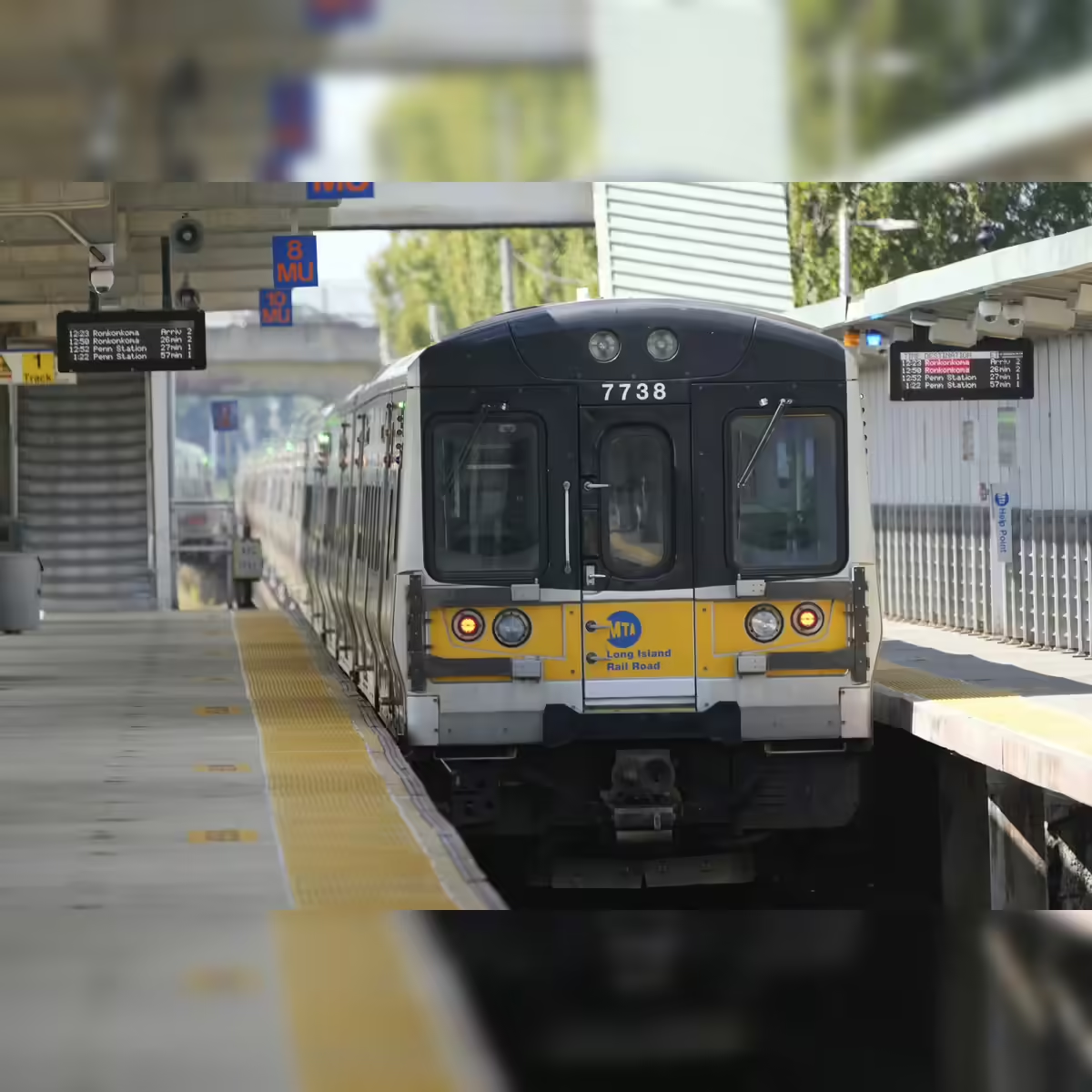
Busiest U.S. Commuter Rail System Returns After Strike Deal
Long Island Rail Road resumes service after labor unions and transit officials reach agreement, ending disruption.
Long Island Rail Road resumes service after labor unions and transit officials reach agreement, ending disruption.
Long Island Rail Road resumes service after labor unions and transit officials reach agreement, ending disruption.
NEW YORK — New York Gov. Kathy Hochul faced a familiar but increasingly common challenge confronting transportation leaders across the United States: how to keep trains moving. At the same time, workers demanded pay that reflected the rising cost of living.
As commuter rail tensions mounted, the pressure was not limited to contract negotiations or government meeting rooms. For commuters dependent on public transportation to reach offices, hospitals, and schools, the possibility of labor disruptions carried immediate consequences — delayed schedules, missed workdays, and uncertainty in already expensive metropolitan life.
The standoff reflects a broader national trend in which transit labor disputes are becoming more disruptive as employees push for higher wages and benefits amid inflation.
Transit workers argue that housing costs, food prices, and everyday expenses have outpaced earnings, while transportation agencies warn that major concessions could strain public budgets, force fare increases or reduce services. The result is a growing conflict playing out inside systems millions of Americans depend on every day.
Economic data helps explain why transit labor disputes are intensifying. In recent years, inflation has significantly increased household costs, reducing workers’ purchasing power even where wages have risen modestly.
Public-sector transportation employees, including rail and transit workers, have increasingly cited affordability pressures when negotiating contracts, arguing that compensation must reflect the realities of living and working in high-cost regions such as New York. Reports surrounding New York commuter rail negotiations highlighted how officials were forced to respond to growing demands for better pay while trying to avoid service interruptions.
Transit agencies, however, face their own financial pressures. Many transportation systems continue managing the effects of lower post-pandemic ridership, operational deficits, and aging infrastructure costs.
Labor expenses already consume large portions of transit budgets, meaning significant wage increases can create difficult fiscal decisions. Without additional government support, agencies may face pressure to raise fares, seek more taxpayer funding or reduce service levels to absorb higher payroll costs.
At the center of the dispute are competing interests that make transit labor negotiations politically and economically sensitive. Workers and labor advocates argue that competitive wages are essential for retaining employees who operate critical transportation systems under demanding conditions.
They maintain that without stronger compensation packages, agencies risk staffing shortages, burnout, and declining service reliability. For many employees, demands for higher pay are framed not as extraordinary requests but as efforts to maintain living standards amid rising inflation.
Transit officials and government leaders, including Hochul, must weigh those demands against the responsibility of protecting public transportation systems from financial instability. Officials often try to avoid outcomes that would burden commuters with higher fares or leave taxpayers covering larger operating deficits. This creates a difficult balancing act: satisfy workers enough to prevent disruptions while ensuring transportation remains affordable and operational for the public that depends on it.
The impact of transit labor disputes extends well beyond workers and government negotiators. Commuters, employers, taxpayers, and local businesses all absorb the effects when transportation systems face instability.
A disrupted rail or transit network can ripple through regional economies by slowing workforce mobility, reducing productivity, and increasing commuting costs. For working families, missed trains or reduced service can translate into lost wages, childcare complications or missed medical appointments.
Because public transportation operates within government systems, these disputes also raise accountability questions about policy priorities and public investment. Citizens may ask whether agencies are planning effectively for workforce retention, managing finances transparently, and investing enough to maintain reliable services.
The recurring tensions around transit labor negotiations suggest a larger national challenge: balancing fair compensation for essential workers with the financial realities of maintaining affordable, dependable public transportation in an era of persistent economic pressure.
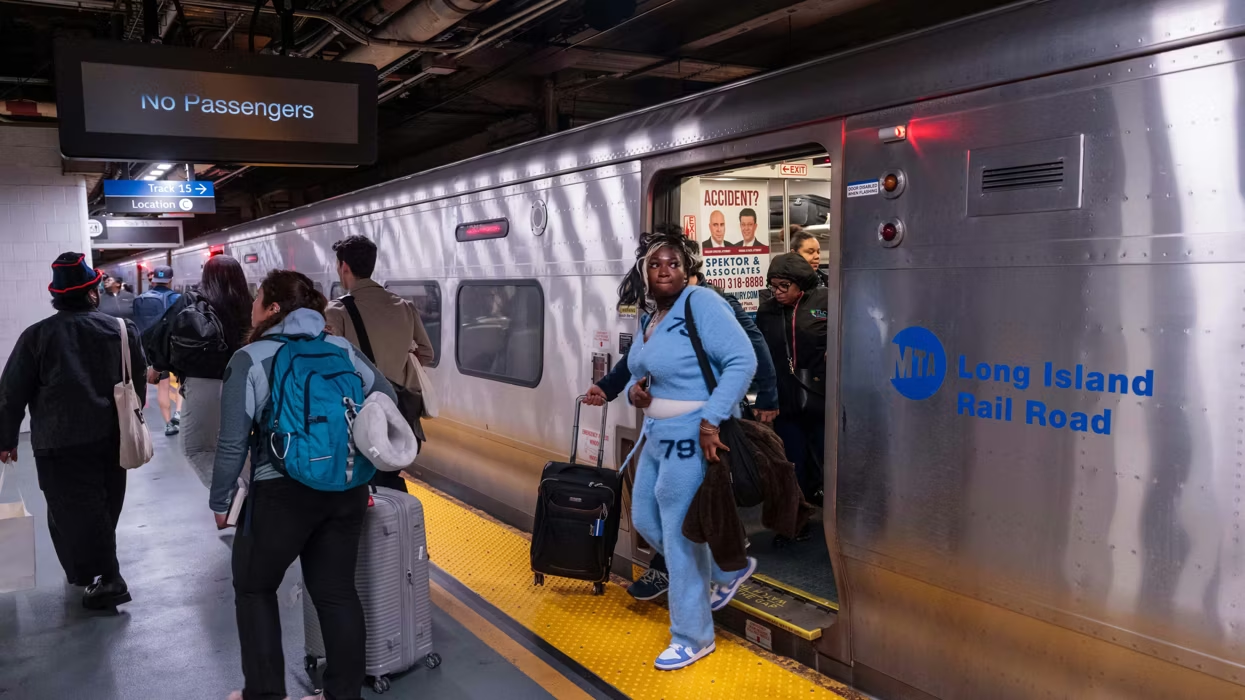

rail
The statement captures the difficult balancing act facing Hochul as a decision maker overseeing transportation systems and public infrastructure. Rather than framing the dispute as a contest between management and labor, her remarks emphasize the broader public consequences of transit shutdowns.
By publicly inviting unions back to negotiations and stressing partnership, Hochul signaled a strategy centered on restoring talks, minimizing commuter disruption and preventing long-term economic fallout. An interview with the governor should explore why her administration believes negotiation is the preferred path, how it defines a fair agreement in an inflationary economy, and what measures the state is willing to support to avoid future service interruptions.
The trend points toward continued pressure on transportation systems nationwide. As inflation and rising living costs fuel worker demands for better wages and benefits, governments and transit agencies may face more frequent labor confrontations with significant economic and political consequences.
Readers should watch whether states adopt new funding approaches, revised labor agreements or policy reforms aimed at stabilizing transit workforces while keeping services affordable. The broader question remains unresolved: in an era of rising costs, can public transit systems satisfy workers, protect commuters, and maintain financial sustainability at the same time?