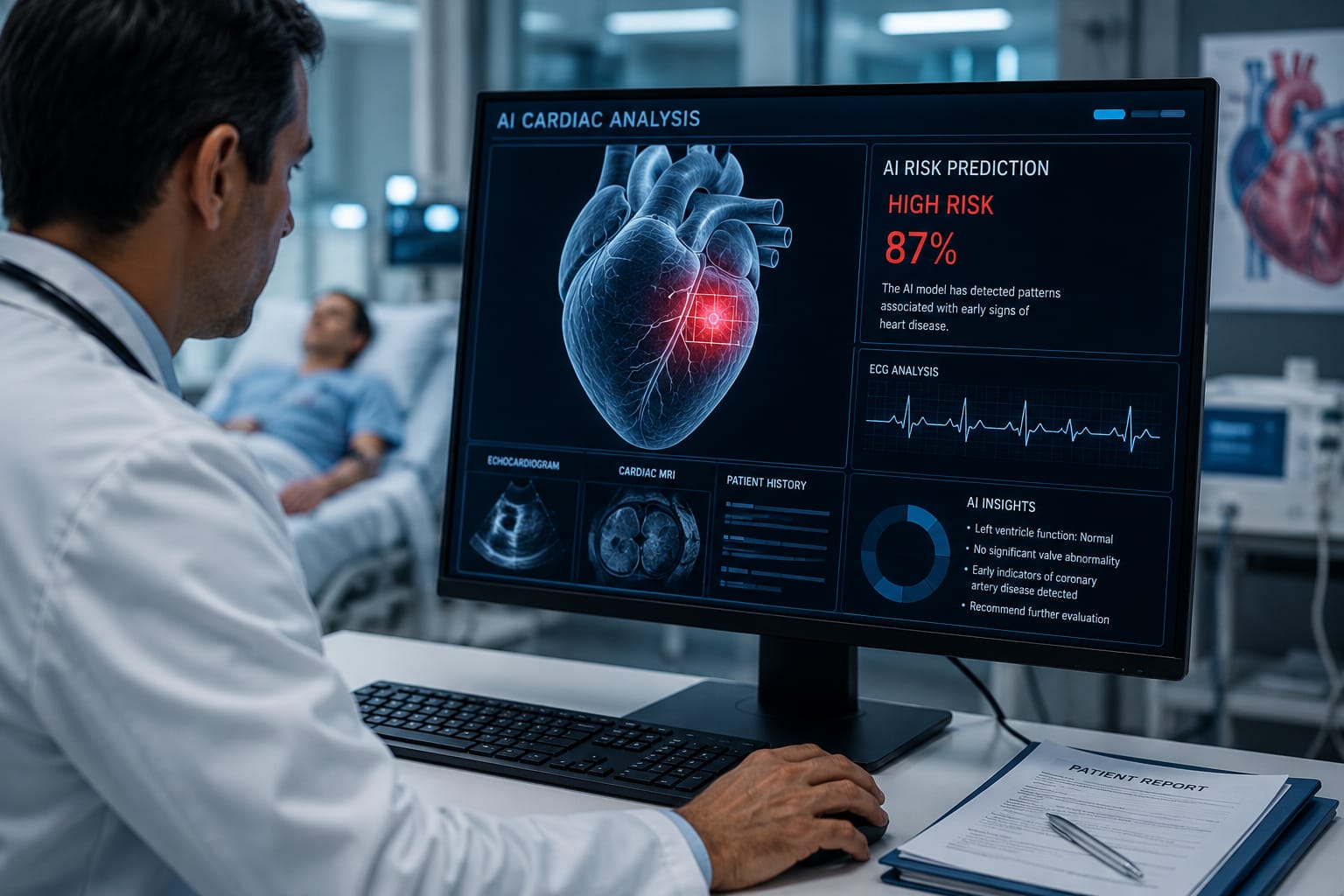
AI Tools Detect Heart Disease Before Symptoms Appear
Hospitals are using AI to identify hidden cardiovascular risk preventing death.
Hospitals are using AI to identify hidden cardiovascular risk preventing death.

NAIROBI, KENYA — As heart disease continues to claim millions of lives every year, hospitals are increasingly turning to artificial intelligence to detect hidden warning signs before symptoms become severe. At medical centers, AI-powered systems are now analyzing patient scans and medical histories within seconds, helping doctors identify risks that might otherwise go unnoticed. “AI is helping doctors detect heart disease earlier than traditional methods.” Dr Emily Carter. Experts add that the growing use of technology could transform modern healthcare by enabling earlier treatment and preventing avoidable deaths.
Emily Carter thought the tightness in her chest was nothing unusual. Like many working adults, she pushed through long days at work, ignored fatigue, and assumed stress was the cause of her discomfort. During a routine hospital visit, her medical records were analyzed using an artificial intelligence system that detected early warning signs of heart disease before clear symptoms appeared, prompting doctors to intervene sooner than they otherwise might have.
The strongest evidence comes from a Yale School of Medicine study where an artificial intelligence system analyzed over 90,000 echocardiogram scans and was able to detect cardiomyopathy as early as six months before a formal clinical diagnosis was made, showing that AI can identify hidden heart disease long before symptoms become obvious in patients.
Across studies from Yale, Oxford and Columbia University, AI systems trained on large patient datasets have demonstrated the ability to detect heart disease up to five years before symptoms appear, often outperforming traditional diagnostic methods in identifying hidden cases.
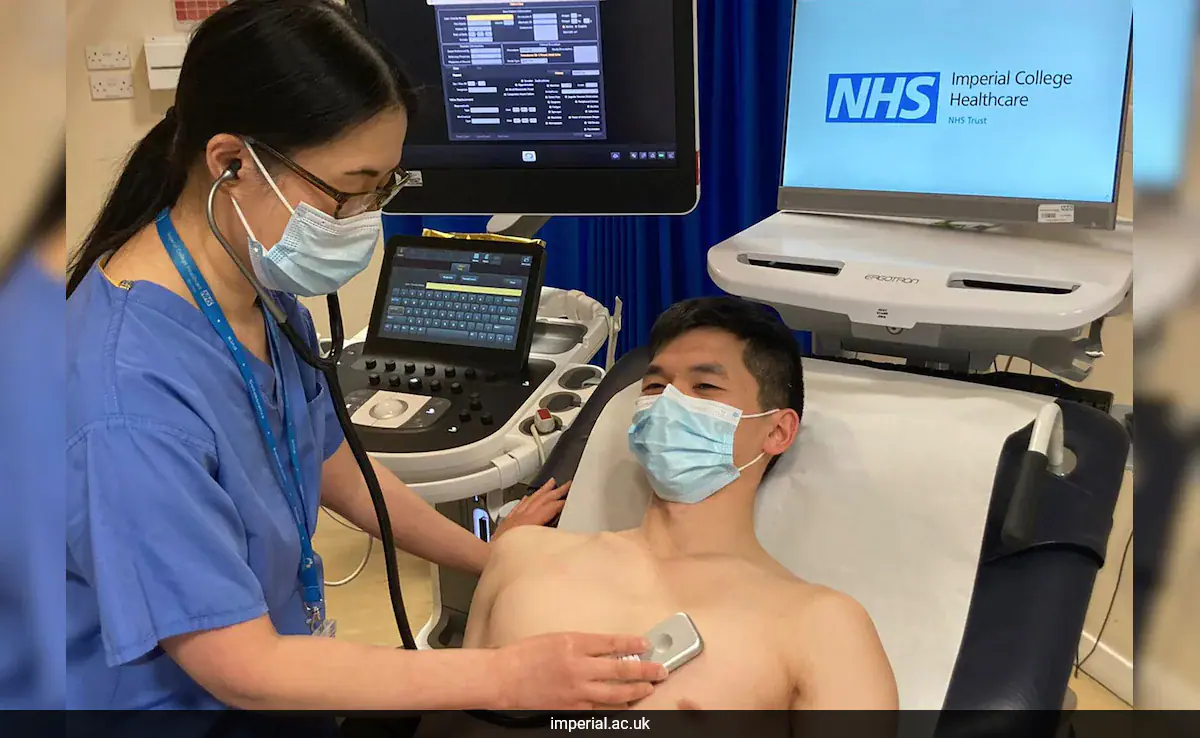

AI-Powered Stethoscope Detects Hearts Condition within 25 seconds
The rapid adoption of AI in heart disease detection is dividing the medical community. On one side, hospitals and health-tech companies are racing to deploy AI systems that promise earlier diagnoses and fewer missed cases, arguing that the technology could save lives by identifying disease before symptoms appear. On the other side, some cardiologists caution that these tools are not yet foolproof, warning that false alarms could lead to unnecessary anxiety and even overtreatment of patients who may never develop serious illness. Privacy advocates are also pushing back, questioning how sensitive cardiac data is stored and used to train commercial AI systems.
A cardiovascular research expert involved in digital health innovation says AI is beginning to reshape how heart disease is understood in clinical practice. The expert, who has not spoken to other sources on this specific development, explains that AI systems are increasingly able to identify subtle patterns in heart data that often go unnoticed during hospital assessments in patients who show no clear symptoms. This represents a broader shift in medicine toward predictive healthcare, where disease may be identified years before it becomes clinically visible. However, they caution that the technology is still developing and must be validated to avoid uneven performance across different populations and settings. Looking ahead, the expert suggests that the biggest transformation may not be in the technology itself, but in how early diagnosis changes patient expectations and hospital decision-making.
The question now, they argue, is not whether AI can detect heart disease earlier but how health systems will adapt when it does.