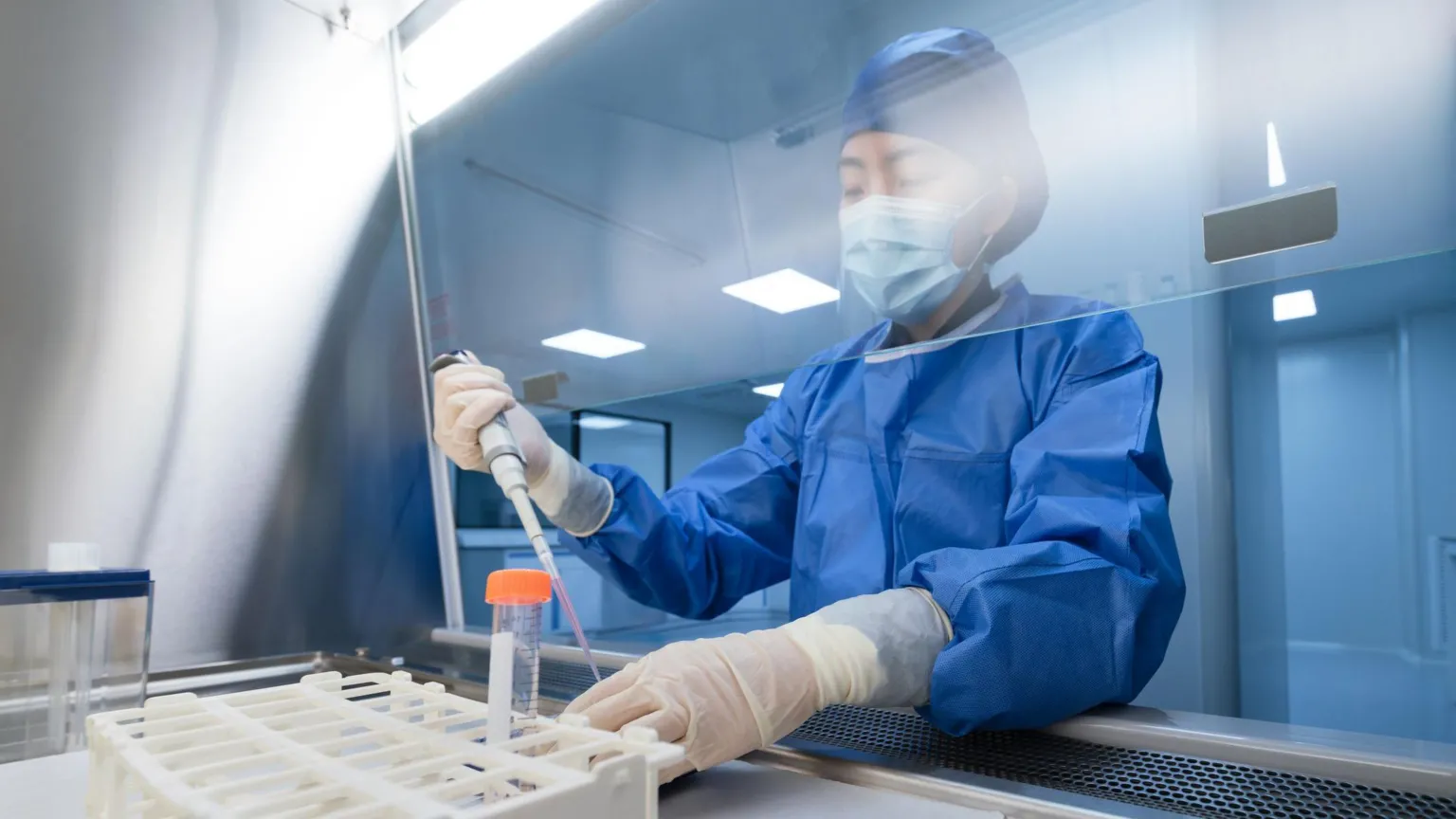
UK scientists developing Ebola vaccine that could be ready for trials in months
Oxford scientist developing Ebola vaccine for clinical trials in 2-3 months

OXFORD, UNITED KINGDOM — In a suite of laboratories in southern England, animal testing has begun on a new vaccine against a rare strain of Ebola that has already claimed nearly 180 lives more than 6,000 kilometers away.
The Democratic Republic of Congo is battling its 17th Ebola outbreak, centred on Ituri Province. As of May 21, 2026, the World Health Organization reported 746 suspected cases, 176 deaths among suspected cases, and 85 confirmed cases across the DRC and Uganda. The cause is the Bundibugyo strain, a rare species first identified in Uganda in 2007. Unlike the more common Zaire ebolavirus, there is no approved vaccine. Bundibugyo kills roughly one in three infected people and has caused only two previous outbreaks — in 2007 and 2012. On May 17, the WHO declared a Public Health Emergency of International Concern. Funding cuts have weakened disease surveillance in eastern DRC, with suspected cases rising from 246 to 500 in just four days.
Prof Teresa Lambe , the Calleva Head of Vaccine Immunology at the Oxford Vaccine Group, is watching the outbreak unfold from her Oxford office with a mixture of urgency and frustration. A British vaccinologist who played a central role in developing the Oxford/AstraZeneca COVID-19 vaccine, Lambe is leading the team adapting the Chad0x1 platform against the Bundibugyo virus. She has already overseen two clinical trials for Ebola vaccines.
“Peaple are worried about this outbreak.Generally,you prepare for the worst-case scenario-hopefully contact tracing and quarantine is all that's needed , but we can't take our foot off the gas.Once we get starting materials to them[Serum Institute of India ] ,they can go fast and they can go big."-said prof.Teresa Lambe , Calleva Head of Vaccine Immunology at the Oxford Vaccine Group.”
Her team has worked through weekends, accelerating animal studies that normally take months. The Serum Institute of India is standing by to mass-produce the vaccine once Lambe’s team can supply medical-grade material.
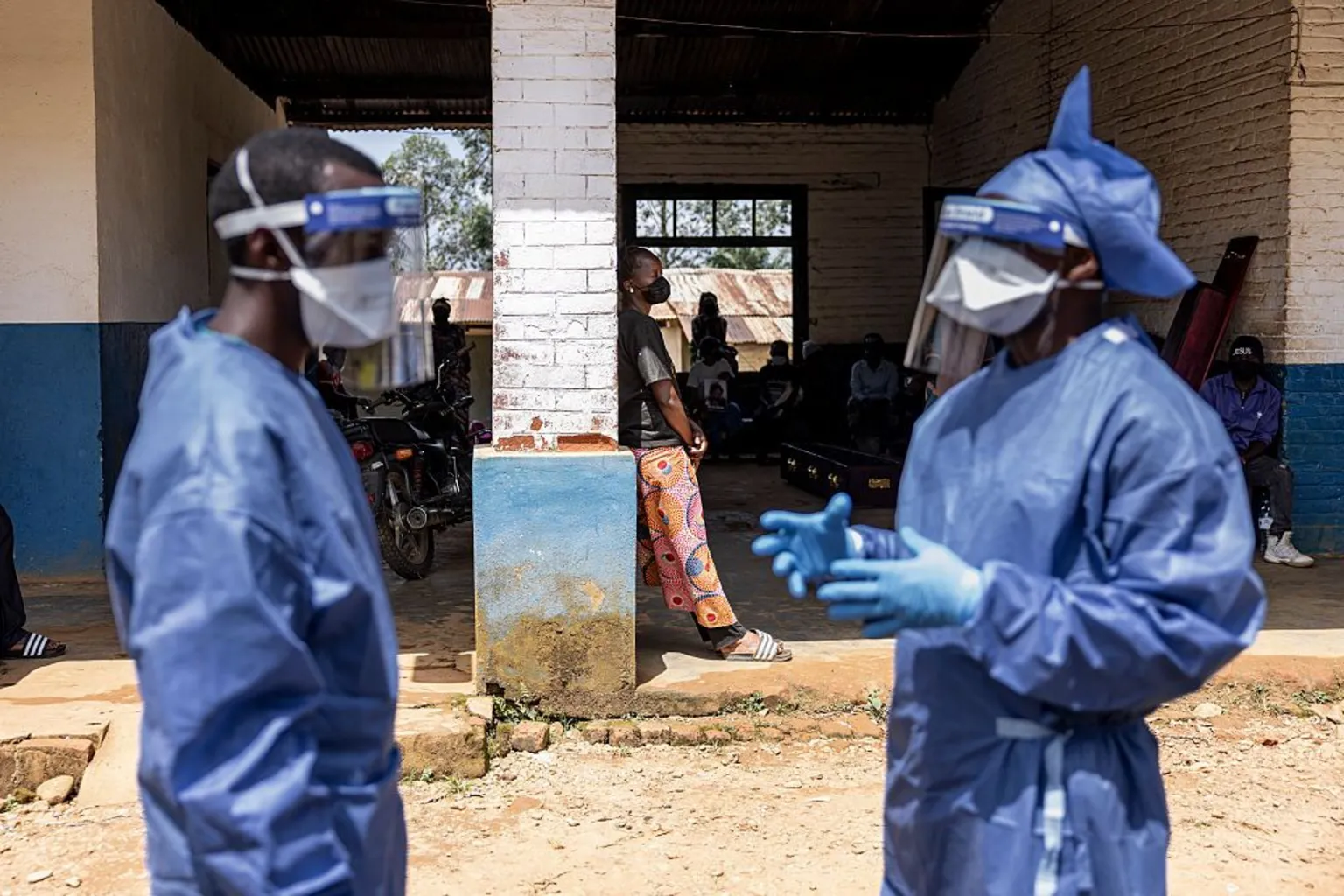

Health workers wearing protective equipment stand outside the General Referral Hospital during the Ebola outbreak
The central tension pits scientific urgency against biological uncertainty. On one side are Lambe and her Oxford team, racing against the clock. On the other is the stark reality: the vaccine may not work. The WHO has stated there is “no animal data yet” to support its effectiveness. A separate experimental Bundibugyo vaccine is also in development but will not be ready for six to nine months. The stakes are enormous. Without a vaccine, containment relies on contact tracing and isolation — methods failing in eastern DRC due to insecurity, community resistance, and weak health infrastructure. The tipping point will arrive in two to three months: if Oxford’s animal trials succeed, human trials could begin. If they fail, Congolese health workers will face an escalating outbreak unarmed.
Dr.Samuel Roger Kamba , the DRC Health Minister, has announced three treatment centres in Ituri, warning that the Bundibugyo strain “has a very high lethality rate which can reach 50 percent” and that “hospitals are already under stress because of the patients.” Trish Newport, an emergency programme manager for Médecins Sans Frontières in Bunia, offers a vision of how crazy it is right now,” she said, describing overwhelmed health facilities. And a grieving mother in Bunia, whose son died of suspected Ebola, said she believed he died of typhoid fever — a moment of community mistrust that complicates disease control.
The WHO has allocated $3.9 million in emergency funding from its Contingency Fund for Emergencies. Yet questions of accountability arise. Why was pandemic preparedness for the Bundibugyo strain neglected despite its known 30‑50 percent lethality? Why is the world again racing to develop a vaccine during an outbreak rather than before one? The DRC health minister has warned that “declining global aid is weakening frontline protections and limiting scientific research efforts.” For taxpayers in donor nations, this raises hard questions about whether international health funding prioritises rare but deadly pathogens.
The Oxford vaccine is not a certainty. If it succeeds, ring vaccination — immunising only the close contacts of cases and healthcare workers — would be deployed in the DRC, not mass vaccination. If it fails, the world will wait six to nine months for the other candidate as the outbreak in Ituri continues to spread. The next milestone arrives in weeks: animal trial results. “We can’t take our foot off the gas,” Lambe said. In Oxford and across eastern Congo, the race continues.