The benefits and risk of cryptocurrency
Cryptocurrencies offer fast, accessible financial opportunities, but concerns over volatility, security, and regulation continue to challenge their widespread adoption.

NORTH, SOUTH CAROLINA — In 2025, a growing number of people are buying groceries, sending money abroad, and investing savings using cryptocurrencies such as Bitcoin and Ethereum. The growth reflects a broader shift toward digital finance. What began as a niche technology embraced by tech enthusiasts has evolved into a global trend attracting millions of users seeking faster transactions, lower transfer costs, and new ways to build wealth.
Furthermore, businesses are increasingly exploring blockchain-based payment systems, while investors continue to pour money into digital assets despite their unpredictability. However, the same technology that promises financial innovation has also exposed users to market crashes, fraud schemes, hacking incidents, and regulatory uncertainty, raising questions about whether the benefits of cryptocurrency outweigh its risks as adoption continues to expand worldwide.
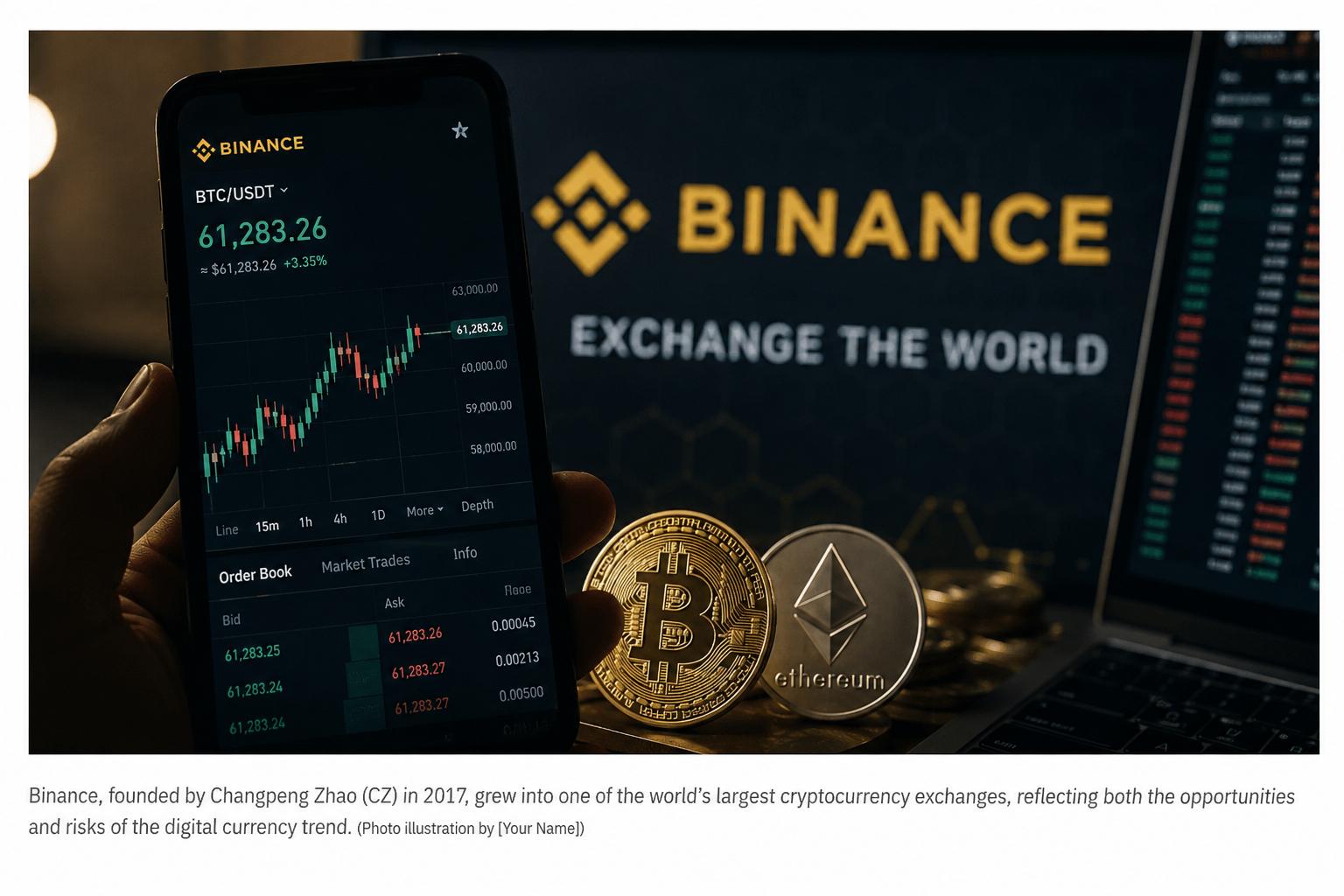
Changpeng Zhao, has become one of the most recognizable faces of the cryptocurrency revolution. As the founder of Binance, one of the world’s largest cryptocurrency exchanges, Zhao’s career mirrors both the opportunities and risks that define the industry. He built Binance into a global platform used by millions of people to trade digital assets, helping drive mainstream adoption of cryptocurrencies such as Bitcoin and Ethereum. His daily work has centered on expanding access to digital finance. He is also navigating rapidly changing technology and responding to growing demand for decentralized financial services. At the same time, Zhao’s journey highlights the challenges facing the sector, including regulatory scrutiny, legal disputes, and concerns about security and consumer protection. His experience illustrates how cryptocurrency has evolved from a niche experiment into a powerful financial force that continues to reshape the global economy while raising important questions about oversight and risk.
The rapid growth of cryptocurrency is supported by striking adoption figures worldwide. According to a 2025 Crypto.com market report, the number of cryptocurrency owners globally rose to approximately 741 million people, a 12.4 percent increase from the previous year. Meanwhile, Encyclopaedia Britannica estimates that the total cryptocurrency market was worth about $3 trillion in 2025, highlighting the sector’s growing influence on global finance. Supporters argue that cryptocurrencies offer faster, cheaper, and borderless transactions compared to traditional banking systems, particularly for international payments. In countries such as Nigeria, stablecoins have gained popularity as a low-cost alternative for cross-border money transfers. However, the industry’s rapid growth has also brought significant risks. Britannica identifies price volatility, cybersecurity threats, and liquidity concerns as major challenges for investors, while a 2025 Chainalysis report estimated that cryptocurrency scams and thefts resulted in losses of roughly $17 billion globally. These figures illustrate both the enormous potential and the substantial dangers associated with the expanding use of digital currencies.


ChatGPT Image Jun 20, 2026, 03_56_53 PM
The rise of cryptocurrency has created a growing divide between supporters who see it as the future of finance and critics who warn of its dangers. Entrepreneurs, investors, technology companies, and people without easy access to traditional banking services are among those benefiting from digital currencies, which can offer faster transactions, lower transfer costs, and new investment opportunities. Figures such as Changpeng Zhao have championed cryptocurrency as a tool for expanding financial access and innovation. However, governments, financial regulators, consumer protection groups, and some economists have pushed back against the trend, arguing that weak oversight can leave users vulnerable to fraud, money laundering, cybercrime, and severe market volatility. While supporters view cryptocurrency as a path toward a more open financial system, skeptics worry that many inexperienced investors are exposed to significant losses when prices collapse or exchanges fail. This tension between innovation and regulation lies at the heart of the cryptocurrency debate and will likely shape the industry’s future as adoption continues to grow.
To explore both the opportunities and risks of cryptocurrency, reporters could interview Changpeng Zhao, founder of Binance, as a key industry leader and advocate for digital assets; a financial regulator or central bank official who can explain concerns about consumer protection, fraud, and oversight; and a cryptocurrency investor or small business owner who uses digital currencies in everyday transactions and can provide firsthand experience with both gains and losses. Additional insight could come from a cybersecurity expert who studies cryptocurrency-related scams and hacking incidents. Looking ahead, cryptocurrency is expected to become more integrated into mainstream finance as governments develop clearer regulations and businesses expand their use of blockchain technology. At the same time, concerns about security, market volatility, and investor protection are unlikely to disappear. The future of cryptocurrency may depend on whether the industry can build enough trust to attract wider adoption while addressing the risks that continue to make many consumers and regulators cautious. Will digital currencies eventually become as common as traditional money, or will their risks limit how far the trend can go?