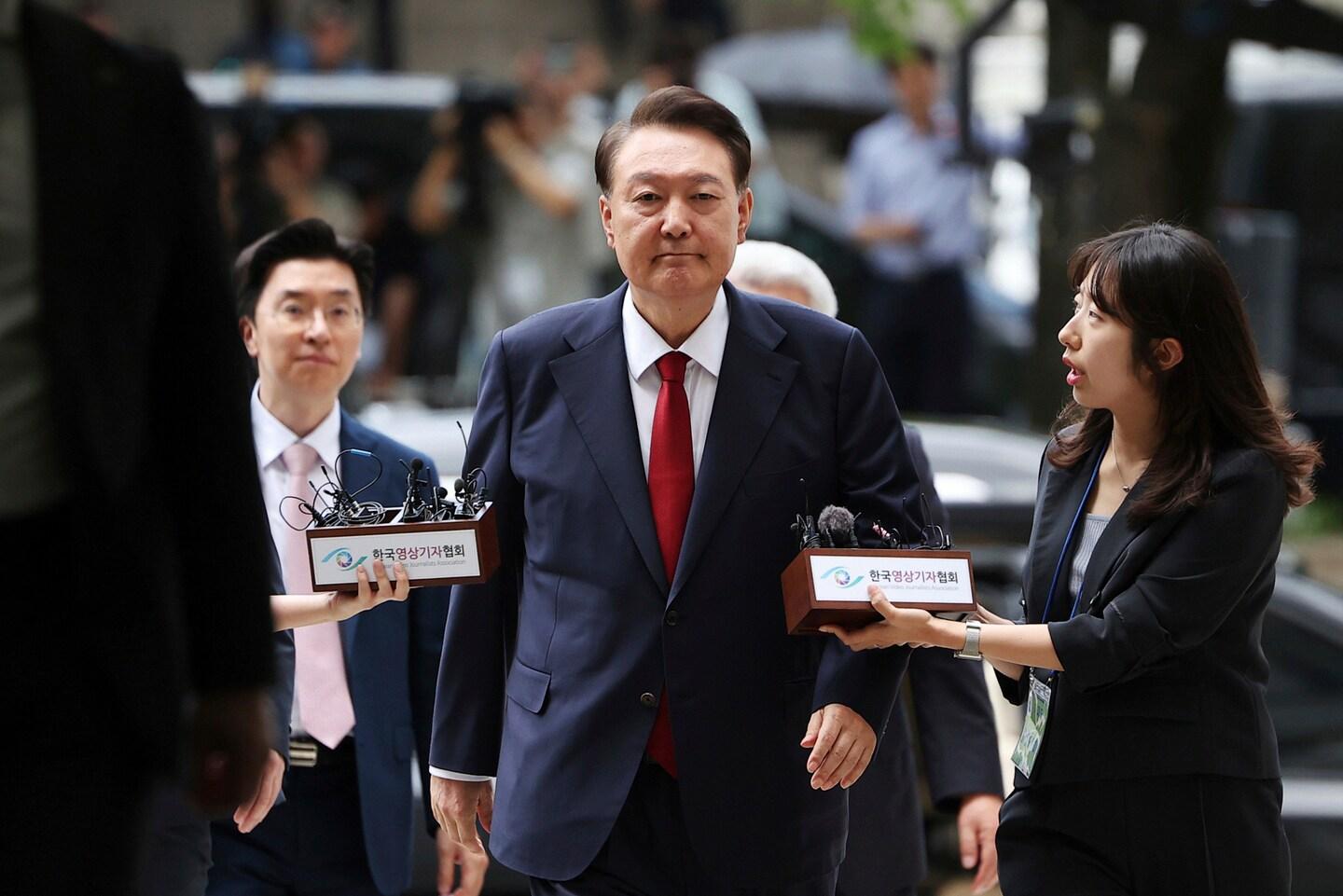
Former South Korean President Faces 30-Year Prison Sentence in Drone Scandal
Court Ruling Exposes Military Deception Claims

SEOUL, SOUTH KOREA — Former South Korean President Yoon Suk Yeol was handed a 30-year prison sentence by a Seoul court on 12th June 2026, having been found guilty of authorizing military drones to fly over North Korea’s capital, Pyongyang.
This action was allegedly intended to create a security threat and legitimize his unsuccessful 2024 declaration of martial law. The verdict signifies a significant decline for the former prosecutor who became president, as his ascent to the nation’s top position culminated in impeachment, removal from office, and one of the most significant legal proceedings in South Korea’s democratic past.
Born December 18, 1960, Yoon Suk Yeol is a South Korean statesman who functioned as the 13th president of South Korea from 2022 until his dismissal from office in 2025. He served as a member of the People Power Party during his presidency; he had the briefest presidency as an elected head of state in the nation’s democratic history. Yoon formerly served as prosecutor general from 2019 to 2021.
“It is about the credibility of the democratic system of South Korea. Citizens must know that leaders are accountable regardless of who they are. The case is likely to set the precedent for future presidents use power in national emergencies. "Said Dr.Kate Williams”
At the core of the matter lies an intense struggle for influence, accuracy, and the boundaries of presidential dominion. State attorneys assert that former South Korean President Yoon Suk Yeol willfully employed military maneuvers and amplified anxieties with North Korea to foster a feeling of national urgency that might legitimize instituting martial law and broadening his command over the nation. Yoon, conversely, maintains that his conduct comprised proper national defense actions undertaken to safeguard South Korea from outside dangers.
The clashing factions reach further than the legal arena. On one side stand prosecutors, legislators, and commentators who believe democratic frameworks were endangered by a chief executive prepared to leverage security concerns for political advantage. On the other hand are Yoon’s adherents, who perceive him as a robust leader reacting to actual perils from an erratic North Korea. The issue has split public sentiment and revitalized discussion concerning the extent of authority a president ought to exercise during periods of turmoil.
The affair originates from South Korea’s political unrest in late 2024, when President Yoon Suk Yeol proclaimed martial law amidst rising tensions with North Korea and increasing internal strife. This action was promptly contested by legislators and ignited widespread popular disapproval, with opponents accusing Yoon of striving to circumvent democratic bodies and consolidate authority.
Investigators subsequently initiated an inquiry into claims that military drones had been dispatched over Pyongyang prior to the proclamation, possibly to amplify security worries and fashion a rationale for emergency governance. The dispute ultimately resulted in Yoon’s impeachment, dismissal from his post, and a sequence of criminal actions that have evolved into one of the most crucial trials of presidential responsibility in South Korea’s recent democratic period.
The legal struggle is far from concluded. Yoon Suk Yeol is anticipated to contest the 30-year sentence, paving the way for an extended judicial proceeding that might decide if the conviction is upheld or reversed. As superior tribunals examine the matter, state attorneys and defense counsel will probably persist in contending whether the ex-president’s conduct amounted to a valid reaction to national security dangers or a misuse of authority.
The result will be keenly observed both within South Korea and internationally, as it could influence future understandings of presidential prerogative during periods of peril. For South Korean citizens, the situation has become more than a verdict on a single past leader—it is a trial of the nation’s democratic frameworks and their capacity to hold even the most senior officials answerable. As the appellate procedure progresses, the country will seek resolutions to an inquiry that extends beyond Yoon himself: where ought the boundary be established between national security and the constraints of executive dominion?