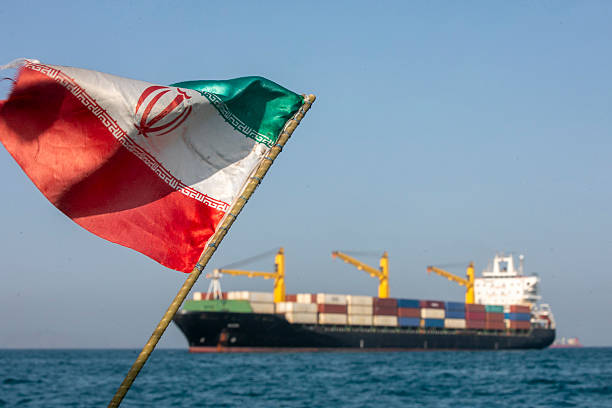
US and Iran Exchange Second Day of Strikes , Shattering Fragile April Ceasefire
Trump vows to hit Iran "hard" as Tehran targets US bases in Bahrain ,Kuwait and Jordan; oil prices spike amid strait of Hormuz

WASHINGTON — For a second straight day, the United States and Iran exchanged direct military strikes across the Middle East, shattering a fragile April ceasefire as President Donald Trump promised to hit the Islamic Republic “hard” and oil prices jumped to $95 a barrel.
The latest barrage began before dawn on June 11, when U.S. Central Command said it completed a wave of “self-defense strikes” targeting military, surveillance and radar sites in southern Iran. Within hours, Iran’s Islamic Revolutionary Guard Corps [IRGC] responded by launching ballistic missiles at American bases in Bahrain, Kuwait and Jordan.
Air raid sirens wailed across Manama, the Bahraini capital, while Kuwait’s Army announced on X that its anti-air defense systems had intercepted “hostile aerial targets” and that the country’s airspace was temporarily closed. In Jordan, the IRGC claimed to have destroyed “a large number” of U.S. fighter jets and facilities at the Muwaffaq Salti Air base, though those claims remain unverified. The strikes marked the second consecutive day of open hostilities, following an initial U.S .attack on June 10 that Trump had previewed with a blunt social media post.
The U.S -Iran conflict has simmered for decades, rooted in the 1979 Islamic Revolution, the hostage crisis, and Iran’s nuclear program. But the current escalation has its own recent history. In April, the two nations agreed to a two-week ceasefire after months of shadow war involving drone strikes, tanker seizures, and proxy attacks. That truce never fully held. Both sides exchanged intermittent fire, but diplomatic efforts to broke a permanent nuclear and security deal stalled in late May.
The tipping point came this week when a U.S helicopter was downed in an attack that U.S officials blamed directly on Iran. The IRGC followed by targeting American bases across the region, and Washington responded with overwhelming force. What began as tit-for-tat retaliation has now become a sustained military confrontation, threatening to pull the entire Middle East into a full-blown regional war.
President Donald Trump, monitoring developments from the White House situation room, has grown visibly impatient. Early on June 11, he posted on Truth Social: “We hit them hard yesterday and we’re going to hit them hard again today.” He added that Iranian leaders have “taken too long to negotiate a deal.” According to administration aides who spoke on condition of anonymity, Trump sees the strikes as both a military necessity and a bargaining chip — raw pressure to force Tehran back to the negotiating table. But his hardened tone leaves little room for de-escalation.
In a later statement, Trump warned: “If no peace deal is secured, Iran will be attacked again.” For the president, this confrontation is personal: a test of his doctrine of maximum pressure, now transformed into maximum firepower. The stakes could not be higher. A prolonged exchange would risk American casualties, Iranian retaliation against U.S allies, and a disruption of global oil supplies that could tip the world economy toward recession.
The core conflict is a rapid unraveling of trust and restraint. On one side stands the United States, backed by CENTCOM and a network of Gulf Arab allies who host American bases. U.Sofficials insist their strikes are defensive, aimed at degrading Iran’s ability to launch further attacks. On the other side, Iran’s IRGC has shown no willingness to back down. Beyond the missile strikes on U.S bases, Iranian state media reported that the IRGC hit two oil tankers passing through the Strait of Hormuz, a choke point through which one-fifth of the world’s oil passes. Iran also claimed the strait was “completely closed to all type of vessel.”
CENTCOM pushed back, saying “commercial ships are continuing to transit,” but the confusion alone spooked energy markets. Brent Crude oil, the global benchmark, climbed about 2% to roughly barrel shortly after the announcement.
![Trump speaks about Iran strikes in the oval office of the White House in Washington D.C on, June 11, 2026. Photo: Kent Nishimura/AFP. ©2026 Agence France -Presse [AFP].](https://staging.zenger.news/wp-content/uploads/2026/06/f37cf730-d8b2-4436-a10d-e9fd3eda087b_Donald_Trump-2.jpg)

Trump speaks about Iran strikes in the oval office of the White House in Washington D.C on, June 11, 2026. Photo: Kent Nishimura/AFP. ©2026 Agence France -Presse [AFP].
For publicly traded companies, the financial implications are immediate and severe. Major oil firmsExxonmobil Chevron [CVX], British oil major [BP] and shell [SHELL] -saw their stock prices swing wildly in after-hours trading. Investors are pricing in a risk premium for potential supply disruptions. If the Strait of Hormuz remains contested for more than a few days, analysts warn that crude could breach $120 a barrel, triggering higher gasoline prices worldwide. Defense contractors, includingLockheed Martin [LMT],Raytheon Technologies [RTX], and Northrop Grumman [NOC], experienced modest gains on expectations of increased US military spending and replenishment of munitions.
But the most vulnerable publicly traded entities are shipping companies. Tanker operators such as Frontline plc andEuronav saw their shares drop sharply on news that two vessels had been attacked, signaling that commercial shipping in the Persian Gulf is not as Frontline. For shareholders, the short-term outlook is tied to how long the conflict lasts. For employees of those shipping firms, the danger is literal.
“The April ceasefire was already a piece of paper with holes in it. Two days of direct, reciprocal strikes means we are no longer in a lesser-fire scenario; we are on the verge of a full regional war. The diplomatic window has not closed, but it is now measured in hours, not weeks.
That stark assessment came from Dr.Sanam Vakil , director of the Middle East and North Africa Programme at Chatham House.
“Only if both sides stop firing the next 24 hours. After that, the window slam shut. '' – Dr. Sanam Vakil, said in an interview from Chatham House.”
She then addressed the human cost of a potential miscalculation.
“A miscalculation. A downed jet with American bodies ,or a missile hitting a Tehran school. Then there is no going back." – Dr .Sanam Vakil said in an interview”
Dr. Vakil urged both sides to return to negotiations immediately, warning that the Strait of Hormuz closure alone could trigger a global economic shock that forces outside powers — including China and Russia — to pick sides. “No one wins an all-out U.S-Iran war,” she added. “The question is whether cooler heads can reassert control before a miscalculation leads to hundreds of casualties.”Iranian President Masoud Pezeshkian struck a defiant tone, saying Iran “will stand firm against any pressure or threat.”
His foreign ministry accused the U.S of “damaging the diplomatic process through the contradictory messages it sends.” Trump, meanwhile, has left the door open for more strikes, with Pete Hegseth Defense Secretary saying bombs would be “dropping on key facilities” in Iran if no deal materializes.
“We should not minimize the risks of lesser fire becoming full fire,” UN Secretary General Antonio Guterres said on X. “All parties must work towards a diplomatic settlement. No more attacks. No more excuses.”
As of late June 11, there is no resolution. The question is no longer whether the conflict will escalate, but who will fire next and whether the world will watch as lesser fire becomes full fire. For now, the Strait of Hormuz remains a gunpowder trail, and oil traders are betting on more smoke to come.