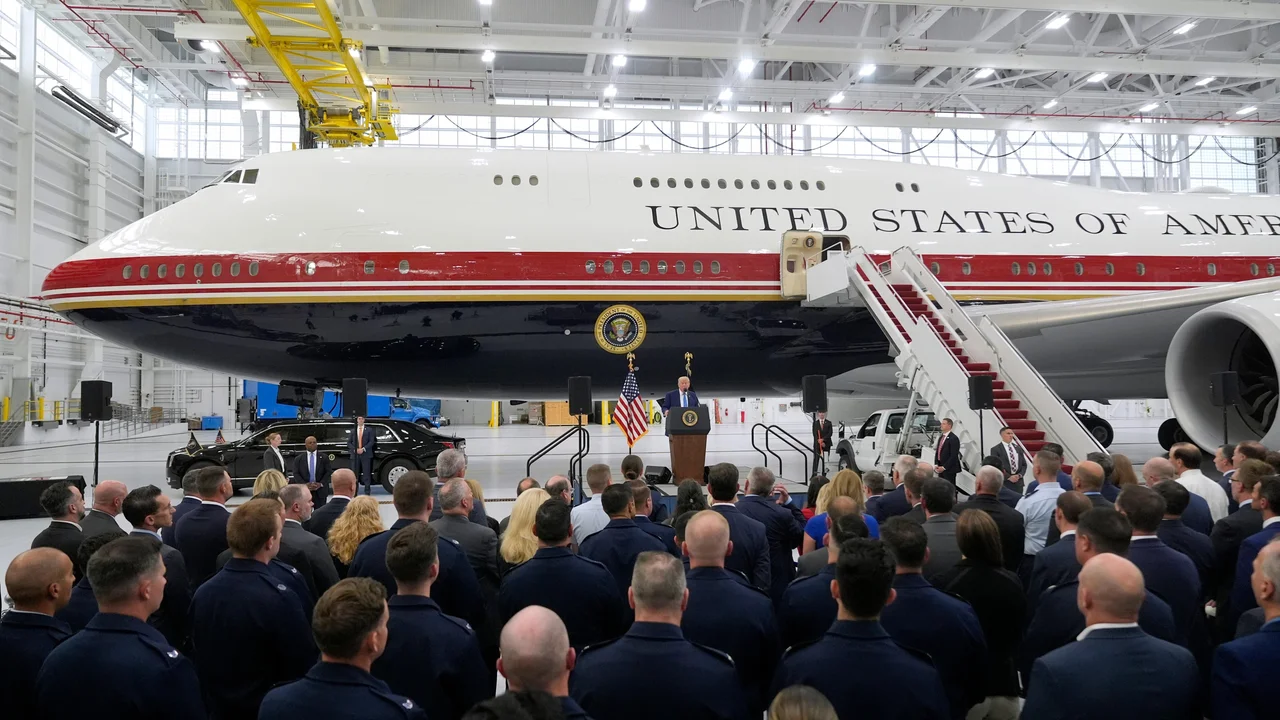
Trump’s luxury jet sparks turbulence in Washington

NAIROBI, KENYA — The rollout of a new presidential aircraft became a center of discussion. This was after President Donald Trump decided to introduce a Boeing 747, which was reportedly provided by Qatar. It was introduced as a stand-in for the next Air Force One and has set off a wave of political, legal, and security concerns that continue to gather momentum in Washington and beyond.
Positioned as a workaround to delays in the U.S. Air Force One replacement program, the aircraft was unveiled with characteristic confidence. Trump framed the move as both efficient and financially prudent, emphasizing the drawn-out timeline and rising costs associated with the existing Boeing contract.
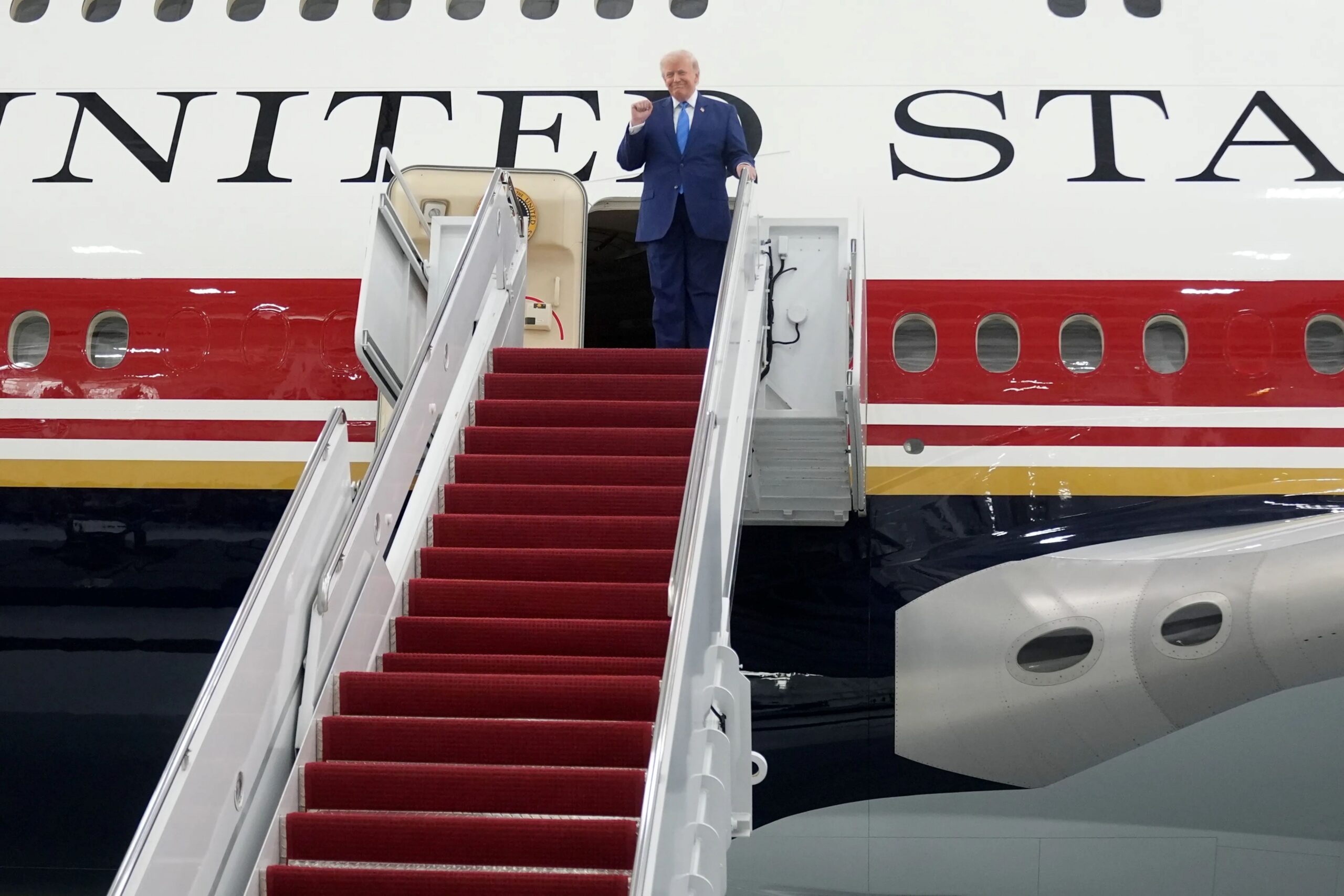

President Donald Trump after touring Air Force One in Joint Base Andrews, June 19, 2026. AP/Photo/Manuel Ceneta
The aircraft’s origin has become the central issue. With an estimated value in the hundreds of millions, the jet’s reported ties to Qatar, which is a foreign government, have sparked unease among lawmakers and ethics specialists.
The question is whether such an arrangement blurs the line between diplomacy and undue influence. This is alarming, given longstanding rules governing what U.S. officials can accept from abroad. Legal analysts note that even if structured within technical boundaries, the optics alone present a challenge.
Complicating matters further is the reality that Air Force One is far more than a symbol. It functions as a highly secure airborne command center, requiring layers of classified technology, hardened communications systems, and rigorous defense protocols. Transforming a previously owned aircraft into that standard is an undertaking of huge scale.
Early projections suggest that the costs could escalate dramatically, potentially offsetting any initial savings promoted by the administration. Specialists point out that every component from wiring to communications must be stripped, inspected, and rebuilt to eliminate vulnerabilities.
The White House has pushed back on these concerns, arguing that such modifications are routine and unavoidable regardless of the aircraft’s origin. Officials maintain that beginning with a high-end platform ultimately streamlines the process.
Still, the controversy has widened beyond technical debates. Diplomatically, the move introduces new sensitivities. Qatar occupies a complex position in Middle Eastern geopolitics, and the acceptance of such a high-profile asset risks sending unintended signals to both allies and rivals. Analysts warn that even symbolic gestures can carry weight in an already delicate regional balance.
At Capitol Hill, the reaction has been swift. Calls for oversight are growing, with some lawmakers pressing for a clearer accounting of how the arrangement was negotiated and whether it aligns with federal guidelines. For critics, the aircraft represents a broader pattern of unconventional decision-making. For supporters, it underscores a willingness to bypass bureaucracy in pursuit of faster results.
What is emerging is a debate that extends well beyond aviation. The issue touches on how power is exercised, how transparency is maintained, and how the presidency navigates relationships on the global stage. The aircraft has become a focal point for deeper questions about governance in a complex world.
“I'm not concerned at all. Everything is being done properly, totally legal. We have great lawyers looking at it. This is about doing what's best for the United States, getting a better Air Force One faster, cheaper, and stronger. That's what people want," said President Trump in an interview.”
For now, the jet remains grounded in controversy, even as it promises to redefine presidential travel. Whether it ultimately soars as the next Air Force One or stalls amid mounting scrutiny may depend less on engineering and more on politics.