Trump Presses Senate to Pass College Sports Bill Before Recess
Trump urges senators to stay in Washington until the Protect College Sports Act passes, warning that programs, women's sports and universities face collapse without it.

WASHINGTON D.C. — Donald Trump urged the Senate to remain in Washington until it passes the Protect College Sports Act, warning that college programs and women’s sports face collapse without it.
Trump framed the bipartisan measure as a shield for young athletes, saying failure to act would leave millions hurt, cancel programs and drive universities into insolvency. He tied the bill to state laws restricting participation in women’s sports.
Here is the full post on truthsocial: “THE PROTECT COLLEGE SPORTS ACT is a great Bill, and the Senate will hopefully stay in D.C. until it passes. Without this Bill, millions of young Athletes will be hurt, programs will be canceled, Women’s and Olympic Sports will go away, the fans will be robbed, and Universities will go broke. Nobody has done more to protect Women Athletes than me — and this Bill CLEARLY protects the Laws in 27 States protecting Women’s Sports, and banning Men from Women’s Sports. Anyone who tells you differently is LYING! Stop grandstanding, and try getting this done. Thank you for your attention to this matter! Trump” on August 7, 2026 at 4:52 PM ET.
This is Trump’s seventh message released today, and the last post was four minutes ago, and it is not part of a thread. On average, Trump produces 18 posts per day since his inauguration on January 20, 2025. The move fits a broader pattern in Trump’s recent messaging, with 46 of his 472 posts over the last 30 days classified as Domestic Policy posts.
Senate Commerce Committee Chairman Ted Cruz and Ranking Member Maria Cantwell announced a bipartisan agreement on the Protect College Sports Act of 2026 on May 27, 2026, according to sportsepreneur.com. Senators Eric Schmitt and Chris Coons joined the agreement, giving the measure a broader coalition than earlier college sports reform attempts. The Senate Commerce Committee described the proposal as an effort to restore stability to college athletics, according to sportsepreneur.com.
The bill would create a national framework covering name, image and likeness rights, transfers, eligibility, athlete-agent rules, medical coverage, scholarships and antitrust protection, according to sportsepreneur.com. It would preserve NIL earnings while adding disclosure and enforcement standards, allow one unrestricted transfer during an athlete’s career and override conflicting state NIL rules with a federal standard. Antitrust protection for schools, conferences and governing bodies may prove the most consequential piece, giving college sports leaders room to set and enforce rules without constant litigation.
The stakes divide the college sports economy. Schools, conferences and the NCAA gain legal certainty and stronger enforcement power, while some athletes and advocates fear that legitimate earning rights could shrink under the banner of stability. Supporters argue that a single federal standard would protect women’s and Olympic programs that face pressure from rising football costs, according to sportsepreneur.com.
For the average reader, the outcome shapes what college teams survive and which games remain on television. Families of athletes would see clearer rules on scholarships, medical coverage after injury and how much agents can charge.
This is not the first time Congress has tried to write national rules for college athletics. Lawmakers have introduced multiple NIL bills since the Supreme Court ruled against the NCAA in NCAA v. Alston in 2021, yet none reached the president’s desk. The current proposal reaches deeper into governance than those earlier efforts.
The next move rests with the Senate Commerce Committee and Senate leadership, according to senate.gov. A floor vote date has not been announced.
College sports has drawn Washington’s attention before, as happened decades ago. Congress passed Title IX of the Education Amendments in 1972, barring sex discrimination in federally funded education programs and forcing schools to expand women’s athletics, according to senate.gov. Female participation in college sports climbed from about 30,000 athletes before the law to more than 200,000 in later decades, according to acenet.edu. That single statute reshaped the field that Trump now invokes in defense of women’s competition.
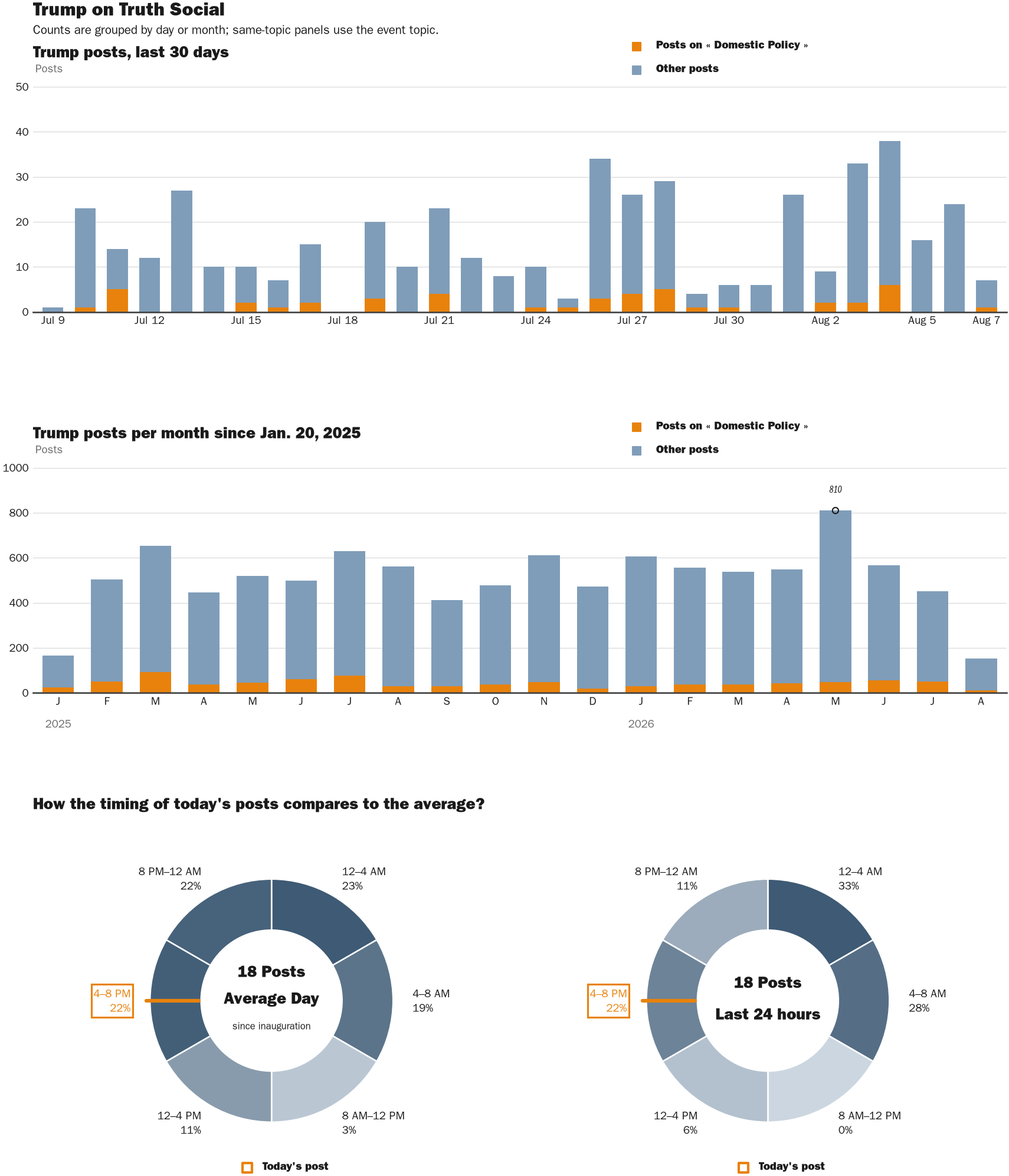

NewsFindr Chart Maker
Photo by Zenger real-time database of all Truth Social posts.
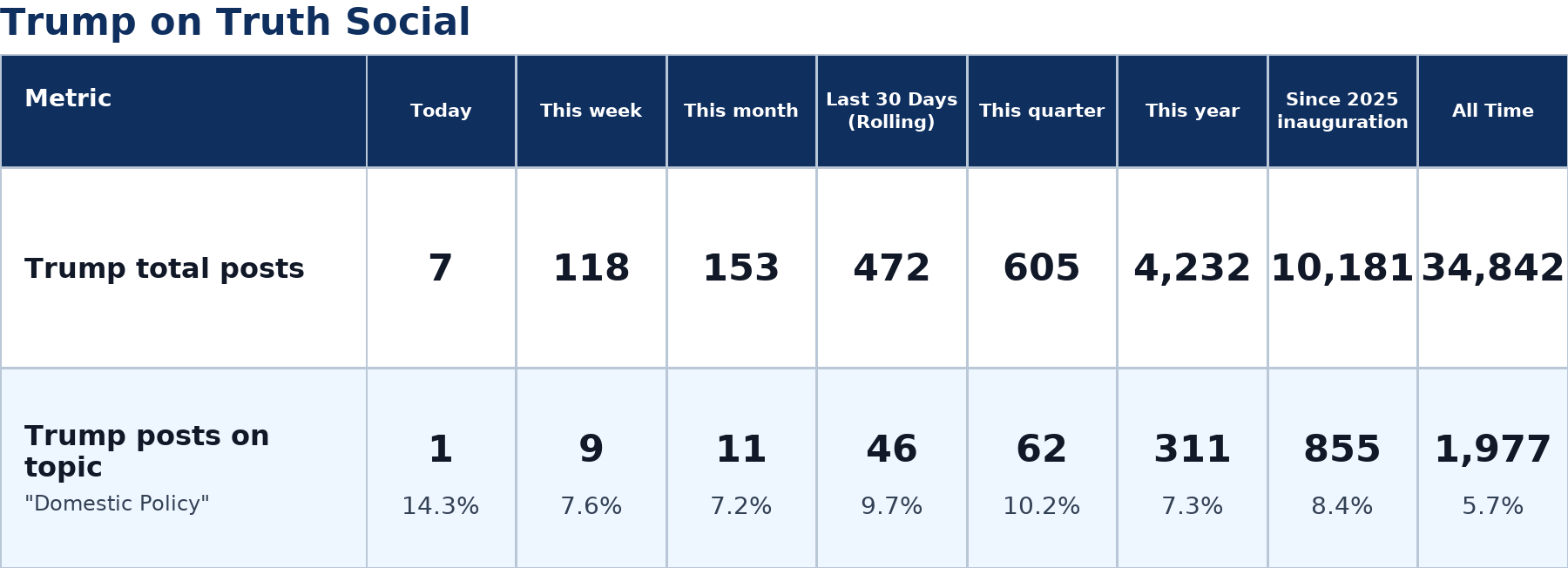
Zenger analysis
Photo by Zenger analysis