Satellite Photos Show Iran Might Be Restoring Secret Nuclear Sites
New Imagery from Parchin and Natanz shows structural reinforcement, Suggesting Tehran is quietly advancing its core infrastructure.

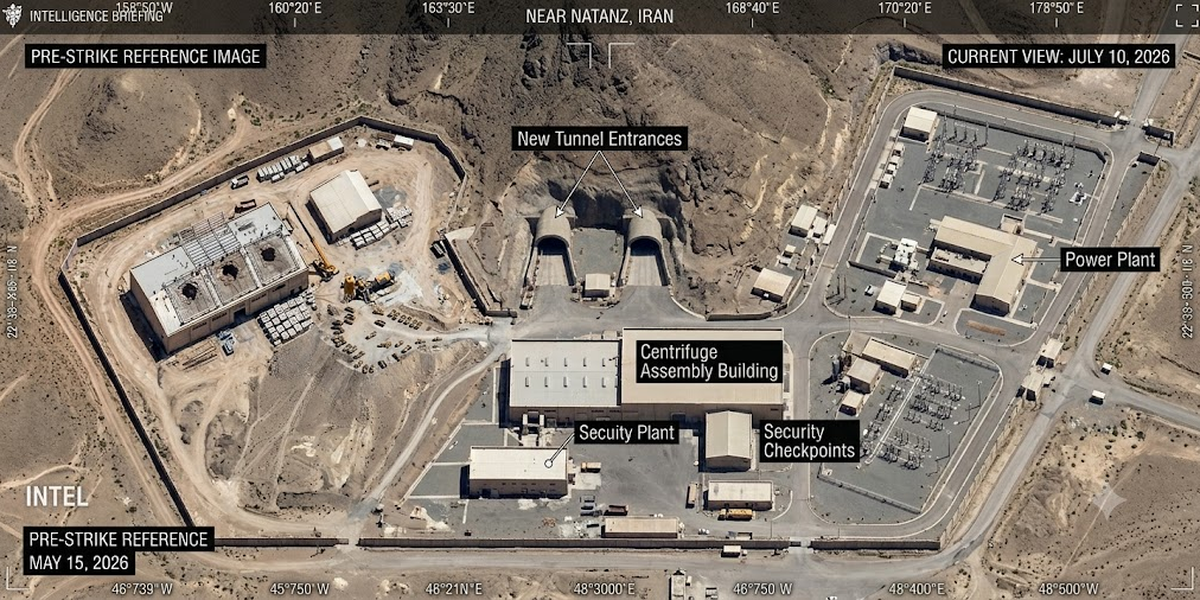
PARCHIN, IRAN — Satellite imagery reveals Iran secretly rebuilding secret, bomb-damaged nuclear sites this July, breaching a fresh U.S. pact.
For David Albright, the warning signs come in quiet progression of pixels on a high-resolution satellite feed. Albright is both a physicist and a former UN weapons inspector who hunted covert programs since the 90s.
He has spent his career translating construction dust into strategic threats. The July 2026 imagery of Parchin makes the terms of the recent U.S.-Iran memorandum fade away. Instead, he sees a familiar, alarming pattern: heavy machinery moving mesh frames over bomb penetration holes at the Taleghan-2 site.
While politicians celebrate an enrichment freeze, Albright’s decades of experience tell a colder truth—Tehran is actively building a concrete sarcophagus to shield its core infrastructure from the next inevitable strike. Through his eyes, the satellite data isn’t just an intellectual puzzle; it is a ticking clock counting down to a renewed global conflict.
“It strongly indicates reconstruction of or reinforcement, though satellite imagery alone cannot confirm what is happening underground,” said Dr. Da vid Albright, former UN weapons inspector.
The quiet move of engineering crews at Parchin and Natanz has triggered a dangerous geopolitical chain reaction. This could pull the United States and Iran back to the brink of military conflict just weeks after negotiating a fragile diplomatic lifeline.
Tehran’s military establishment is determined to quietly reconstruct its strategic capabilities and bury its nuclear program under several meters of dirt to ensure their immunity from any aerial bombing.
Facing them is a united front from Washington and its regional allies who view a nuclear-armed Iran as an existential threat, leaving an agonizingly narrow window to act before diplomacy completely runs out of room.
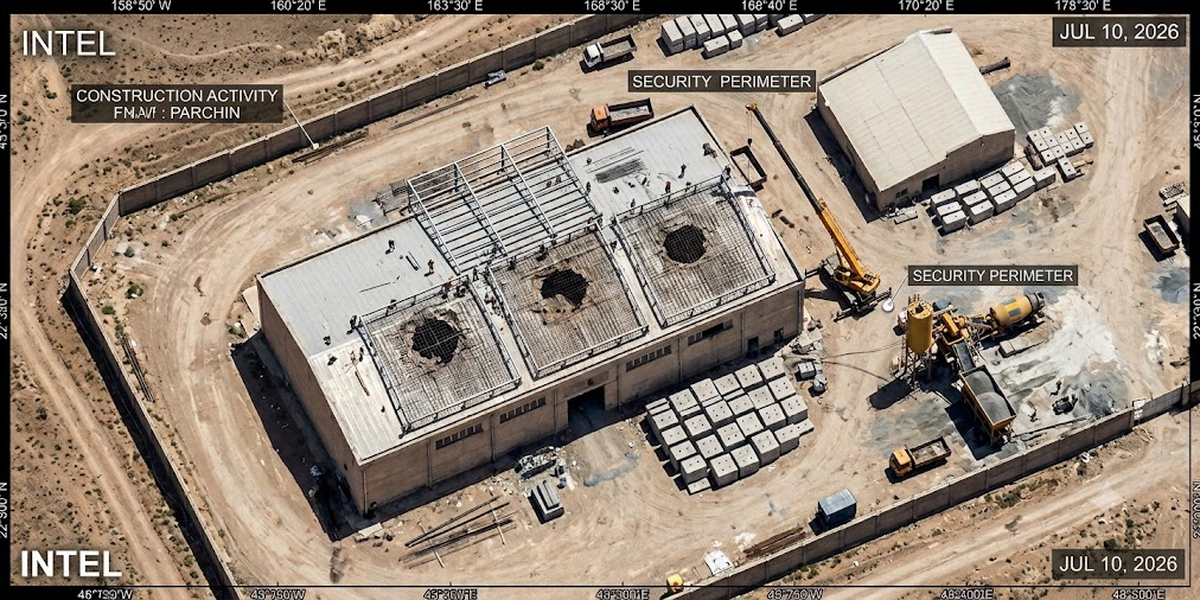

Heavy machinery activity seen with new fresh debris piles confirming recent activities going on in Parchin, Iran on July 10, 2026 at 7:18 PM. Photo: AP/Reuters
For citizens, this architectural game comes with a terrible cost of human lives that extends far beyond remote desert test sites. The failure of the late-June memorandum of understanding doesn’t just mean a return to harsh economic sanctions; it actively sets the stage for a wide-scale regional war.
Should the standoff ignite into a hot conflict, a full-scale military war threatens to engulf major population centers across the Middle East, putting millions of civilian lives in the danger of retaliatory missile strikes and triggering a catastrophic humanitarian crisis.
This comes on the heels of large-scale air strikes conducted by the U.S. and Israel early this year which severely damaged Iran’s surface-level centrifuges facilities. In retaliation against the destruction of their program, Tehran entered into an unstable, U.S.-sanctioned memorandum of understanding (MoU) in late June.
This diplomatic agreement was meant to impose a rigid halt on Iran’s nuclear development process in return for sanctions relaxation, hence creating a temporary peace period in the region. However, geopolitically speaking, there continues to be an endless war of underground construction.
It has been years now that Iran has been trying hard to place its key nuclear enrichment structures below ground level to secure them from aerial attacks. The quick constructions detected in Parchin and Natanz just weeks after the signing of the MoU are part of the usual trend of using diplomatic breaks by Tehran to strengthen its defensive structure.
All eyes now focus on the International Atomic Energy (IAEA) board of governors meeting due late next month, where Western diplomats are expected to press for an official reprimand of Tehran. The race against time for Albright and company is to decipher through the next round of satellite images every week.
This is to determine whether Iran will cease construction or try to lay the final concrete reinforcing to plug the structural holes that remain. In light of the fact that the June memorandum of understanding is now practically dead in the water, only time will tell whether the way out is diplomacy or war by prevention.