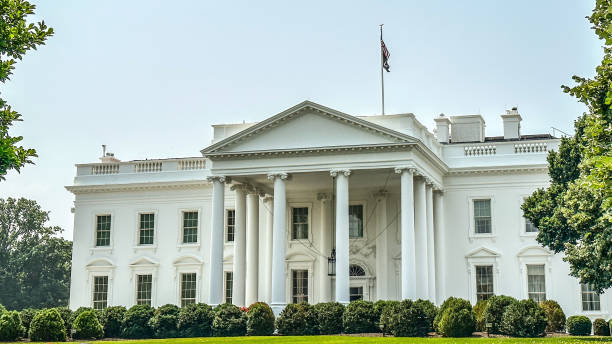
Trump releases 2020 intelligence memo on election system vulnerabilities
Trump a National Intelligence Council memorandum dated Jan. 15, 2020, warned that Russia, China, Iran and North Korea could reach US election systems. President Trump cleared it for public release on July 3, 2026.

WASHINGTON D.C. — Donald Trump released a declassified 2020 intelligence memo warning of foreign threats to US election systems.
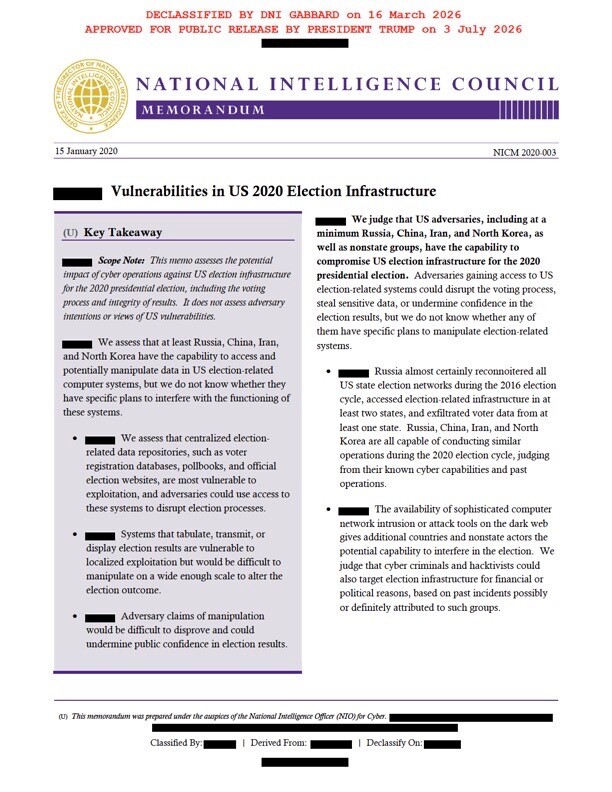
Here is the full post on truthsocial: “DECLASSIFIED BY DNI GABBARD on 16 March 2026 APPROVED FOR PUBLIC RELEASE BY PRESIDENT TRUMP on 3 July 2026 DIRECTOR NATIONAL INTELLIGENCE COUNCIL MEMORANDUM 15 January 2020 Vulnerabilities in US 2020 Election Infrastructure We assess that at least Russia, China, Iran, and North Korea have the capability to access and potentially manipulate data in US election-related computer systems, but we do not know whether they have specific plans to interfere with the functioning of these systems.”
The document is a National Intelligence Council Memorandum labeled NICM 2020-003 and dated Jan. 15, 2020. Red header markings state that then-Director of National Intelligence Tulsi Gabbard declassified it on March 16, 2026, and Trump approved it for public release on July 3, 2026. Gabbard served as the eighth director of national intelligence from Feb. 12, 2025, until June 19, 2026, according to dni.gov.
The memo assessed the potential impact of cyber operations against election infrastructure for the 2020 presidential election. Its scope note said it evaluated the voting process and the integrity of results, and did not assess adversary intentions. The memo said centralized data repositories, such as voter registration databases, pollbooks and official election websites, were most vulnerable to exploitation.
Systems that tabulate, transmit or display results were vulnerable to localized exploitation but hard to manipulate on a scale wide enough to alter an outcome, the memo said. Adversary claims of manipulation would be hard to disprove and could undermine public confidence, it said. The document also stated that Russia reconnoitered US state election networks during the 2016 cycle, accessed infrastructure in at least two states, and exfiltrated voter data from at least one state.
The release matters because it places a formal intelligence judgment behind long-running debates over election security. Voters, state election officials and campaigns all hold a stake in whether ballot systems can withstand foreign intrusion. The memo drew a distinction between the vulnerability of registration databases and the far harder task of altering vote totals at scale.

Gabbard held a role that ranks as executive head of the 18-agency US Intelligence Community, which reports to the director under the Intelligence Reform and Terrorism Prevention Act of 2004, according to dni.gov. Congress created the position after the Sept. 11, 2001, attacks, passing the enabling law by votes of 336-75 in the House and 89-2 in the Senate, according to dni.gov. John Negroponte became the first director when the office formed on April 21, 2005, according to dni.gov.
For the average US reader, the memo underscores that the systems most exposed are the ones that manage voter rolls and public-facing websites, not the machines that count ballots. Disruption to those systems could complicate voting or seed doubt without changing a certified result.
Has this happened before? This is not the first release of intelligence material tied to election security. Federal assessments after 2016 documented Russian probing of state systems, and the new memo repeats that finding for the 2020 cycle. The public disclosure of a full National Intelligence Council memorandum in this form remains unusual.
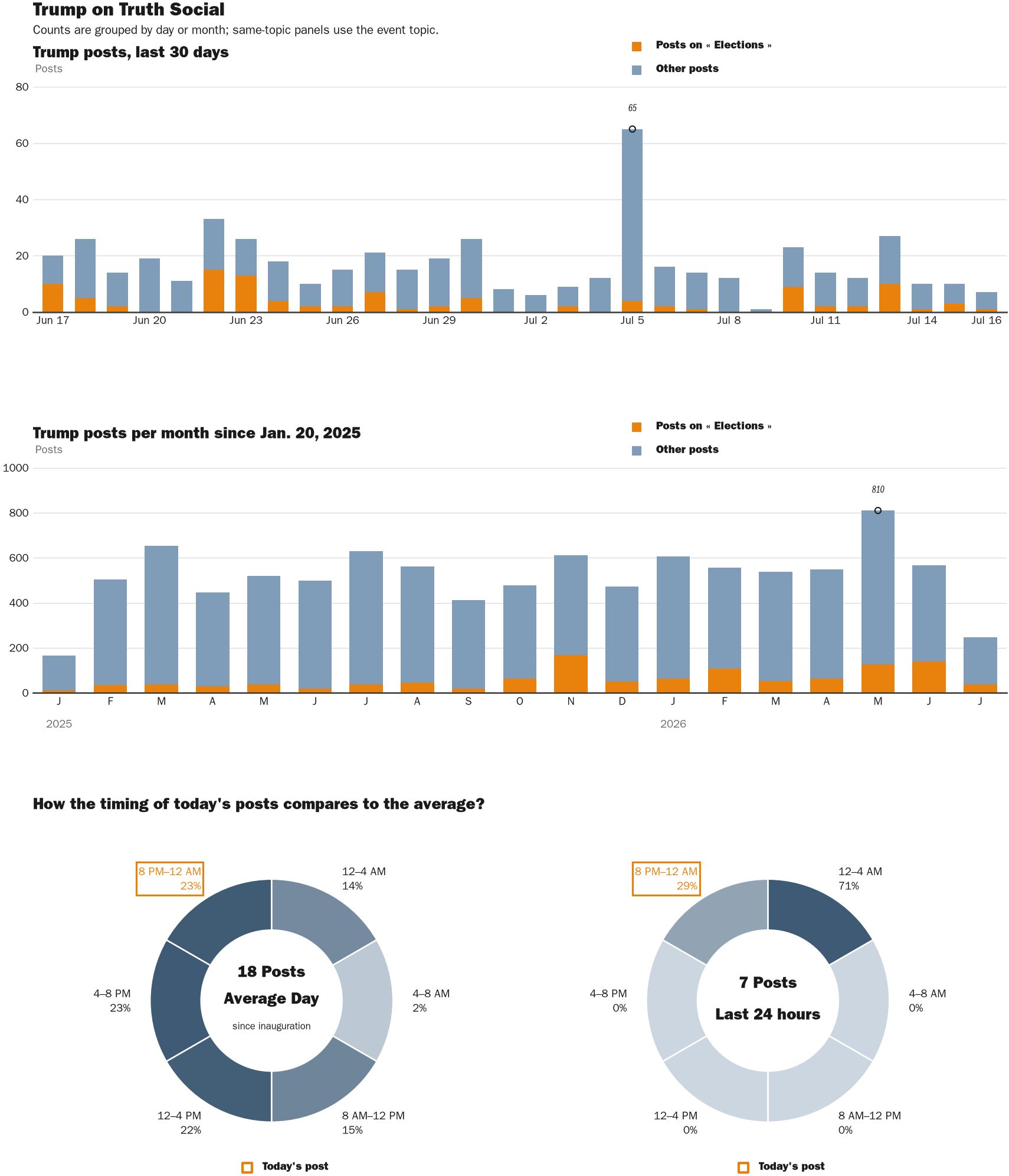
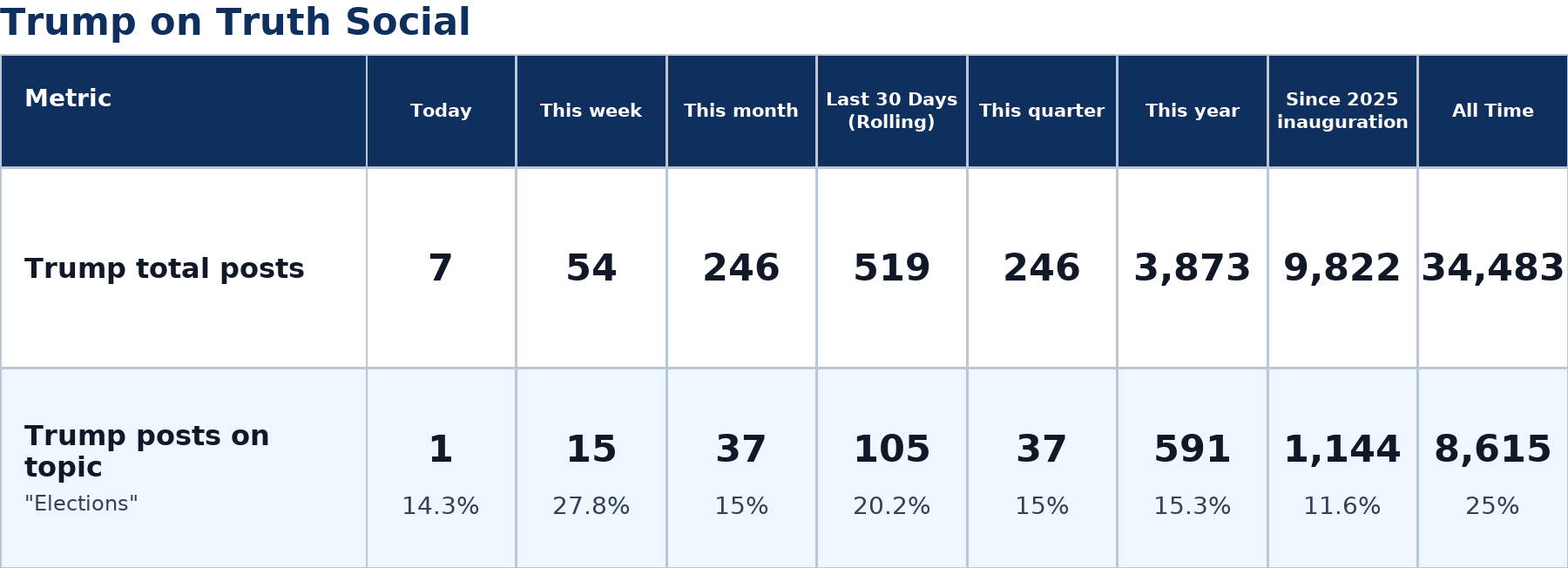
The next decision rests with the acting director of national intelligence, Bill Pulte, who took the role on June 19, 2026, according to dni.gov, and with the Office of the Director of National Intelligence on any further declassification. A date for additional releases has not been announced. Elections dominated Trump’s recent feed, with 105 of 519 Truth Social posts on the topic over the last 30 days.
Government secrecy fights over intelligence are not new to the office Gabbard once held. The Director of National Intelligence position itself grew out of the 9/11 Commission Report, released on July 22, 2004, which found intelligence failures ahead of the 2001 attacks, according to dni.gov. The commission’s recommendation reshaped how 18 agencies share information and report to a single official. Every director since Negroponte has faced the tension between guarding sources and answering public demands for disclosure.
NewsFindr Chart Maker
Zenger analysis
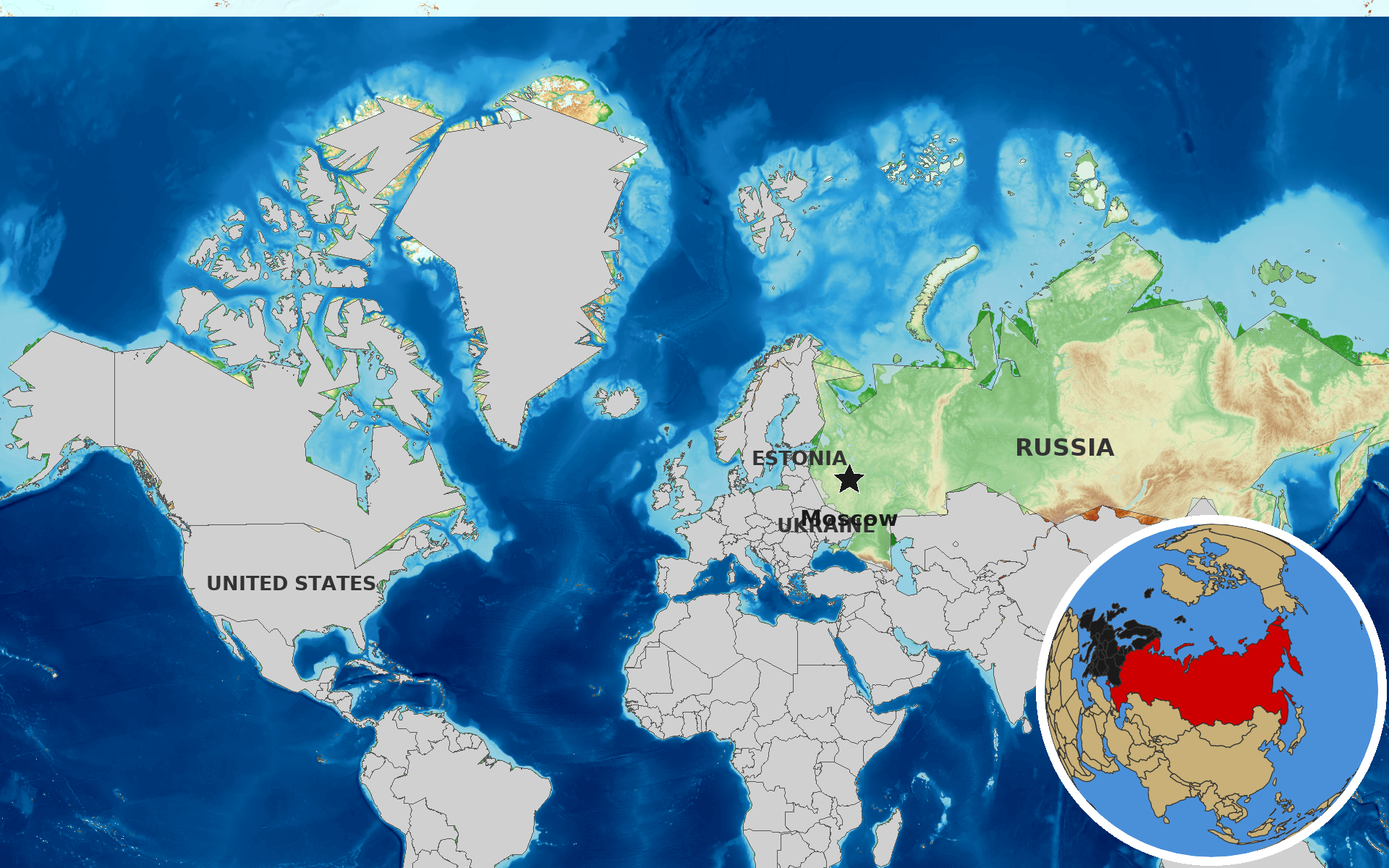
OpenTopoMap / Natural Earth – Russia
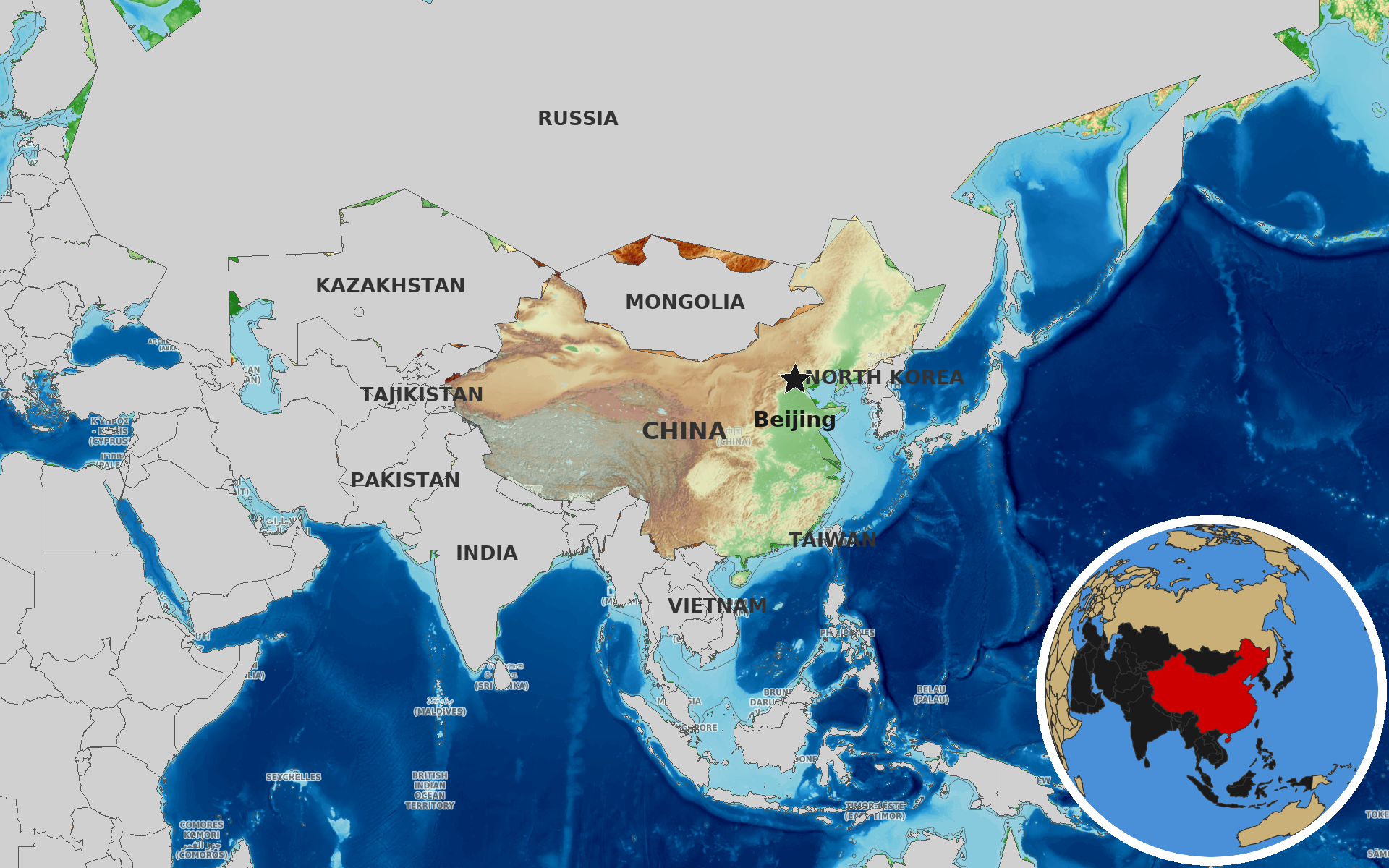
OpenTopoMap / Natural Earth – China