
Trump credits his policies as national beef herd stabilizes after years of decline
Trump highlights a Washington Examiner report showing U.S. cattle numbers ticked up to 94.2 million on July 1, even as ground beef prices remain near $6.89 a pound.

WASHINGTON D.C. — Donald Trump credited his administration’s policies for steadying the national beef herd, pointing to fresh U.S. Department of Agriculture data that shows cattle numbers rising after five straight years of decline.
The total number of cattle and calves reached 94.2 million on July 1, an increase of 200,000 from a year earlier, according to washingtonexaminer. The American beef herd is the smallest it has been in 75 years. That shortage pushed the average price of a pound of ground beef to $6.89, up from $3.88 at the start of the pandemic, according to washingtonexaminer.
“We’re seeing heifer retention for the first time in nine years, which is humongous,” said T.J. Wilson, deputy director of rural policy at the America First Policy Institute, according to washingtonexaminer.
Here is the full post on truthsocial: “Trump’s policies meat the moment: National beef herd size stabilizes after years of decline: https://www.washingtonexaminer.com/news/washington-secrets/4689402/national-beef-herd-size-stabilizes-after-years-of-decline/” on August 31, 2026 at 11:29 AM ET.
This is Trump’s 3rd message released today, and the last post was 1 hour ago, and it is not part of a thread. On average, Trump produces 18 posts per day since his inauguration on January 20, 2025. The move fits a broader pattern in Trump’s recent messaging, with 59 of his 663 posts over the last 30 days classified as Domestic Policy posts.
Trump shared the report by mentioning the source (see washingtonexaminer), which framed the stabilization as evidence that supermarket prices may have stopped getting worse. The herd collapsed rapidly from 2021, when drought and high feed prices led ranchers to sell their breeding cows, setting off what the report called a doom spiral, according to washingtonexaminer. The number of beef cows stood at 35.3 million in the mid-1990s and sits at 27.6 million today, according to washingtonexaminer.
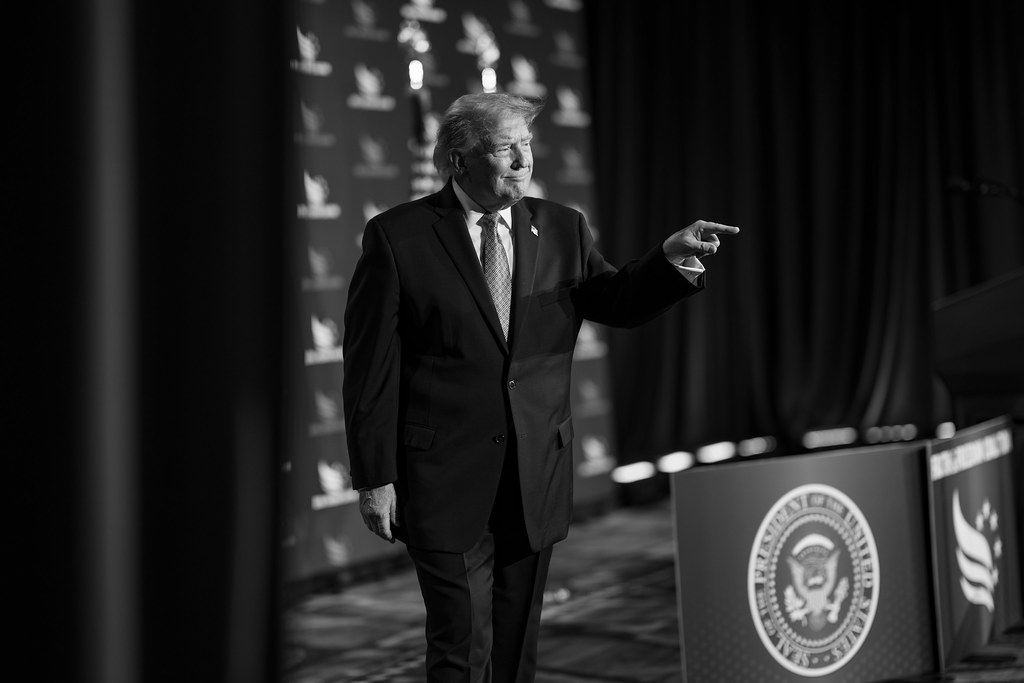

President Donald J. Trump spoke at WASHINGTON D.C.
© copyright Flickr with permission
The America First Policy Institute tied the herd improvement to policy changes affecting grazing, processing and enforcement. Changes to rules on ranching on public lands will increase the number of cattle grazing on more than 100 million acres in the West, and the Department of Justice has turned its attention to allegations of price collusion among meatpackers, according to washingtonexaminer. The USDA also acted before the New World screwworm could reach American herds from Mexico, according to washingtonexaminer.
The White House moved separately to address prices at the checkout counter. Trump signed a proclamation to temporarily increase the quantity of lean beef trimmings imported without an above-quota tariff, according to whitehouse.gov. The measure applies for 90 days beginning September 1, 2026, allows 100,000 tons (about 90.7 metric tons) per month and covers only lean beef trimmings combined with U.S. beef for ground beef, according to whitehouse.gov. USDA projects U.S. beef production in 2026 at over 11 million tons, and the White House said the temporary action would increase beef supply by roughly 10% over current projections, according to whitehouse.gov.
Beef carries outsized weight for households. The United States is the world’s largest consumer of beef by volume and ranks second globally in per capita consumption, according to whitehouse.gov. The White House said market disruptions pushed down herd size, citing restrictions on live animal imports from Mexico tied to the New World Screwworm, drought and reduced feed availability, according to whitehouse.gov. USDA forecasts U.S. beef output will fall by around 4% from 2025 levels, according to whitehouse.gov.
The administration has used federal authority on meat supply before. Trump signed an executive order in April 2020 compelling the nation’s meat packing plants to stay open as “critical infrastructure” under the Defense Production Act during COVID-19 outbreaks, according to abcnews. Tyson Foods had suspended operations at its largest pork plant, and Smithfield Foods also idled some facilities, according to abcnews.
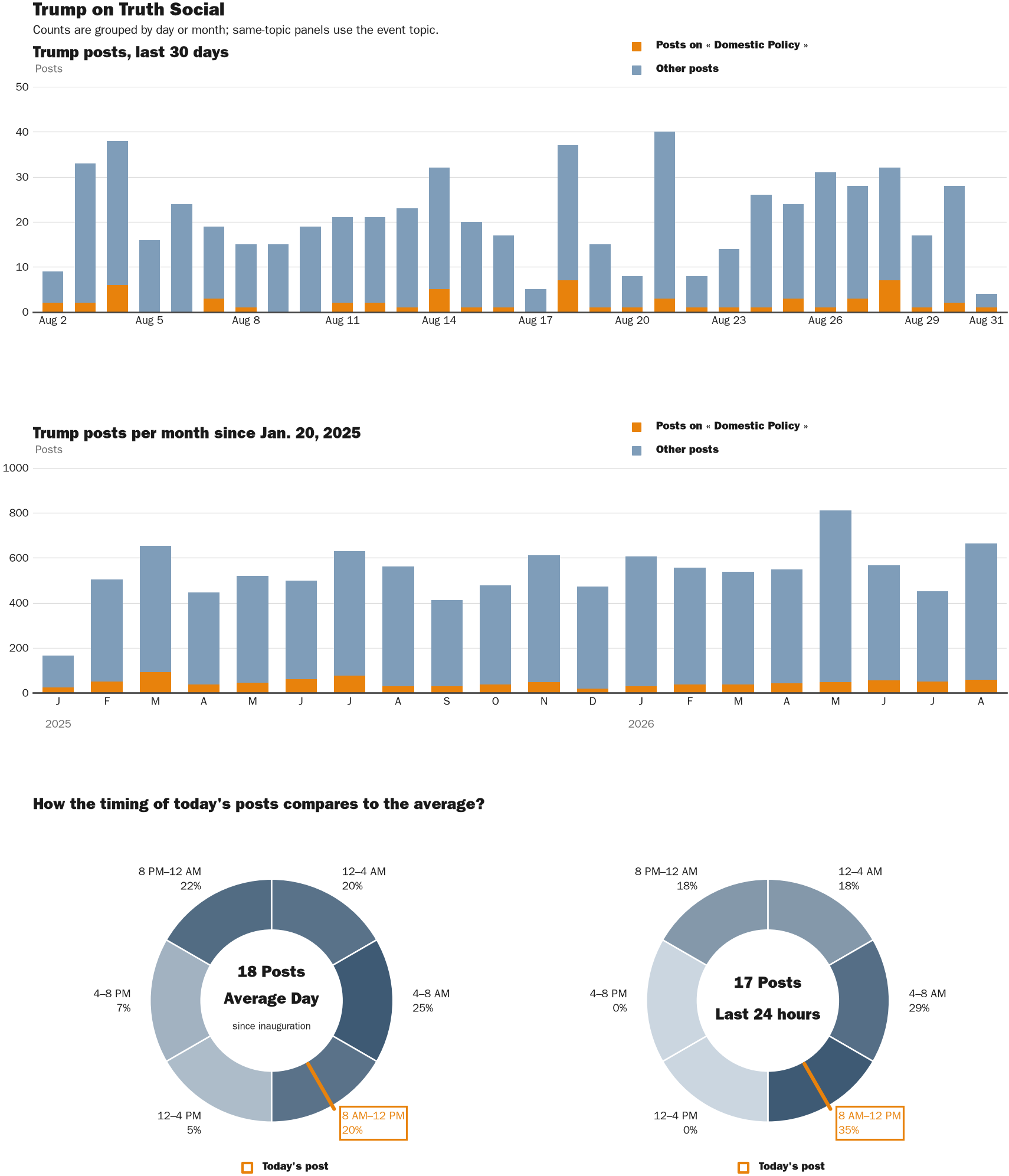
NewsFindr Chart Maker
Photo by Zenger real-time database of all Truth Social posts.
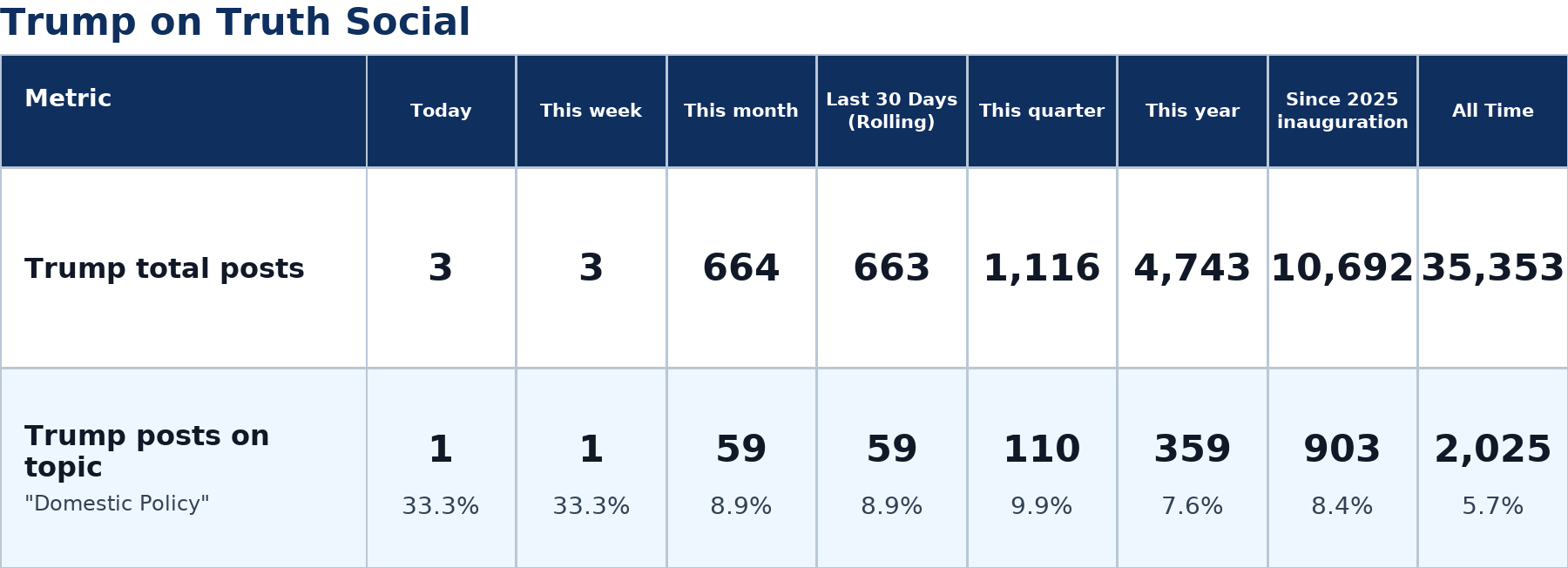
Zenger analysis
Photo by Zenger analysis
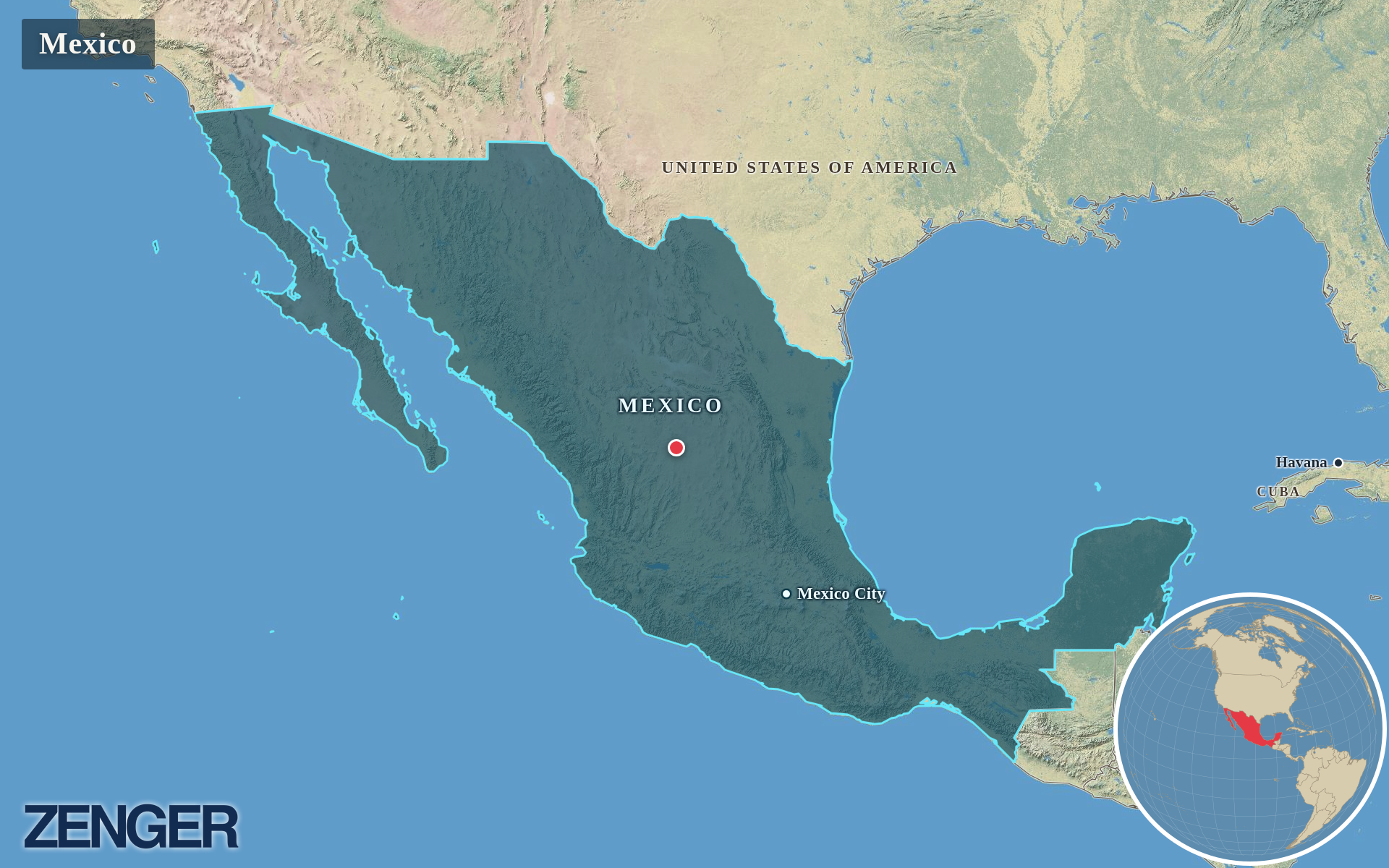
Protomaps / Natural Earth – Mexico
Photo by Protomaps / Natural Earth – Mexico