
Northrop Grumman Awarded $1.84 Billion Air Force Targeting Pod Contract
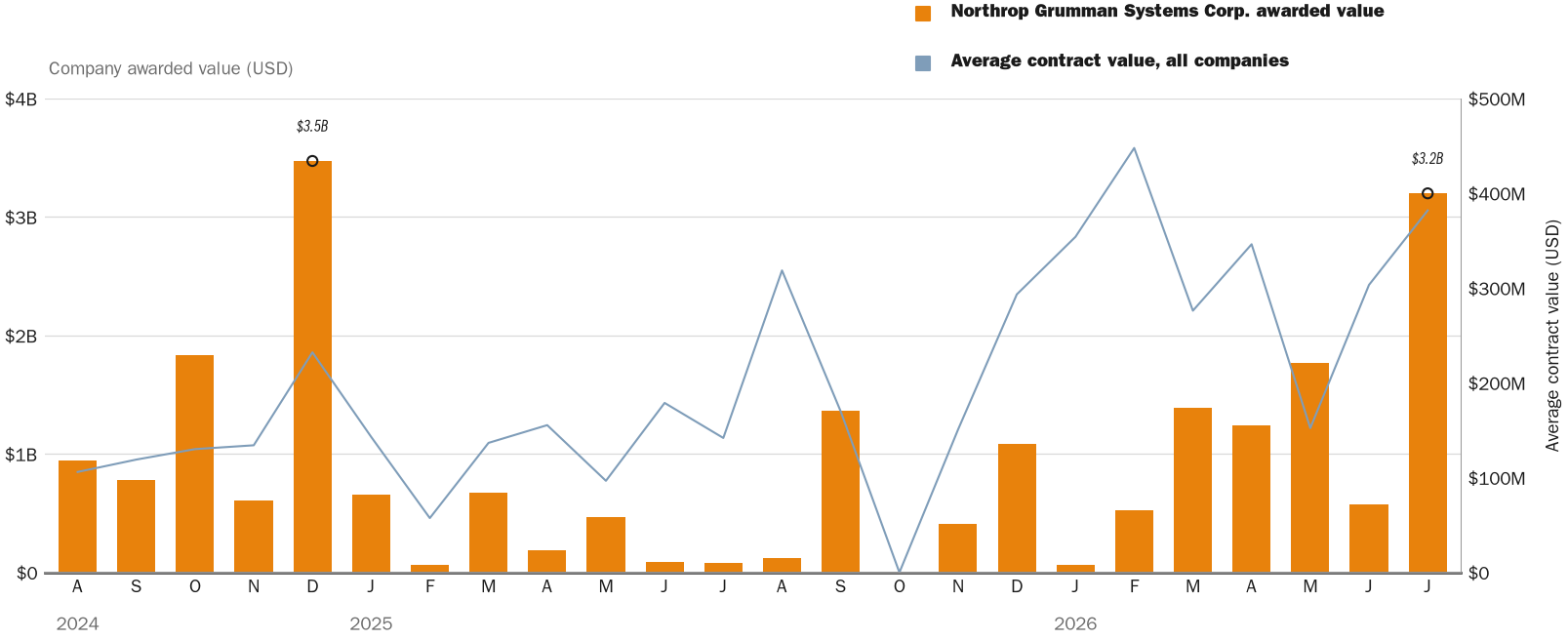
The Pentagon awarded Northrop Grumman a ceiling of $1.84 billion to sustain and produce its LITENING targeting pod through 2035, with work based in Rolling Meadows, Illinois.

ROLLING MEADOWS, ILLINOIS — Northrop Grumman Systems Corp., the defense contractor based in Rolling Meadows, Illinois, received a $1.84 billion Air Force contract to keep its LITENING targeting pod flying through 2035, as announced on war.gov.
The indefinite-delivery/indefinite-quantity, firm-fixed-price ceiling covers continued sustainment, production, and modifications for the Laser Infrared Targeting and Navigation Comprehensive Advanced Targeting Pod, known as LITENING CATP, according to war.gov. Work will run at Rolling Meadows through Dec. 31, 2035. The award was a sole source acquisition, so no rival competed for it.
The LITENING pod hangs beneath fighter and attack aircraft and gives crews high-resolution infrared and daylight imaging, laser targeting, and navigation cues. The system equips a range of U.S. and allied platforms, and sustainment work keeps aging pods mission-ready as hardware and software evolve. Northrop Grumman gains a decade of guaranteed work and revenue visibility, while the Air Force secures continuity of a proven sensor without the cost and risk of a new program. Fiscal 2026 operations and maintenance funds of $42.9 million cover the initial obligation, a fraction of the ceiling and a common structure for contracts that fund work in increments, according to war.gov.
The scale of the deal stands out even for a top-tier contractor. The $1.84 billion ceiling exceeds the annual general-fund budgets of many mid-sized American cities, and the ten-year horizon locks in a longer runway than most defense production runs. Defense spending of this size flows into regional payrolls, subcontractors, and local tax bases, sustaining skilled manufacturing and engineering jobs in Illinois. LITENING has been a repeat performer: the Air Force has extended sustainment and modification work across multiple cycles, and the pattern of sole-source follow-on awards reflects the entrenched position of a system already integrated into the fleet. The next decisions rest with the Precision Attack Contracting Branch at Robins Air Force Base, Georgia, which will issue individual delivery orders under the ceiling, according to war.gov. A date for the first order has not been announced.
Air Force targeting technology has advanced in leaps tied to combat need, as happened before. During Operation Desert Storm in 1991, coalition aircraft used early laser-guided and infrared targeting systems that transformed precision strike, hitting Iraqi armor and command sites with a fraction of the ordnance earlier wars demanded. Those systems proved the value of onboard targeting sensors and drove decades of investment in pods like LITENING. The result was a lasting shift toward precision-guided munitions that now dominate U.S. air campaigns and shape the contracts sustaining them.

NewsFindr Chart Maker
Photo by NewsFindr Chart Maker