
Trump Shares Image Post as Truth Social Rolls Out Paid Data Feed
Trump posts an image to Truth Social days after his media company launched Truth API, a subscription feed selling early access to his market-moving posts for up to $100,000 per month.

WASHINGTON D.C. — Donald Trump shared an image on his Truth Social account, days after his media company began selling early access to his posts for up to $100,000 per month.
The post, which contained a single image, landed as Trump Media & Technology Group C orp., the parent company he founded and largely owns, expanded a paid data service called Truth API. The service gives paying subscribers a real-time feed of the platform’s most market-moving posts, according to theguardian.com.
“This appears to be an outrageous abuse of the President’s office for his personal benefit that undermines everyday investors and the integrity of our markets, while enriching Wall Street and other wealthy insiders,” Democratic senators Adam Schiff and Elizabeth Warren wrote in a letter to Securities and Exchange Commission chair Paul Atkins, according to theguardian.com.
The image sits at the intersection of Trump’s dual role as sitting president and largest shareholder of a publicly traded firm. That combination turns each of his posts into a potential market signal that others now pay to receive first.
Here is the full post on truthsocial: “truthsocial post containing one image.” on August 6, 2026 at 8:30 PM ET.
This is Trump’s 17th message released today, and the last post was 1 minute ago, and it is not part of a thread. On average, Trump produces 18 posts per day since his inauguration on January 20, 2025. The move fits a broader pattern in Trump’s recent messaging, with 44 of his 469 posts over the last 30 days classified as image-only posts.
Trump Media rolled out the subscription-based service on a Saturday, giving trading firms and other paying customers faster access than ordinary users, according to theguardian.com. Interim CEO Kevin McGurn described the tool as a direct, licensed feed of the platform’s most influential posts in a release announcing the launch. The @realDonaldTrump account, by far the platform’s largest, had 13 million followers as of that day, according to theguardian.com.
The stakes fall unevenly. Trading firms able to pay the fee gain a head start on posts that have moved markets, while retail investors and casual users wait. Trump, as the company’s largest shareholder, could personally benefit from any revenue the feed generates, a conflict critics frame as market manipulation and insider trading, according to theguardian.com.
Trump has used the platform to reveal major policy moves before announcing them elsewhere, including messages on tariffs and the Iran conflict. Global stock markets tumbled last year as he published more than 100 posts in a single day, amid concern his economic agenda could trigger a downturn, according to theguardian.com. Trump Media’s stock has fallen more than 70% since he took office, wiping out roughly $6 billion in shareholder value, according to theguardian.com.
For an average reader with a retirement account or brokerage balance, the feed matters because Trump’s posts can swing prices of stocks, bonds, and commodities within minutes. Paying subscribers positioned to trade on that information first could gain an edge over ordinary savers who learn the news later.
This has happened before in a narrow sense. Social platforms including X have long sold premium data feeds to traders and analysts, according to theguardian.com. What sets this case apart is that the platform’s most influential user also runs the government and owns the company selling the feed.
The next move rests with the Securities and Exchange Commission, which received the senators’ request to investigate whether the service breaks the law, according to theguardian.com. A date for any SEC decision has not been announced.
Mixing public office with private media ventures has drawn scrutiny before. In 1919, President Woodrow Wilson faced criticism over close ties between his administration and business interests, and later reforms tightened conflict-of-interest rules for federal officials, according to britannica.com. Congress passed the first modern financial disclosure requirements for presidents in the Ethics in Government Act of 1978, after the Watergate scandal forced Richard Nixon from office in 1974. Those disclosure rules remain the primary tool by which the public tracks a president’s financial interests today.
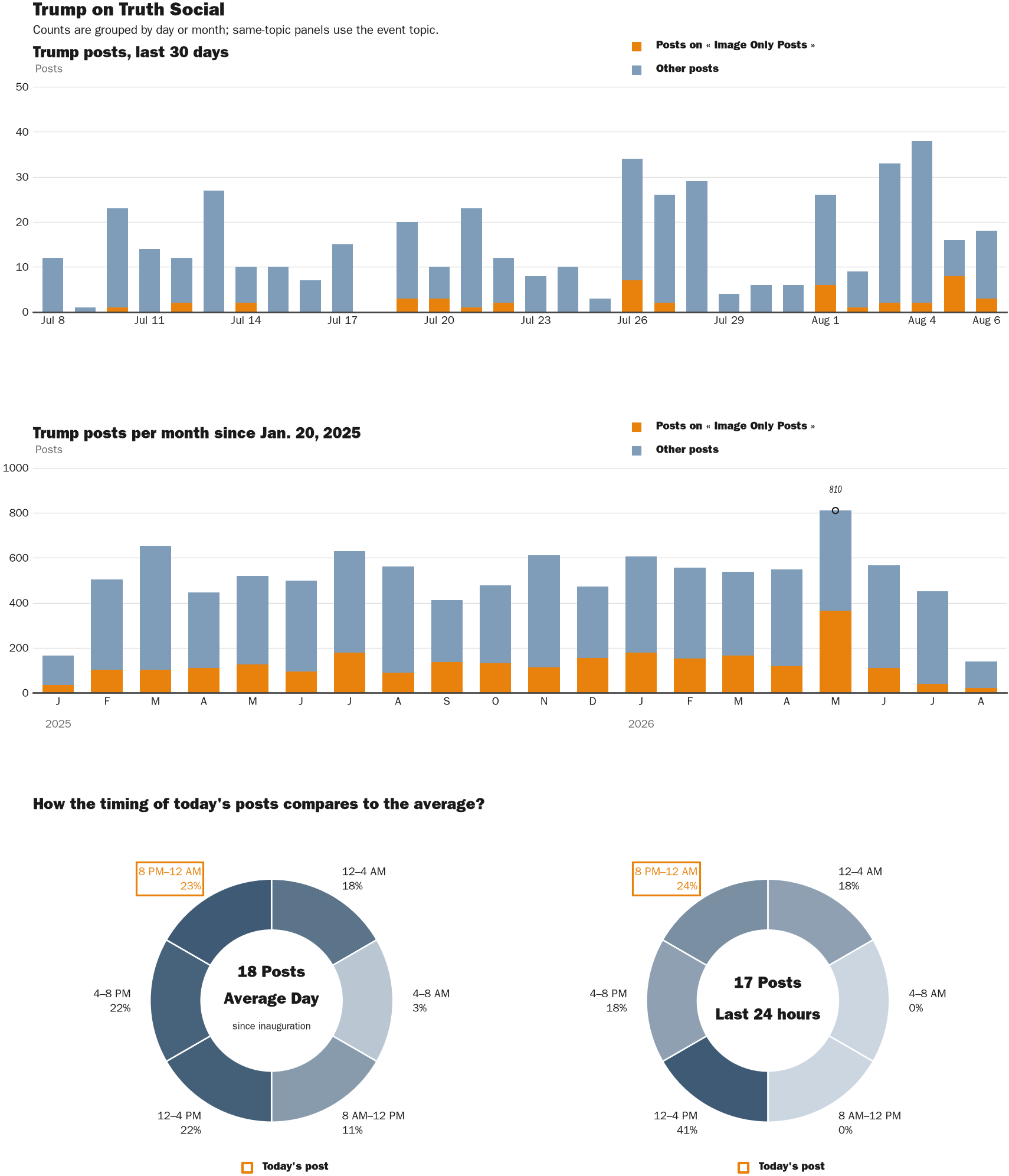

NewsFindr Chart Maker
Photo by Zenger real-time database of all Truth Social posts.
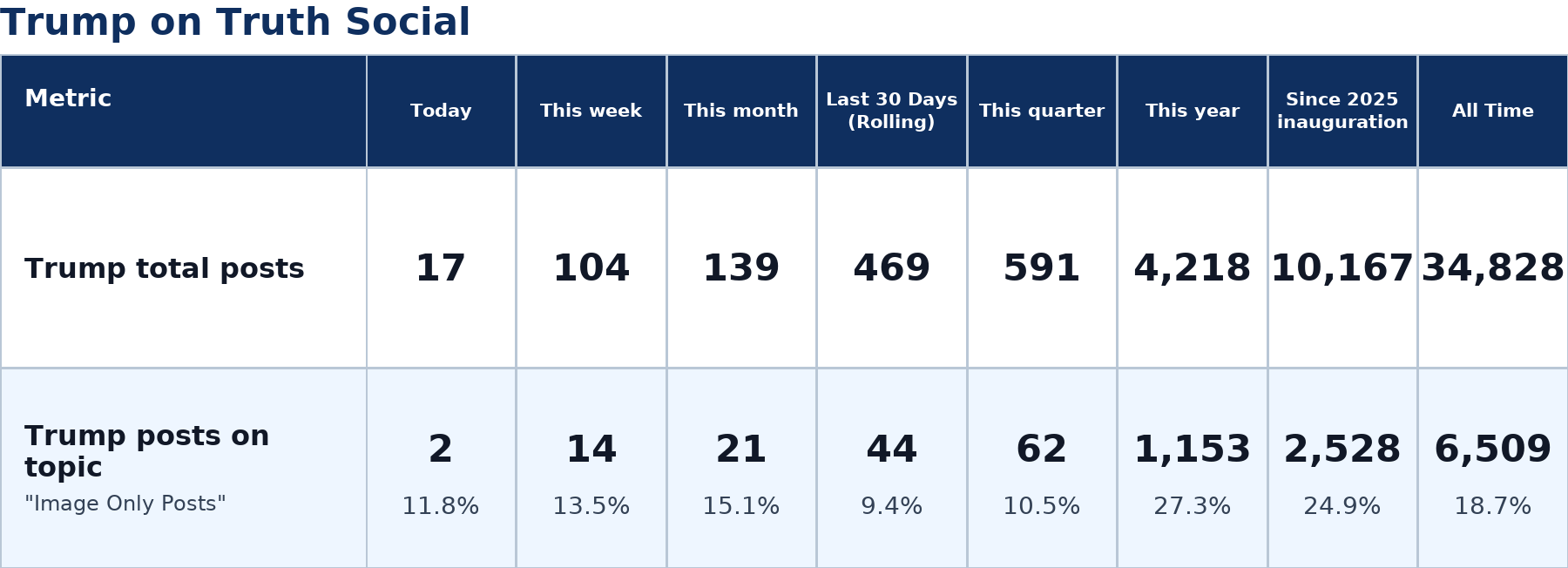
Zenger analysis
Photo by Zenger analysis

OpenTopoMap / Natural Earth – Iran
Photo by OpenTopoMap / Natural Earth – Iran