
Trump links to White House election integrity page detailing voter data claims
Trump the page cites intelligence assessments, a China voter-data breach and roughly 278,000 noncitizens said to be on state voter rolls in federal elections.

WASHINGTON D.C. — Donald Trump directed followers to a White House page on election integrity in a Truth Social post on July 16, 2026 at 9:02 PM ET.
Here is the full post on truthsocial: “https://www.whitehouse.gov/election-integrity”
The page frames election integrity as fundamental to trust in American democracy, according to whitehouse.gov. It says concerns after the 2020 presidential election prompted examinations of voting processes, data security and registration practices across multiple states. It offers downloadable documents grouped around four areas: electronic voting vulnerabilities, China’s acquisition of voter data, a Michigan voter-registration investigation and noncitizens on state voter rolls.
The page states that the government released previously classified U.S. Intelligence Community assessments spanning January 2020 to June 2026, according to whitehouse.gov. One assessment cited on the page says U.S. adversaries, including Russia, China, Iran and North Korea, have the capability to compromise U.S. election infrastructure. The page also says the CIA obtained reporting of a plot by the Maduro regime in Venezuela to digitally rig its own 2020 elections.
The People’s Republic of China carried out what the page calls the largest compromise of election data in history, resulting in the acquisition of 220 million U.S. voter files, according to whitehouse.gov. The page says spy agencies began learning in 2020 that voter data in 18 states had been bought, stolen or hacked. It says a Department of Homeland Security review identified approximately 278,000 noncitizens registered to vote in federal elections.
The stakes fall on election administrators, both major parties and voters. Supporters of stricter rules argue the disclosures justify voter identification and proof-of-citizenship requirements. Critics of such measures warn that new barriers can reduce turnout among eligible voters. The competing readings shape a debate over who casts ballots and how officials count them.
Election administration in the United States is decentralized, with states and counties running their own systems under federal minimum standards. That structure means any national change flows through state legislatures and local officials rather than a single agency. For the average reader, the practical effect could arrive as new registration paperwork, identification checks at the polls, or new mail-ballot rules in their home state.
Has this happened before? This has happened before. Disputes over election security and voter rolls followed the 2000 Florida recount, which the Supreme Court ended in Bush v. Gore, and again after the 2020 election, when courts dismissed dozens of lawsuits challenging results. The current page revisits many of those themes with newly released documents.
The next moves rest with the FBI and the Department of Justice, which the page directs to investigate the Michigan matter and pursue prosecution where crimes occurred. A specific date for any charging decision or further document release has not been announced.
In the last 30 days, 18 of 518 Trump posts fell under the topic “Reposts & External Links.”
Presidents leaning on the machinery of government to press election claims isn’t the first time an occupant of the White House has done so. Rutherford B. Hayes reached the presidency in 1877 only after a special Electoral Commission awarded him 20 disputed electoral votes by an 8-7 margin, settling the 1876 contest against Samuel J. Tilden, according to britannica.com. The resolution came through a political bargain that ended Reconstruction, and Hayes served a single term, declining to seek reelection.
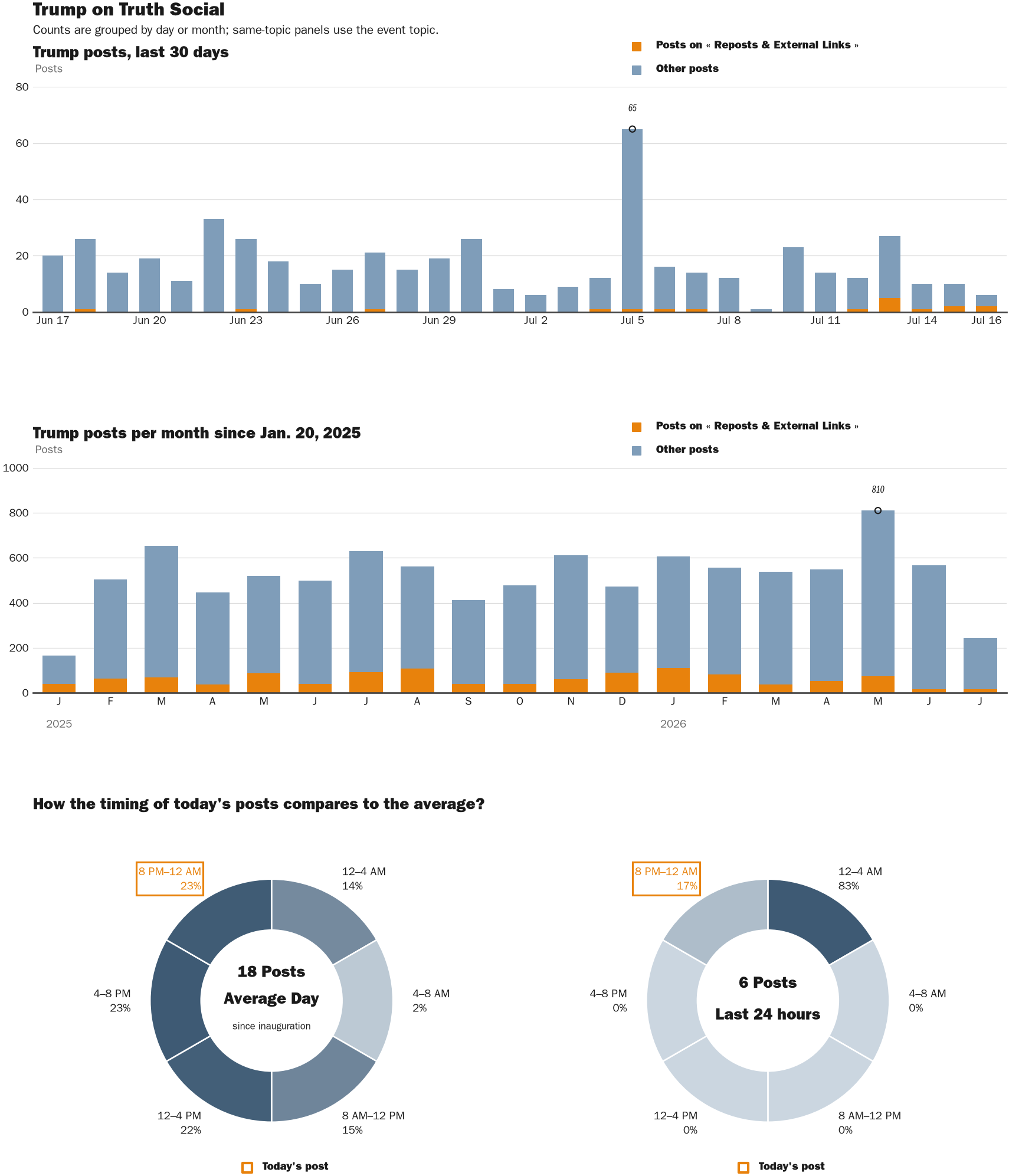

NewsFindr Chart Maker
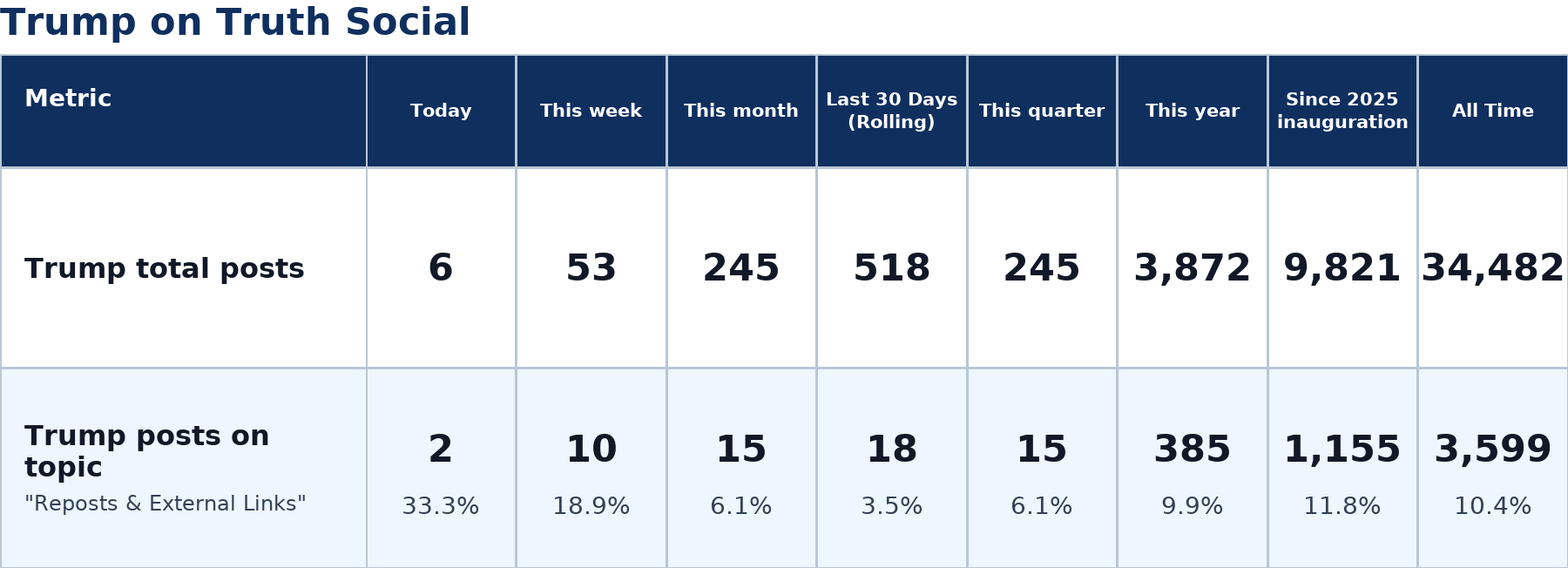
Zenger analysis
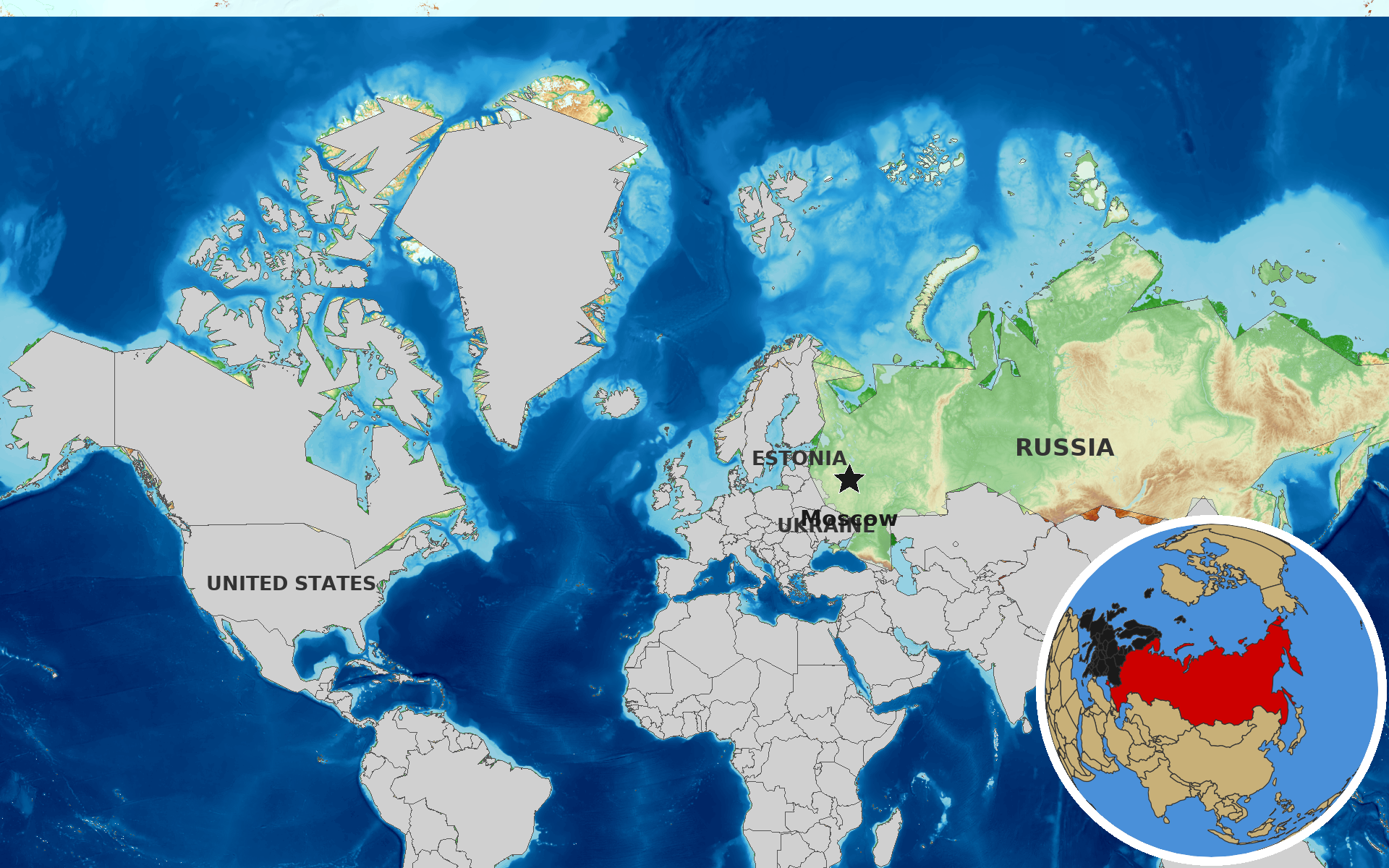
OpenTopoMap / Natural Earth – Russia
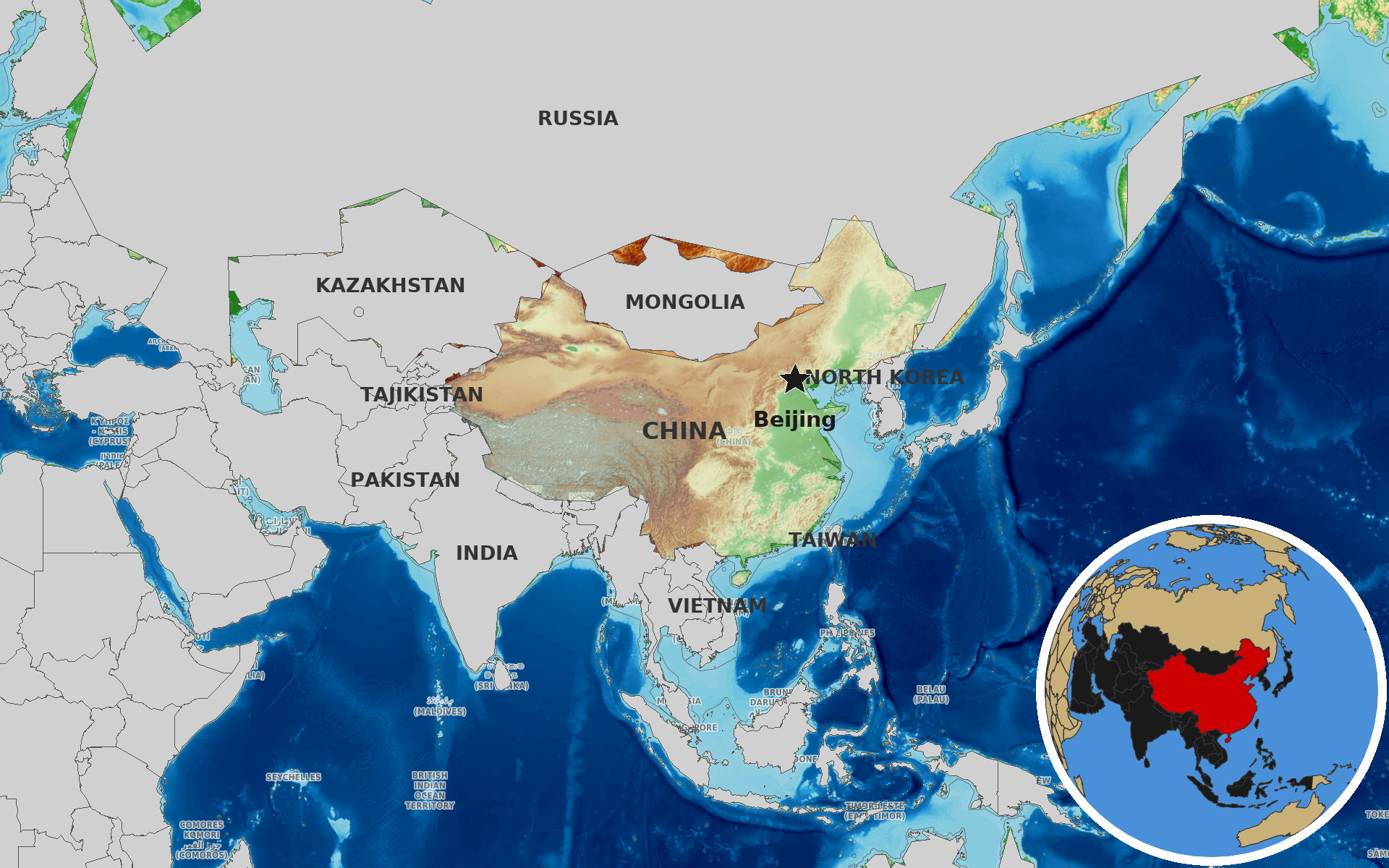
OpenTopoMap / Natural Earth – China