Beneath the Surface lies the Global Groundwater Crisis that Threatens Your Next Meal
Falling Water Tables Are Reshaping a Global Hotspot

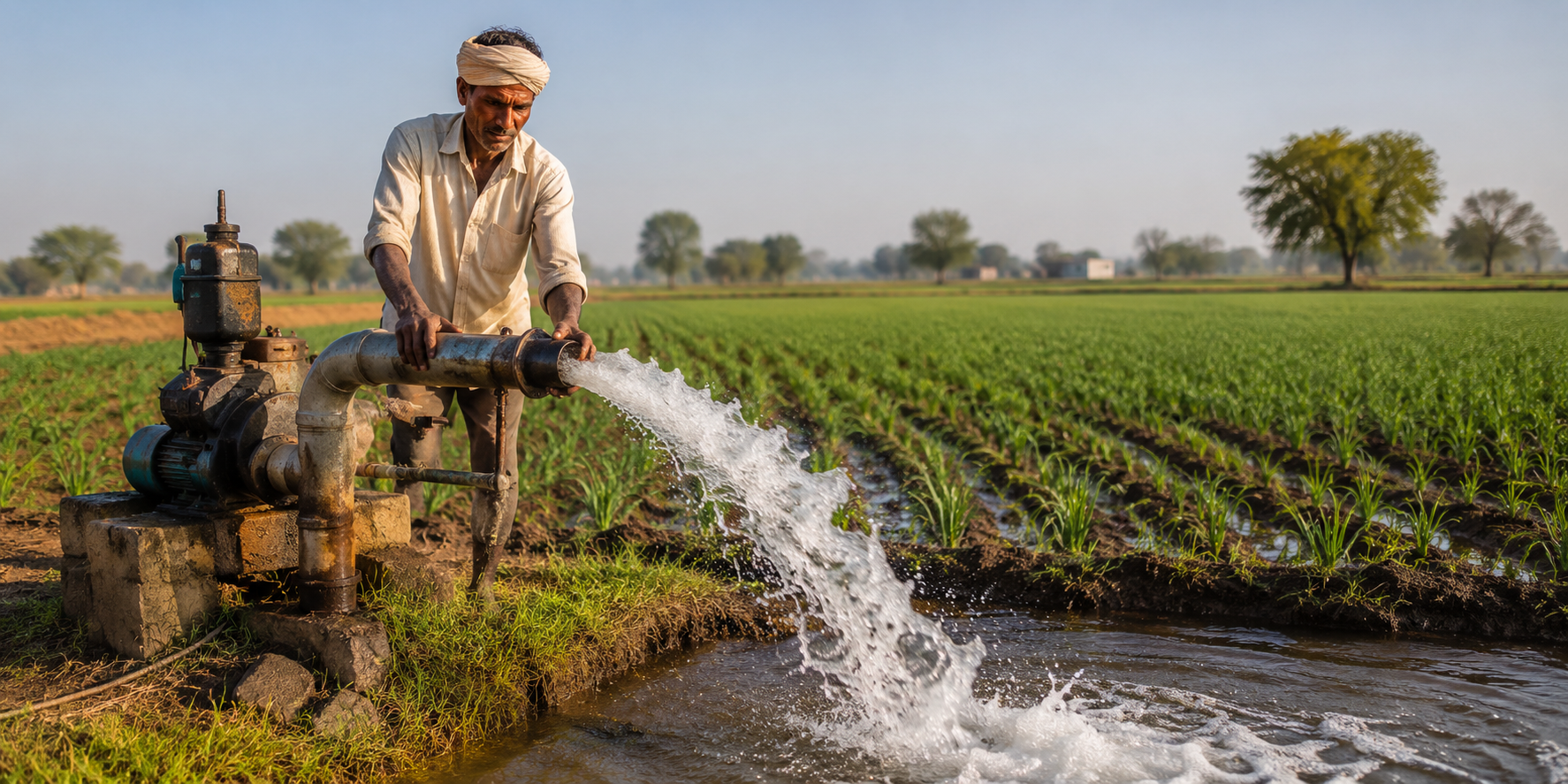
PUNJAB NAGAR, INDIA — The country is increasingly suffering from a growing problem involving the depletion of groundwater, as the natural rate at which the water recharges itself cannot keep pace with its consumption. Specialists note that an increase in demand, changes in the climate, and the unsustainable use of water resources are speeding up the process. Groundwater depletion is also becoming a problem in Pakistan, Iran, China, and the U.S.
In the United States, there are aquifers that are important in the production of foods and supporting communities, and these aquifers are also facing threats because of overutilization and drought. For instance, the Ogallala Aquifer, which supports agriculture in eight states in the US, has been experiencing low water level for decades because of heavy irrigation. As climate change brings hotter temperatures and more frequent droughts, the challenges facing the United States mirror those seen in India and other water-stressed regions, underscoring the global nature of the groundwater crisis.
As the water table continues to go down in India, the International Water Management Institute (IWMI) is ringing alarm bells that if no immediate measures are taken, there could be severe water shortages in the future. The adverse impact of groundwater depletion can already be seen on many Indians as some farmers cannot irrigate their farmland due to insufficient supply while many families have to use well water for drinking. Scientists from the water institute in India have warned that this water depletion problem caused by over-pumping, climatic changes, and increasing demand is not unique to India alone. Other nations such as Pakistan, Iran, China, and the United States are experiencing similar problems.
“Groundwater is largely invisible, so people often do not realize there is a problem until wells begin to dry up or water becomes expensive to access. What we are seeing today is that demand is exceeding clean natural recharge rates in many regions, creating." Said Dr. Mark Smith, Director General, International Water Management Institute.”
Governments have been promoting agricultural development, urbanization, and industrialization in order to cater to the demands of the increasing population for many years. Farmers use the underground water source to irrigate their crops and earn a living, while cities use the underground water source to supply drinking water to millions of people. But ironically, it is this source of water that is being depleted quickly.
This conflict is primarily centered around the International Water Management Institute (IWMI), where researchers have cautioned that overexploitation can lead to a situation where people experience water scarcity in the future. For farmers, a reduction in water sources leads to digging deeper into the ground for water, higher pumping expenses, and decreased agricultural productivity. For individuals, a lack of adequate clean water is a possibility. For governments, there is increasing pressure to ensure economic development and food security, even at the cost of conservation.
But what’s at risk here goes way beyond the confines of India. With the depletion of the country’s underground water resources, the situation could have serious consequences not only in Pakistan, Iran, China, and the United States but also anywhere else where there is an increasing scarcity of underground water sources. The problem is becoming ever more real for those millions who rely daily on underground water resources.
Groundwater depletion has been occurring over the past few decades due to the increased usage of underground aquifers by various nations to fulfill their agricultural, industrial, and increasing population needs. In India, which happens to be the largest user of groundwater in the world, extraction has always exceeded the rate of replenishment in many places, leading to declining water tables. The same is true of Pakistan, China, Iran, and even some areas in the United States. With the onset of climate change and increasing droughts, scientists at the International Water Management Institute caution that the pressure on groundwater reserves is mounting.
Moreover, the depletion of underground water bodies poses economic dangers for companies and industries that rely heavily on water. With depleting aquifers, agricultural producers will have higher costs of irrigation and possibly reduced crop production, which can increase the cost of food and impact the international market chain. The businesses working in water-based industries, such as agriculture, manufacturing, and energy production, can experience higher costs of operations and stringent water legislation. For business people and decision makers, the increasing scarcity of groundwater demonstrates the need for sustainable resource management that can guarantee economic development and security of markets. The experts from the International Water Management Institute point out that not addressing the issue can cause serious damage to the economies of the countries and the international food industry.
While policymakers and water experts are trying to find ways to address the problem, focus is shifting toward policies that can help in lowering the extraction of groundwater, improving the irrigation systems and promoting more effective water conservation measures. According to scientists from the International Water Management Institute, the next few years will be decisive in establishing whether or not it is possible for countries to reverse the situation and save their aquifers from becoming irreversibly depleted. As the water needs of people are predicted to grow and climatic pressures are mounting, there is more pressure on policymakers to take action.