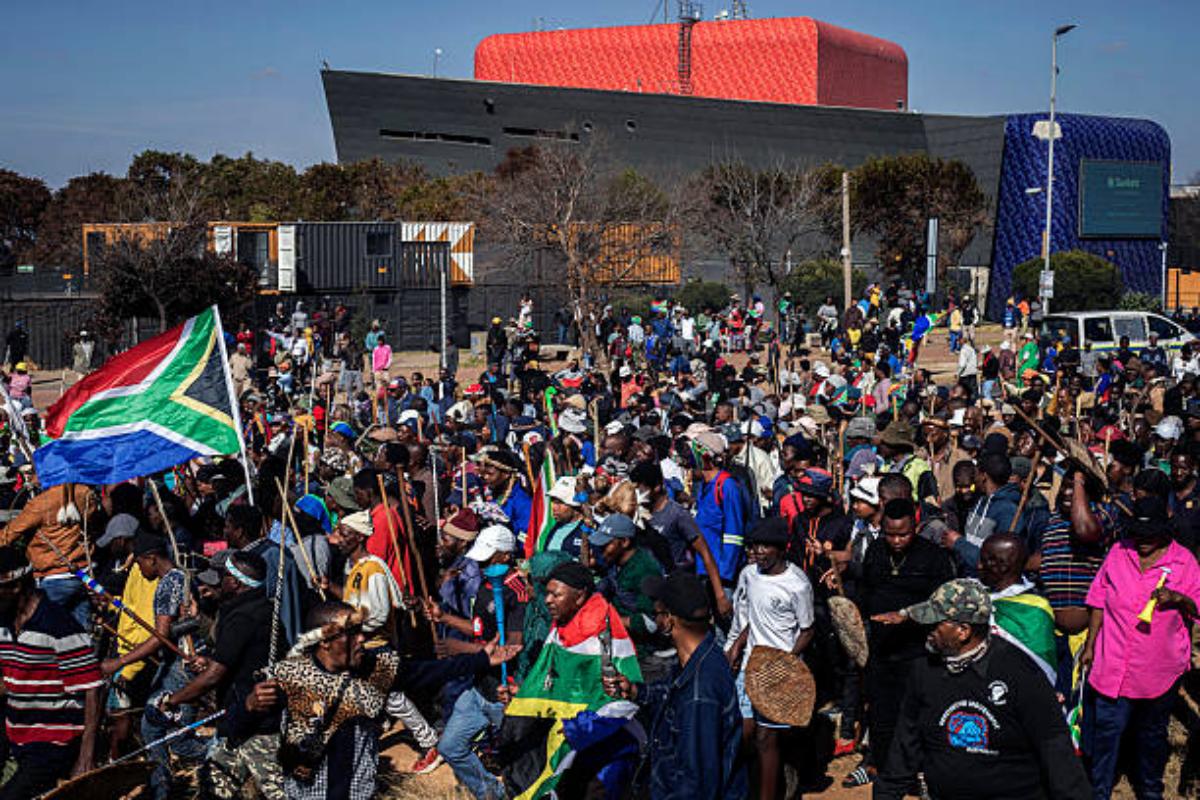
Police deployed as anti-migrant marches defy Ramaphosa’s warnings
Thousands rally across South African cities as president warns ultimatums cannot override constitutional rights.

JOHANNESBURG — President Cyril Ramaphosa deployed police across South African cities on Tuesday as anti-immigrant marches defied his constitutional warnings.
Thousands of demonstrators gathered in Durban, Johannesburg and parts of the North West and Free State provinces to rally against undocumented migration, with some protest groups setting June 30 as an unofficial deadline for all illegal migrants to leave the country. The most prominent groups include March and March, Operation Dudula and Progressive Forces.
“Today is the last day,” said Nkele Thebe, a protester in Johannesburg. “After today, we’ll be dealing with our president and our nation. We don’t want an outsider to run our country.”
The protests cap three months of escalating anti-immigrant demonstrations across South Africa. Groups blame undocumented foreigners for high unemployment, crime and pressure on public services. The unemployment rate stands at nearly 33%, with 350,000 job losses recorded in the first quarter of this year, according to Statistics South Africa.
More than 25,000 foreign nationals have been repatriated in recent weeks, the National Joint Operation and Intelligence Structure said on Monday, with many others still awaiting departure. Several African governments, including Nigeria, Malawi, Ghana, Zimbabwe and Mozambique, have organised voluntary repatriation flights and buses.
“South Africa is a constitutional republic governed by the rule of law,” Ramaphosa said in his weekly newsletter on Monday. “The exercise of rights by any citizen in a constitutional democracy cannot be determined by intimidation, threats or ultimatums.”
The president met Monday night with leaders of some protest groups and asked them to conduct peaceful demonstrations. He has repeatedly warned that protesters involved in criminal conduct would face prosecution, while also acknowledging widespread public concern over illegal immigration and the need for reforms.
“Some foreign nationals who live in South Africa are here lawfully,” Ramaphosa said. “They work, study, raise families, invest in our economy and contribute positively to our society. They too are entitled to the protection of our laws and our Constitution.”
Security forces, including K9 units and the Air Wing, have been deployed across Gauteng, KwaZulu-Natal and Eastern Cape provinces. Authorities have warned organisers to ensure no violence, though previous marches have resulted in attacks on migrants and vandalism of foreign-owned businesses.
“No. The government does not recognize ultimatums from vigilante groups. Enforcement of migration laws rests with the state, not with self-appointed organizations," said Carli Van Wyk Spokesperson for the Minister of Home Affairs, South Africa.”
Van Wyk said the government has deployed specialised units and strengthened border management to address the escalating crisis. She said the Department of Home Affairs is establishing dedicated immigration courts to expedite deportation proceedings.
“Specialized units, including K9 teams and the air wing, have been deployed. The government is strengthening border management and increasing enforcement, including dedicated immigration courts to speed deportation," Said Van Wyk.”
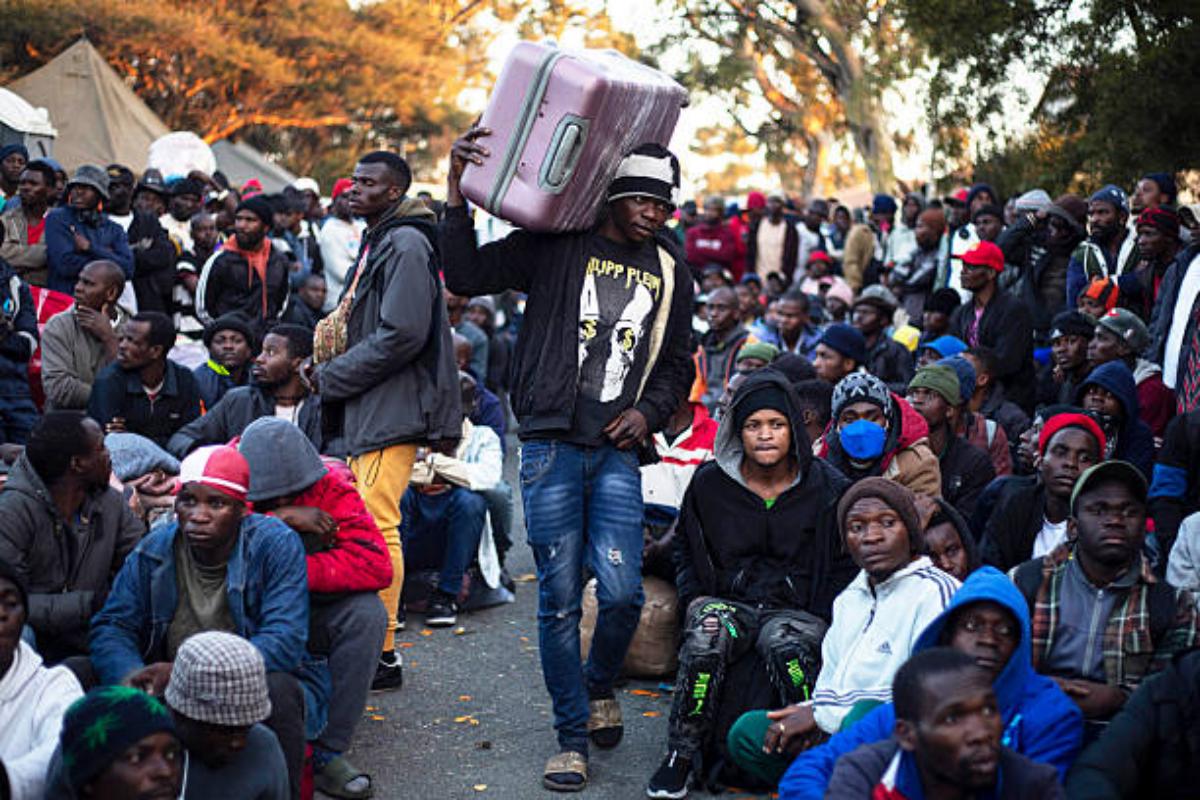

Malawian nationals wait to board buses outside the Malawian Consulate General in Johannesburg,South Africa on June 29, 2026 at 11:16 AM. Photo: Per-Anders Pettersson/Getty Images
Three people — one Malawian and two Mozambican nationals — were killed in the lead-up to the deadline during recent protests, according to local police reports. Migrants have reported daily harassment, intimidation and forced business closures.
“We don’t know what will happen to us on that day. We are scared we might be killed,” Ismail Phiri, a casual worker at a Johannesburg hotel, said. “We are being hunted like wild animals. There is no humanity anymore.”
“We are staring down the face of a looming massacre,” said July Eccles, spokesperson for the Siyafuna Sonke Action campaign.
Operation Dudula National Executive Committee member Siphiwe Shatangu called for mass deportations and a state of emergency over immigration. “Government must stop playing with South Africans,” said Shatangu.
Ramaphosa said the government is strengthening border management and increasing enforcement against undocumented migration, including dedicated immigration courts to speed deportations. But he insisted enforcement remains a state function. “The responsibility for enforcing our laws rests with the state,” said Ramaphosa.
As dusk fell over Johannesburg, foreign-owned shops remained shuttered and bus stations that once overflowed with fleeing migrants fell quiet. The marches proceeded largely without the widespread violence many had feared — but for thousands who have already left, the decision was final. “It’s better to leave the country alive instead of leaving in a coffin,” said Francis, a Malawian national.