Iran blockade traps thousands of sailors in Strait of Hormuz
Tens of thousands of seafarers face mental exhaustion, soaring costs, and blocked exits as Iran's blockade drags on

MUSCAT, OMAN — Thousands of sailors remain trapped in the Strait of Hormuz as Iran’s blockade enters its fourth month.
Captain Hassan Khan, a Pakistani sailor, watches the calm sea from his cargo ship. The tranquility is deceptive.
“It is really strange that everything looks normal outside, but people inside are not calm," Said Khan.”
Missiles fly overhead and mines lurk beneath the waves, turning the once-busy waterway into a prison for an estimated twenty thousand seafarers.The International Maritime Organisation (IMO) puts the number of stranded vessels hundreds. The psychological strain is severe.
“We try to follow our normal routine, but everyone is exhausted. People jump at the smallest sound, even in their sleep. The stress stays in our minds all the time," said khan.”
Depleting supplies compound the crisis. Chief Engineer Rashedul Hasan said his vessel recently purchased water nearly ten times the pre-war cost. Some suppliers appear to be profiteering from the desperation. Food and fuel for air conditioning units are also running short.
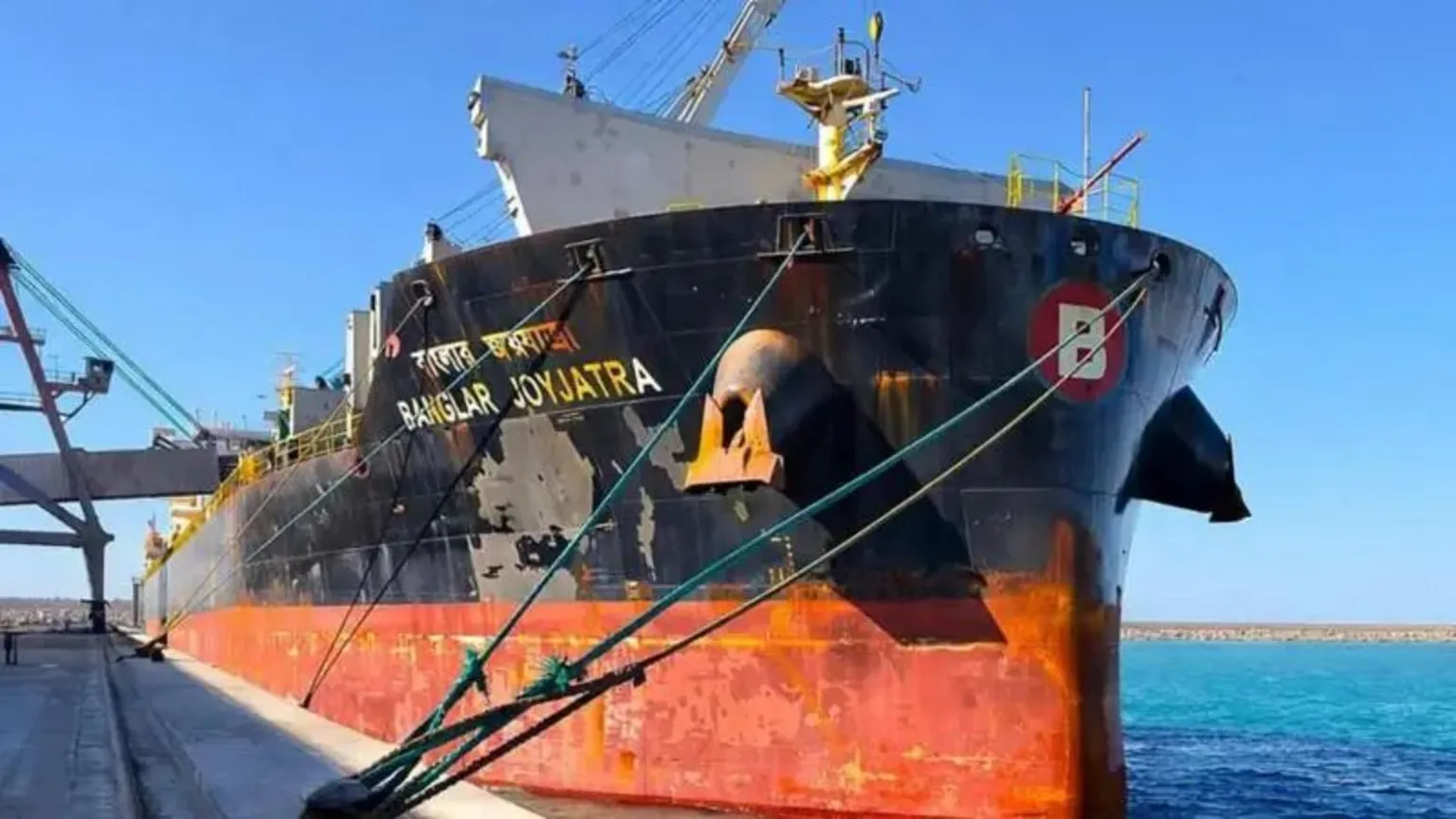
“Water costs nearly 10 times what we paid before. Vegetables and lentils are hard to find. Summer is coming. It's already over 30 degrees. We just want to go home," said Rashedul Hasan chief engineer of Banglar Joyjatra.”
Iran shut the Strait of Hormuz shortly after the war began, granting passage only with explicit permission from the Islamic Revolutionary Guard Corps (IRGC).
Captain Shafiqul Islam [second from right]and chief engineer Rashedul Hasan [sitting to the left of the captain] record morale -boosting video aboard the stranded Banglar Joyjatra in the Persian Gulf, June 3, 2026. Photo: Reuters![Captain Shafiqul Islam [second from right]and chief engineer Rashedul Hasan [sitting to the left of the captain] record morale -boosting video aboard the stranded Banglar Joyjatra in the Persian Gulf, June 3, 2026. Photo: Reuters](https://staging.zenger.news/wp-content/uploads/2026/06/11f0ef0c-7c7b-43d5-9a7f-5175f800246d_71dba6b0-5e6e-11f1-b682-cf91850925ea.png_1_.webp)

“It is as if we are trapped in a pond. There’s only one way out, and that’s Hormuz,” said Captain Md Shafiqul Islam of the Bangladesh-flagged vessel Banglar Joyjatra.
Islam has twice tried to leave. The first attempt, following an April ceasefire, ended when Iranian forces warned his ship and others not to proceed. Days later, Iran declared the strait “completely open” — then reversed course after the U.S. kept its blockade in place. Islam’s ship had come within miles of the passage before he was forced to turn back.
The conflict has claimed more than a dozen seafarers’ lives, with many merchant vessels damaged by aerial attacks. Three Indian nationals were killed in a U.S. strike on an Iranian tanker. Others have been wounded or detained.
Shipping intelligence firm Kpler reports hundreds of vessels remain trapped in the Persian Gulf. Full recovery of normal traffic is expected to take weeks or months. A preliminary U.S.-Iran peace agreement announced in mid-June offers a fragile hope.
President Donald Trump told ships to “start your engines,” but shipping companies remain deeply wary. The U.S. naval blockade technically remains in effect until the deal is signed in Switzerland. Naval mines also pose an ongoing obstacle, and Iran has signaled it may still charge fees for transit services.
Diplomacy has failed most vessels. Some owners secured exits by paying millions in fees to Tehran, but Bangladesh agreed to the toll only to reverse course after the U.S. threatened sanctions. The Banglar Joyjatra remains stranded with dozens of Bangladeshi sailors, its daily food allowance increased to maintain morale.
“We want to hear from the Iranians that they will not attack us,” said Dr. SV Achan, chairman of Safesea Group, whose ships were attacked during the conflict.
Iranian state television said Thursday the passage of ships through the Strait of Hormuz still requires coordination with Tehran. According to the broadcaster, the IRGC continues to impose the condition of coordination with its naval forces on ships seeking to transit the waterway.
The Iranian Foreign Ministry spokesman Esmaeil Baghaei said Iran does not seek to collect tolls from ships crossing the strait but will charge them for services. Tehran has also said non-hostile vessels can transit if they coordinate with Iranian authorities.
For Khan and thousands of other sailors, the wait continues. Air temperatures have already exceeded thirty degrees Celsius. Summer is just beginning.