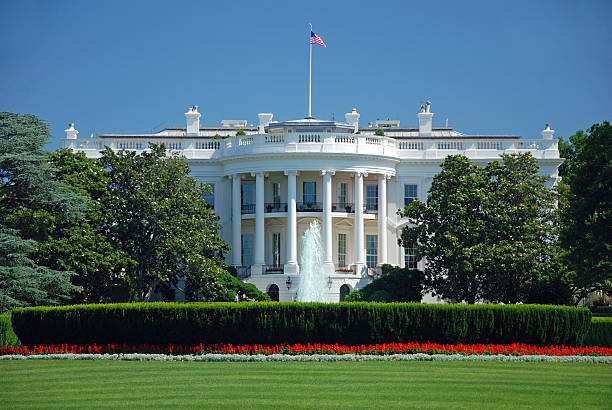
Trump celebrates court ruling keeping defamation suit against The New York Times in Florida
Trump a federal judge in the Middle District of Florida denied The New York Times' bid to move Trump's defamation lawsuit to another jurisdiction, setting the stage for oral arguments.

WHITE HOUSE — Donald Trump declared victory after a federal judge denied The New York Times’ effort to transfer his defamation lawsuit out of Florida, in a Truth Social post on July 7, 2026 at 9:48 PM EST.
Here is the full post on [truthsocial]: “BREAKING NEWS: A very fair and highly respected Judge in the Middle District of Florida just denied The Failing New York Times’ desperate attempt, together with other defendants we are suing, to move our powerhouse Defamation Lawsuit against them to another jurisdiction. We will now have an oral argument in Florida, where our lawyers will present, in great detail, all the ways in which The Times publishes, promotes, and deals in Fake News. Thank you for your attention to this matter! Trump”
The ruling means Trump’s legal team will present oral arguments before a judge in Florida rather than in a venue potentially more favorable to The New York Times. Trump characterized the newspaper’s motion as a “desperate attempt” and referred to the publication by his long-standing epithet, “The Failing New York Times.” The case names additional defendants alongside the newspaper, though Trump did not identify them in his post (see truthsocial).
Defamation lawsuits filed by public figures face a high legal bar in the United States. Under the landmark 1964 Supreme Court decision in New York Times Co. v. Sullivan, public officials must prove that a publisher acted with “actual malice,” meaning the publisher knew a statement was false or acted with reckless disregard for the truth. Jurisdiction can play a significant role in such cases, as different federal districts may have varying procedural tendencies and jury pools.
Trump has pursued multiple defamation claims against media organizations over the years. The decision to keep the case in the Middle District of Florida — which covers a broad swath of the state including Orlando, Tampa, and Jacksonville — could give Trump’s attorneys a procedural advantage, as Florida courts have generally been viewed as favorable terrain for the former and current president.
The ruling does not address the merits of Trump’s claims. Oral arguments will give both sides the opportunity to present their positions on whether the case should proceed and on what grounds. The New York Times has not yet issued a public response to the ruling as of the time of Trump’s post.
The post is one of 20 Truth Social messages Trump has devoted to legal topics in the last 30 days, out of 560 total posts during that period. The frequency underscores the degree to which legal battles remain a central feature of Trump’s public messaging from the White House.
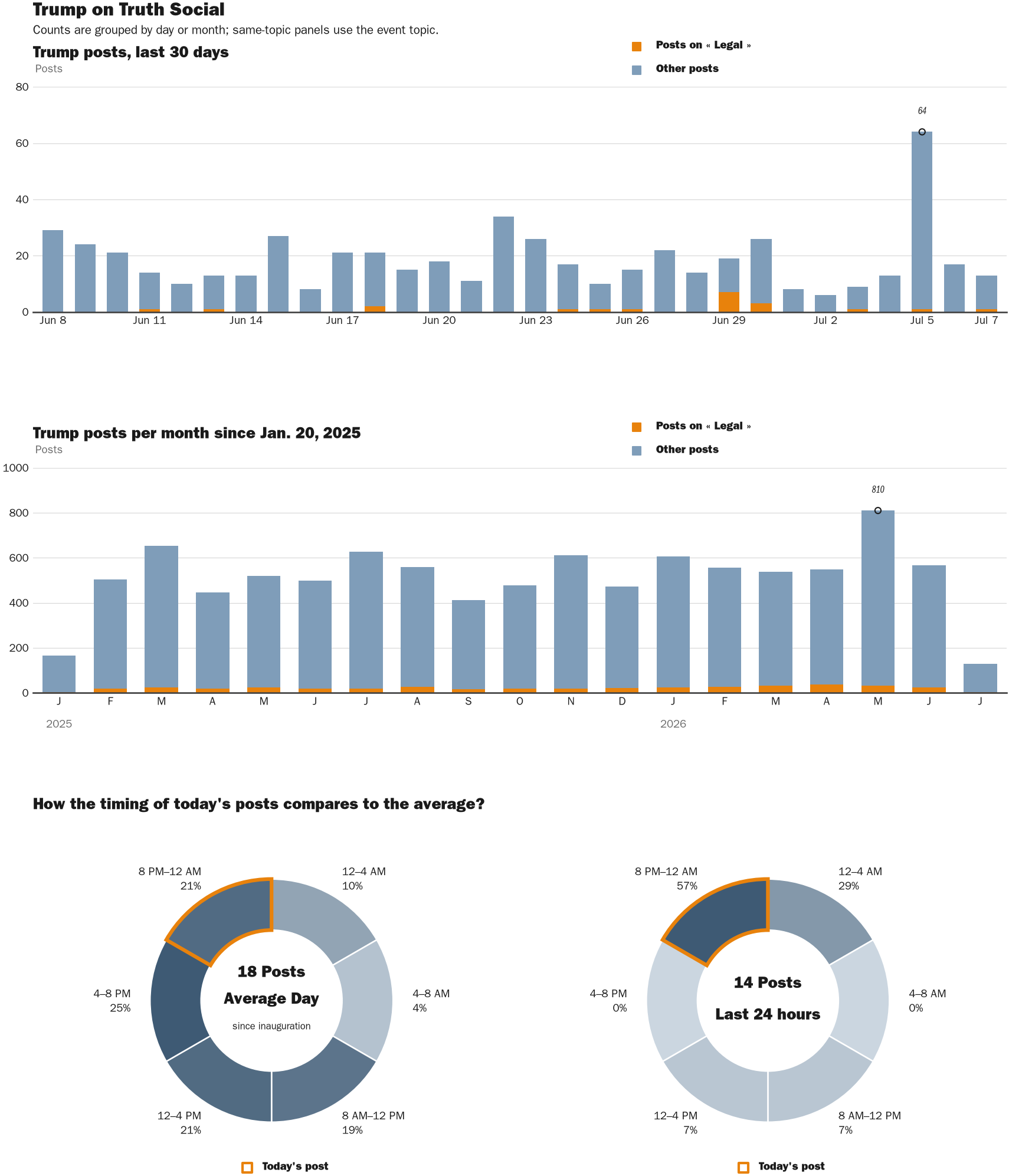

Source: Zenger real-time database of all Truth Social posts.
Note: Chart generated on July 7, 2026 at 9:54 PM EST
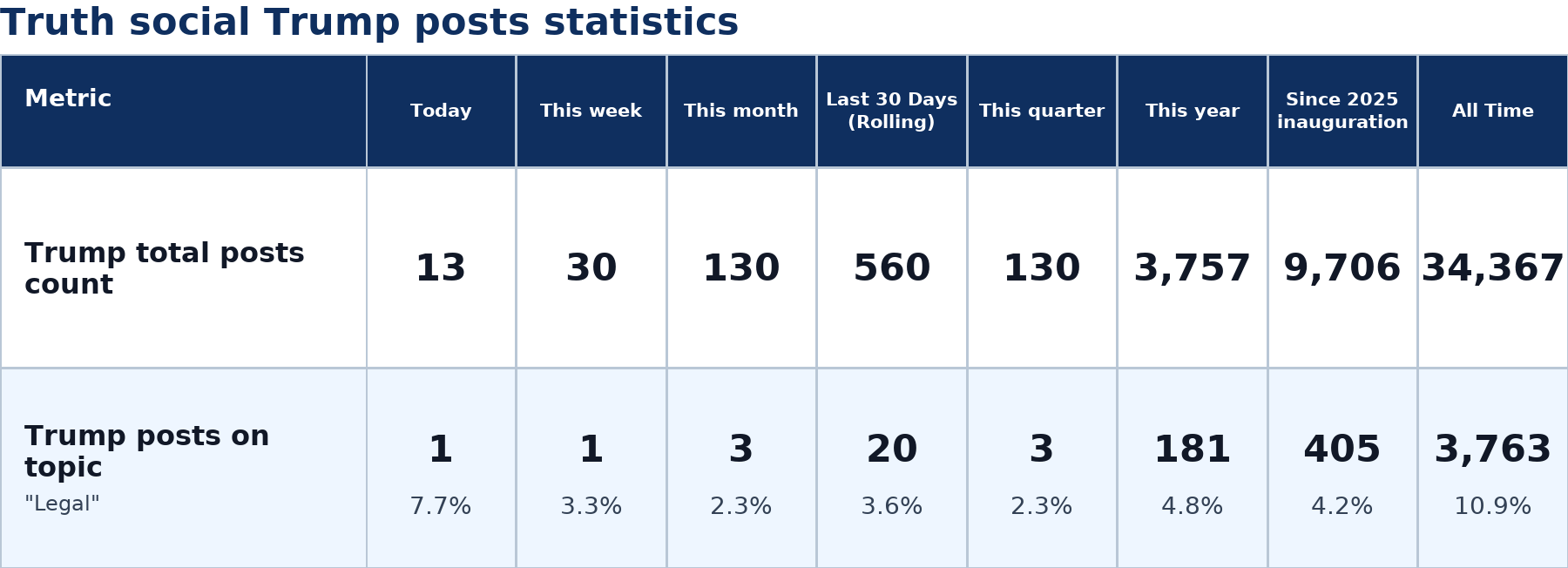
Source: Zenger analysis real-time database of all Truth Social posts
Note: Table generated on July 7, 2026 at 9:54 PM EST