Trump Claims Black and Brown Voters Are Flocking to the Republican Party
Trump claims Black and Brown voters reject communism and socialism and cites Abraham Lincoln's Republican roots as he pushes to widen the party's base.

WASHINGTON D.C. — Donald Trump claimed on Truth Social that Black and Brown voters are abandoning the political left and joining the Republican Party in growing numbers.
The president tied the shift to opposition to communism and socialism, and invoked the Republican affiliation of Abraham Lincoln, the 16th U.S. president who signed the Emancipation Proclamation in 1863. He offered no polling data, election results, or study to support the claim.
Here is the full post on truthsocial: “Black and Brown Voters don’t want Communism or Socialism — Not surprisingly, they are flocking to the Republican Party! They remember that Abraham Lincoln was a Republican! Trump” on August 9, 2026 at 5:14 PM ET.
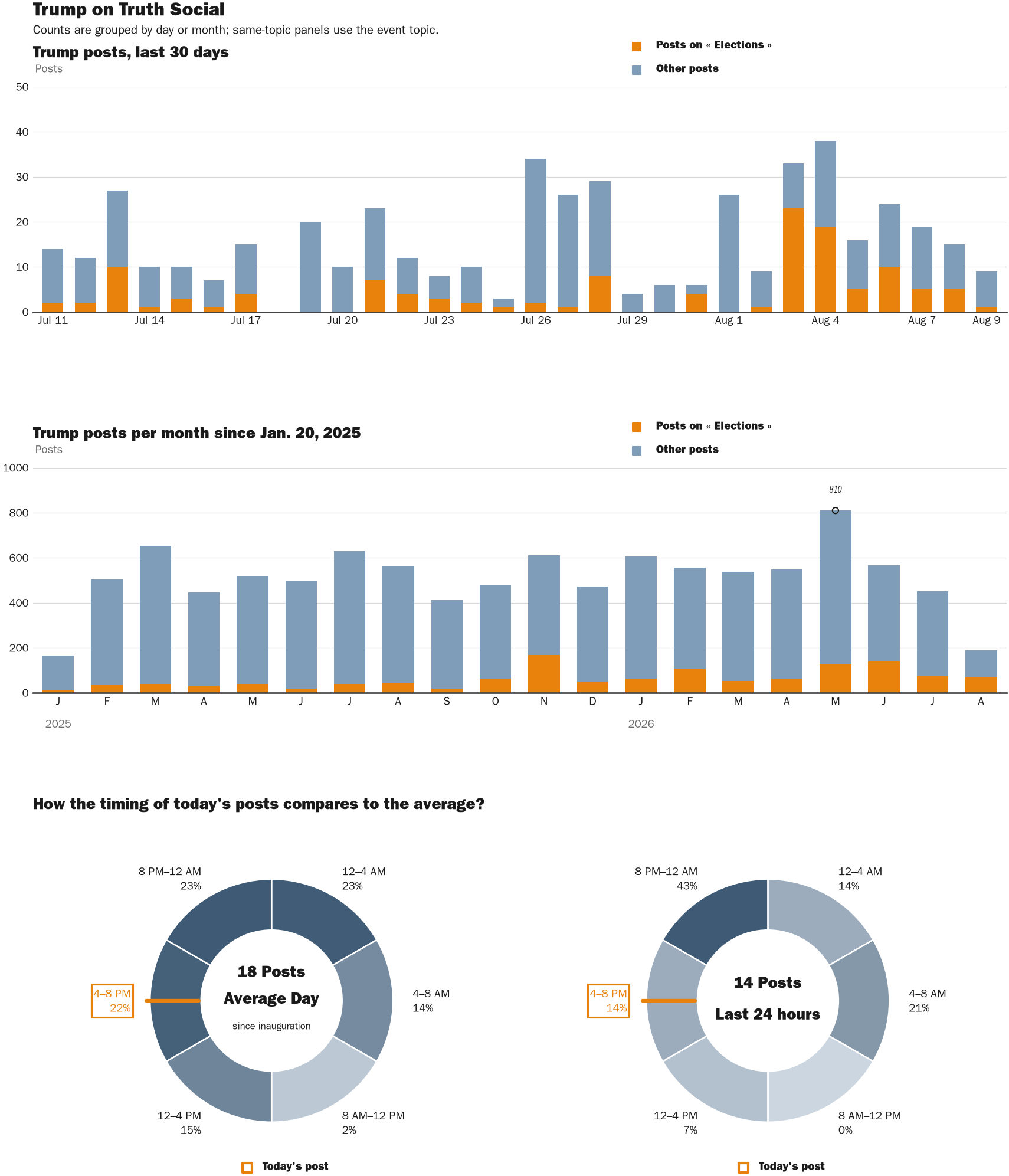
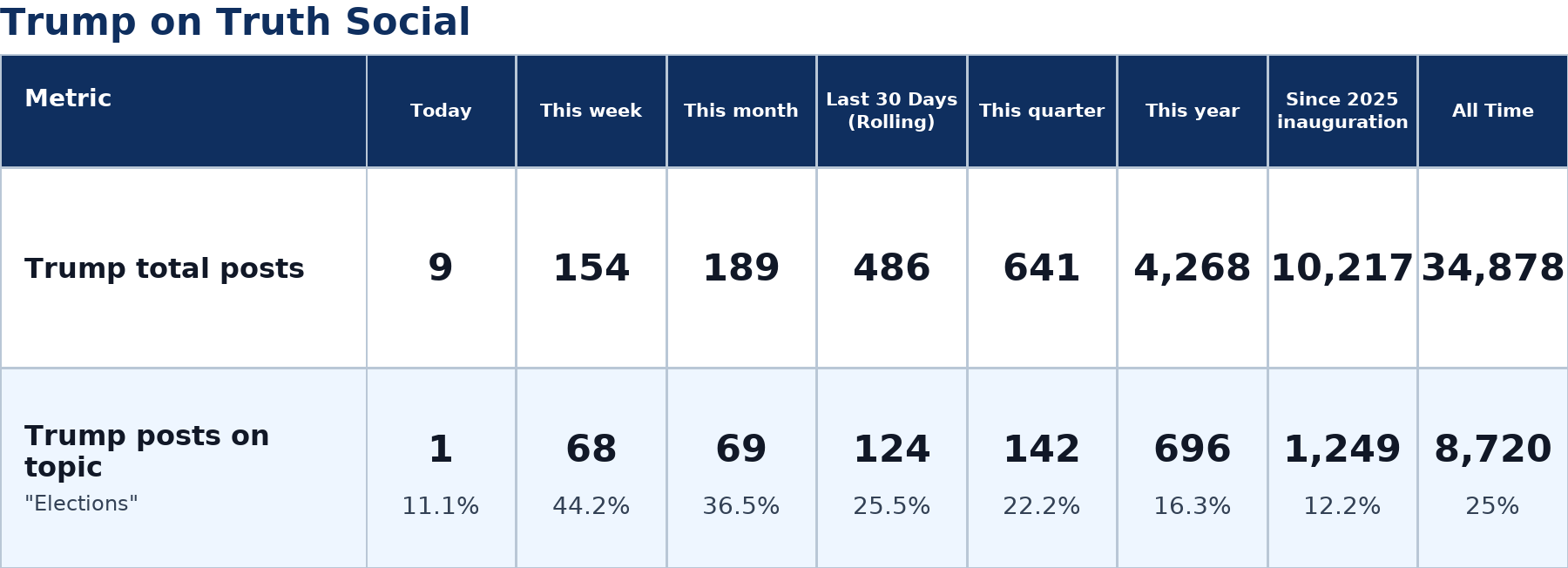
This is Trump’s ninth message released today, and the last post was 22 minutes ago, and it is not part of a thread. On average, Trump produces 18 posts per day since his inauguration on January 20, 2025. The move fits a broader pattern in Trump’s recent messaging, with 124 of his 486 posts over the last 30 days classified as Elections posts.
The claim lands as Black and Brown communities confront contested congressional maps ahead of the 2026 midterm elections. Eligible Texas voters in multiple congressional districts will vote in November using maps a three-judge federal district court found racially gerrymandered, according to wordinblack.com. The Supreme Court then granted a stay allowing the 2025 maps to stand. Missouri mimicked the tactic by diluting Black political strength in Kansas City, and North Carolina’s changes weaken the pull of Black voters in its 1st district, according to wordinblack.com.
The stakes cut in more than one direction. A Republican gain among Black and Latino voters would narrow a Democratic advantage that has anchored the party’s coalition for decades. Democratic strategists have long warned that the Black and brown vote is too often taken for granted, and that the coalition delivered the party its last two presidential victories, according to madison365.com. A durable defection would force both parties to rebuild their turnout math district by district.
Context complicates the picture. The Supreme Court is weighing Louisiana v. Callais, a case that could curtail Section 2 of the Voting Rights Act and further reshape minority representation, according to wordinblack.com. That statute traces to 1965, when President Lyndon Johnson said “Every device of which human ingenuity is capable” had been used to deny Black Americans the vote.
What this means for the average reader is concrete. The lines drawn now determine which candidates appear on ballots in November and whose votes carry weight in the next Congress. Shifts in demographic voting patterns influence tax policy, spending priorities, and civil-rights enforcement that reach households far from any statehouse.
This has happened before. Republican campaigns have courted Black and Latino voters in cycle after cycle, and Democratic organizers have long cautioned that a failure to deliver policy could push millennials of color toward a third party, according to madison365.com. Claims of a demographic realignment have surfaced in prior elections without producing a permanent partisan swing.
Voters themselves will render the next verdict at the ballot box in the general election on November 3, 2026. Courts weighing the Texas, Missouri, and North Carolina maps could issue further rulings before then. A date for a final decision has not been announced.
Parties have battled over the loyalty of Black voters since Lincoln’s era, and this isn’t the first realignment fight. The Republican Party won the overwhelming share of Black support from Reconstruction through the early 20th century. That bond dissolved as Franklin Roosevelt’s New Deal drew Black voters to the Democratic Party in the 1930s. By 1964, after the Civil Rights Act, Democratic nominee Lyndon Johnson captured roughly 94 percent of the Black vote, a margin that has held near that level in the six decades since and reshaped every candidate who inherited Lincoln’s party.

NewsFindr Chart Maker
Photo by Zenger real-time database of all Truth Social posts.
Zenger analysis
Photo by Zenger analysis