Trump touts Saudi Arabia’s biggest oil price cut in decades
Trump shared a Bloomberg report detailing Aramco's record price reduction as the US-Iran peace deal floods global markets with crude oil.

WHITE HOUSE — Donald Trump has mentioned the source (see bloomberg) that oil prices are coming down after Saudi Arabia made its biggest crude price cut in decades, on a Truth Social post on July 6, 2026 at 2:00 PM EST.
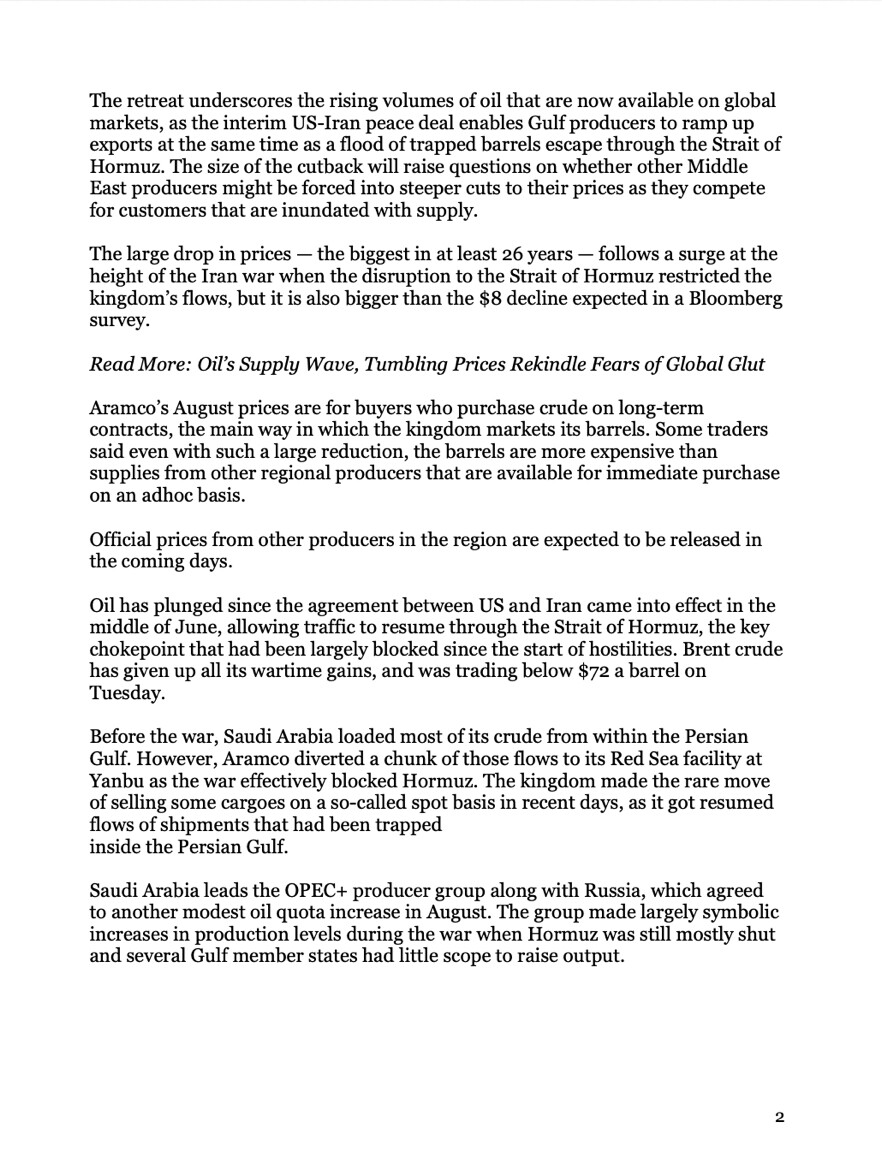
Here is the full post on [truthsocial]: “OIL PRICES COMING DOWN! https://www.bloomberg.com/news/articles/2026-07-06/saudis-make-biggest-oil-price-cut-in-decades-as-market-weakens The retreat underscores the rising volumes of oil that are now available on global markets, as the interim US-Iran peace deal enables Gulf producers to ramp up exports at the same time as a flood of trapped barrels escape through the Strait of Hormuz. The size of the cutback will raise questions on whether other Middle East producers might be forced into steeper cuts to their prices as they compete for customers that are inundated with supply. The large drop in prices – the biggest in at least 26 years – follows a surge at the height of the Iran war when the disruption to the Strait of Hormuz restricted the kingdom’s flows, but it is also bigger than the $8 decline expected in a Bloomberg survey. Read More: Oil’s Supply Wave, Tumbling Prices Rekindle Fears of Global Glut Aramco’s August prices are for buyers who purchase crude on long-term contracts, the main way in which the kingdom markets its barrels. Some traders said even with such a large reduction, the barrels are more expensive than supplies from other regional producers that are available for immediate purchase on an adhoc basis. Official prices from other producers in the region are expected to be released in the coming days. Oil has plunged since the agreement between US and Iran came into effect in the middle of June, allowing traffic to resume through the Strait of Hormuz, the key chokepoint that had been largely blocked since the start of hostilities. Brent crude has given up all its wartime gains, and was trading below $72 a barrel on Tuesday. Before the war, Saudi Arabia loaded most of its crude from within the Persian Gulf. However, Aramco diverted a chunk of those flows to its Red Sea facility at Yanbu as the war effectively blocked Hormuz. The kingdom made the rare move of selling some cargoes on a so-called spot basis in recent days, as it got resumed flows of shipments that had been trapped inside the Persian Gulf. Saudi Arabia leads the OPEC+ producer group along with Russia, which agreed to another modest oil quota increase in August. The group made largely symbolic increases in production levels during the war when Hormuz was still mostly shut and several Gulf member states had little scope to raise output.”
Saudi Aramco slashed its August official selling prices by the largest margin in at least 26 years, exceeding the $8 decline that analysts in a Bloomberg survey had forecast. The reduction reflects a surge in global crude supply driven by the interim US-Iran peace deal signed in mid-June, which reopened the Strait of Hormuz and released barrels that had been trapped inside the Persian Gulf during the conflict.
Brent crude was trading below $72 a barrel, having surrendered all of its wartime gains after the Hormuz chokepoint reopened. The benchmark had climbed above $120 a barrel earlier in the conflict when the strait was largely blocked and Gulf producers struggled to ship oil (see capital.com). The speed of the reversal has rekindled fears of a global supply glut.
Aramco had rerouted a significant portion of its crude exports to its Red Sea terminal at Yanbu while hostilities shut down the Persian Gulf shipping lane. The company also took the rare step of selling cargoes on a spot basis to clear the backlog of shipments that resumed once Hormuz traffic restarted. Traders noted that even after the steep price cut, Saudi barrels remain more expensive than ad hoc supplies available from rival regional producers.
The OPEC+ producer group, led by Saudi Arabia and Russia, approved another modest quota increase for August, adding to cumulative output hikes of roughly 600,000 barrels per day since April (see capital.com). The group’s earlier production increases during the war were largely symbolic because several Gulf member states had little capacity to raise output while Hormuz remained shut.
Major investment banks have revised their price forecasts sharply lower since the ceasefire. Goldman Sachs cut its fourth-quarter Brent target to $80 a barrel from $90, while Citi lowered its fourth-quarter estimate to $70 a barrel, the most bearish among large banks. Morgan Stanley set its third-quarter Brent forecast at $90 and its fourth-quarter forecast at $80, citing the expected pace of Hormuz supply normalization as the key variable (see capital.com).
The US Energy Information Administration projected Brent would average about $105 a barrel in June and July before falling below $80 in the third quarter and reaching roughly $70 by year-end, driven by an estimated 1.1 million barrel-per-day decline in global demand across 2026 (see capital.com).
Other Middle East producers are expected to release their own official selling prices in the coming days. The size of Saudi Arabia’s cut raises questions about whether competitors will be forced into even steeper reductions to retain customers in a market suddenly flooded with supply.
In the last 30 days, 26 of 550 Trump posts on Truth Social addressed the topic of the economy.
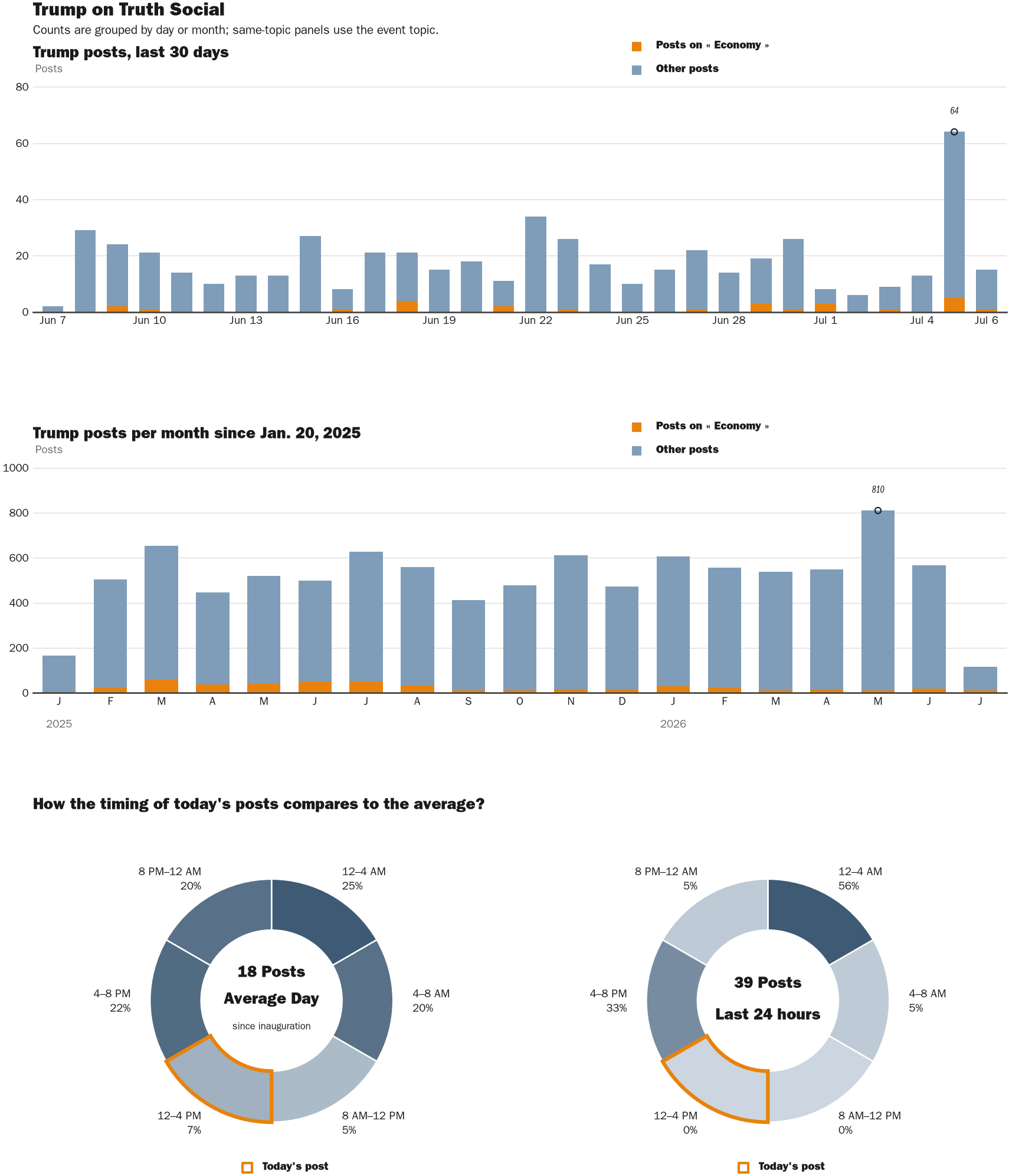

Source: Zenger real-time database of all Truth Social posts.
Note: Chart generated on July 6, 2026 at 2:14 PM EST
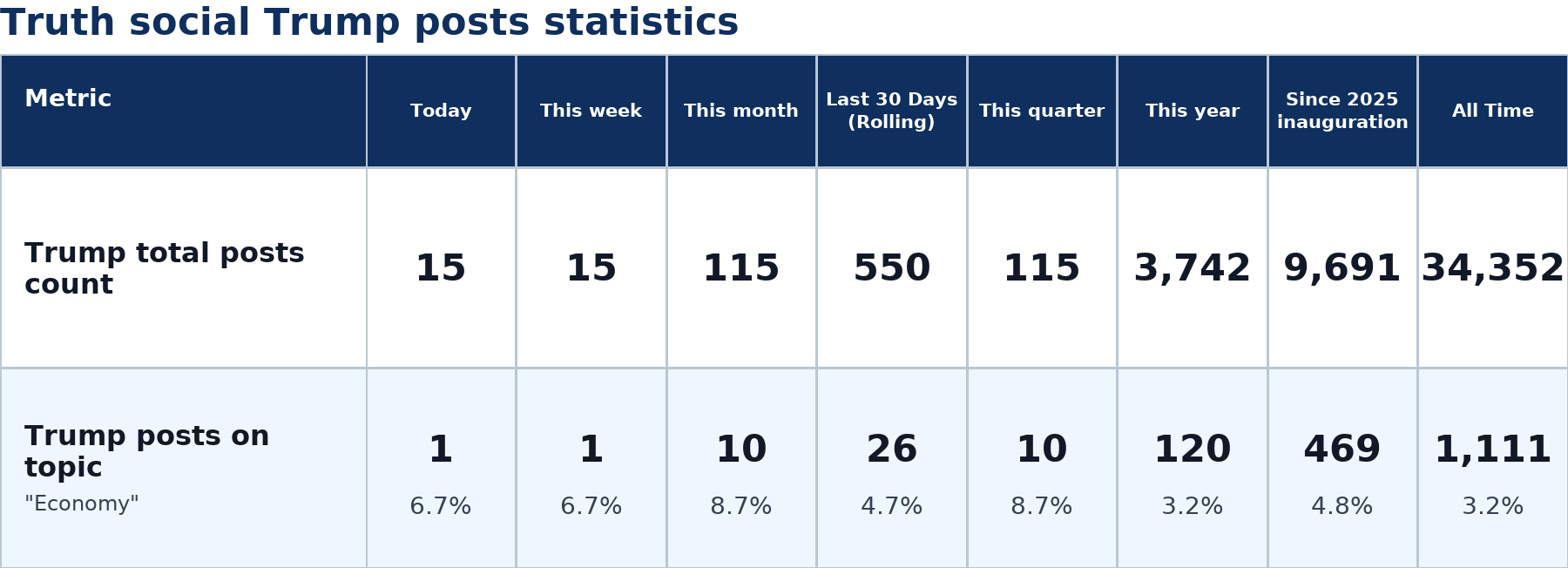
Source: Zenger analysis real-time database of all Truth Social posts
Note: Table generated on July 6, 2026 at 2:14 PM EST