
Northrop Grumman Awarded $17.7 Million Global Hawk Upgrade Contract
The Air Force awarded Northrop Grumman Aerospace Systems a contract modification to redesign the RQ-4B Global Hawk's digital receiver module, lifting the deal's cumulative value to $618.2 million, with work due by November 2028.

SAN DIEGO, CALIFORNIA — Northrop Grumman Aerospace Systems, the San Diego arm of the fifth-largest U.S. federal contractor, received a $17.7 million Air Force contract modification to upgrade a core sensor on the RQ-4B Global Hawk surveillance drone, as announced on war.gov.
The cost-plus-fixed-fee modification funds a form, fit and function engineering change proposal for the aircraft’s digital receiver module, lifting the deal’s cumulative face value to $618.2 million. Fiscal 2026 depot maintenance funds covering the full $17.7 million were obligated at award, according to war.gov.
Northrop Grumman generated about $41.9 billion in revenue in 2025 and employs roughly 95,000 people across all 50 states and 25 countries, according to ebsco.com. The company receives more than 2% of all U.S. federal contractor spending and ranks 110th on the Fortune 500 list of America’s largest corporations, according to ebsco.com.
The RQ-4B Global Hawk is a high-altitude, long-endurance unmanned aircraft used for intelligence, surveillance and reconnaissance. Its digital receiver module processes sensor signals, and the engineering change proposal reworks that hardware to keep the fleet mission-capable through the end of the decade. Work will span three sites: San Diego, California; El Segundo, California; and Forest, Mississippi.
The award carries modest financial stakes for a company of Northrop Grumman’s scale. It ranks as the first contract booked by Northrop Grumman Aerospace Systems in 2026 and the 90th Department of Defense contract awarded in California this year, according to firestore records. The company’s largest award on record reached $3.6 billion, dwarfing this modification. The Air Force’s 2026 portfolio ranged from $17 to $5.6 billion, placing this deal near the smaller end of the service’s activity.
For the average U.S. reader, the contract represents a slice of routine defense sustainment spending that keeps aging surveillance aircraft flying rather than a major new weapons buy. Taxpayer dollars fund the work, and the jobs tied to it support engineering payrolls in California and Mississippi, where Northrop Grumman holds top employer recognition, according to whereyouworkmatters.org.
This type of Global Hawk sensor work has happened before. Northrop Grumman and Lockheed Martin completed flight trials for a Digital Receiver Exciter Recorder upgrade on the Navy’s E-2D Advanced Hawkeye earlier in 2026, and the company took a $1.19 billion Navy contract for three E-2D Block II aircraft on July 22, 2026, according to naval-technology.com. Sensor modernization forms a recurring line of business across Northrop Grumman’s surveillance platforms.
The Air Force Sustainment Center at Robins Air Force Base, Georgia, serves as the contracting activity and will oversee performance. Work will finish by November 30, 2028. No date has been announced for any follow-on modification or option decision tied to the digital receiver module.
Global Hawk sustainment builds on a Northrop lineage that stretches back nearly a century. Jack Northrop founded his first venture, Avion Corporation, in 1928 and relaunched Northrop Aircraft in 1939, according to ebsco.com. During World War II the company built the P-61 Black Widow, the first radar-equipped U.S. military aircraft, according to ebsco.com. That early radar work seeded the sensor expertise that still anchors the company’s surveillance contracts today.
This contract represents the 1st contract awarded to Northrop Grumman Aerospace Systems, in 2026, bringing the company’s total contract value for the year to $17,747,040. It is also the 90th Department of Defense contract awarded in California during 2026. While this is not the largest contract ever awarded to Northrop Grumman Aerospace Systems, whose record stands at $3,600,000,000, it is notable within the Air Force portfolio. Specifically, it falls between the 2026 Air Force portfolio’s year-to-date minimum of $17 and maximum of $5,600,000,000. Overall, this award was announced among 6 Department of Defense contracts issued nationwide on July 30, 2026.
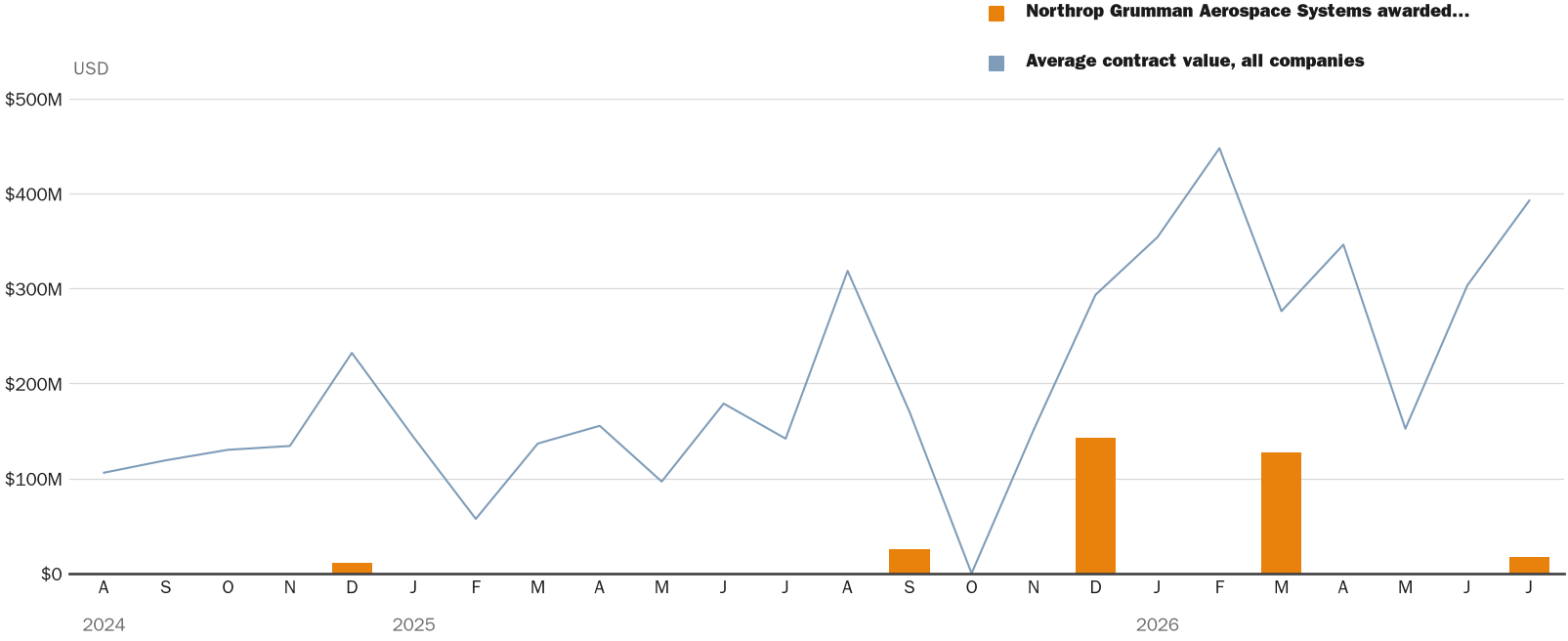

NewsFindr Chart Maker
Photo by NewsFindr Chart Maker
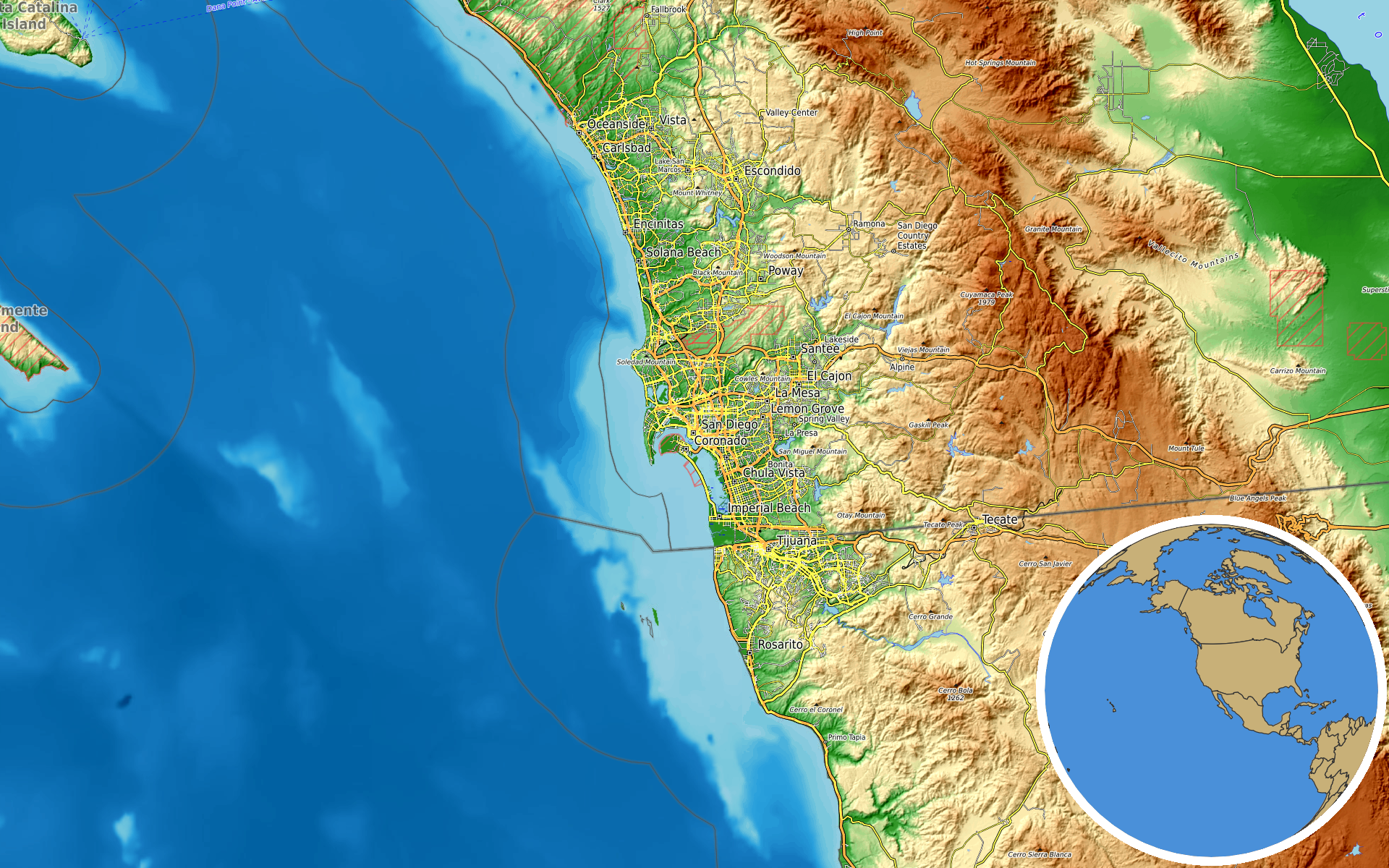
OpenTopoMap / Natural Earth – San Diego, California
Photo by OpenTopoMap / Natural Earth – San Diego, California
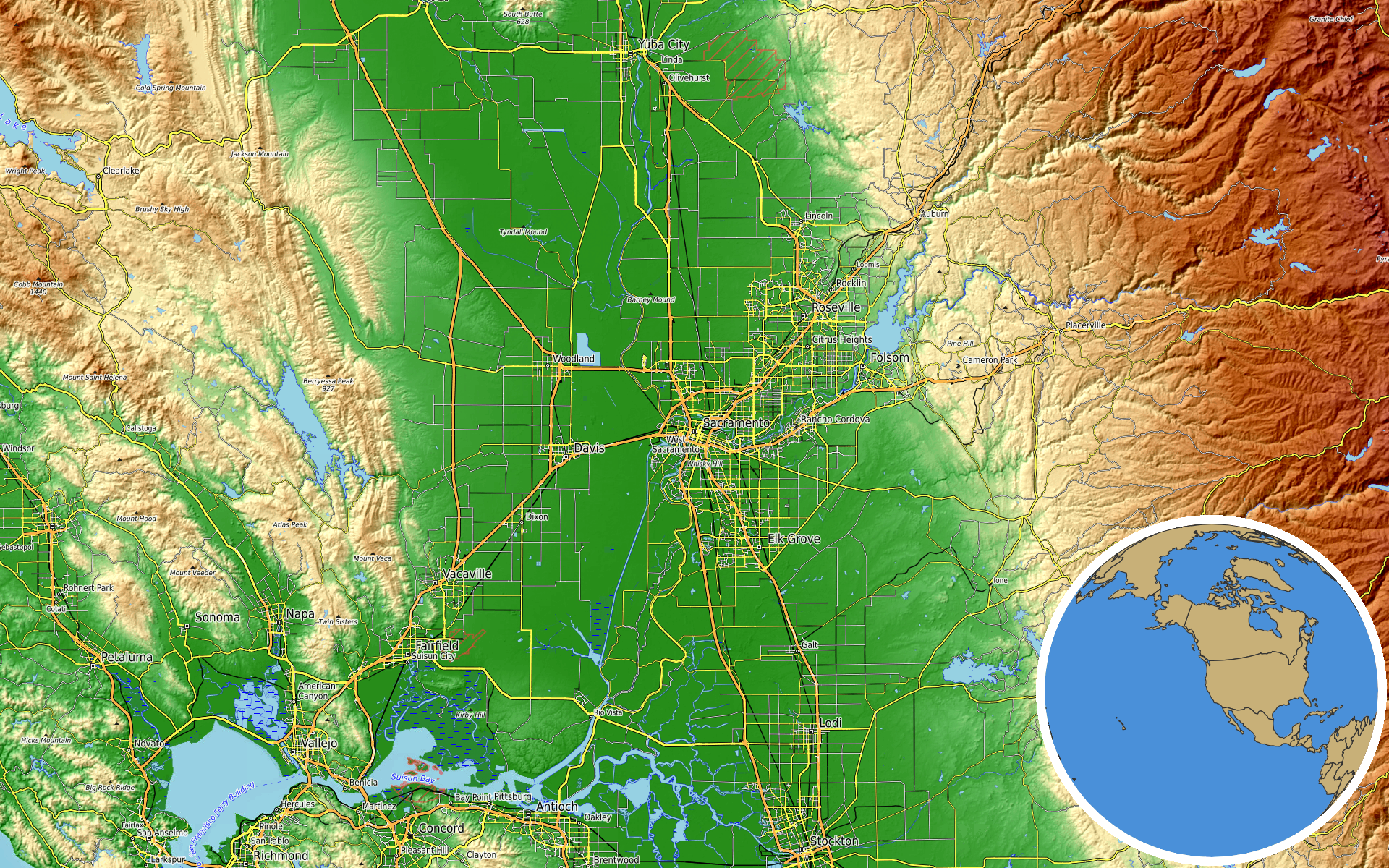
OpenTopoMap / Natural Earth – El Segundo, California
Photo by OpenTopoMap / Natural Earth – El Segundo, California