Suspect killed after opening fire on Secret Service near White House
The suspect, identified as Nasire Best, was killed in exchange of fire with Secret Service on Saturday evening.
The suspect, identified as Nasire Best, was killed in exchange of fire with Secret Service on Saturday evening.

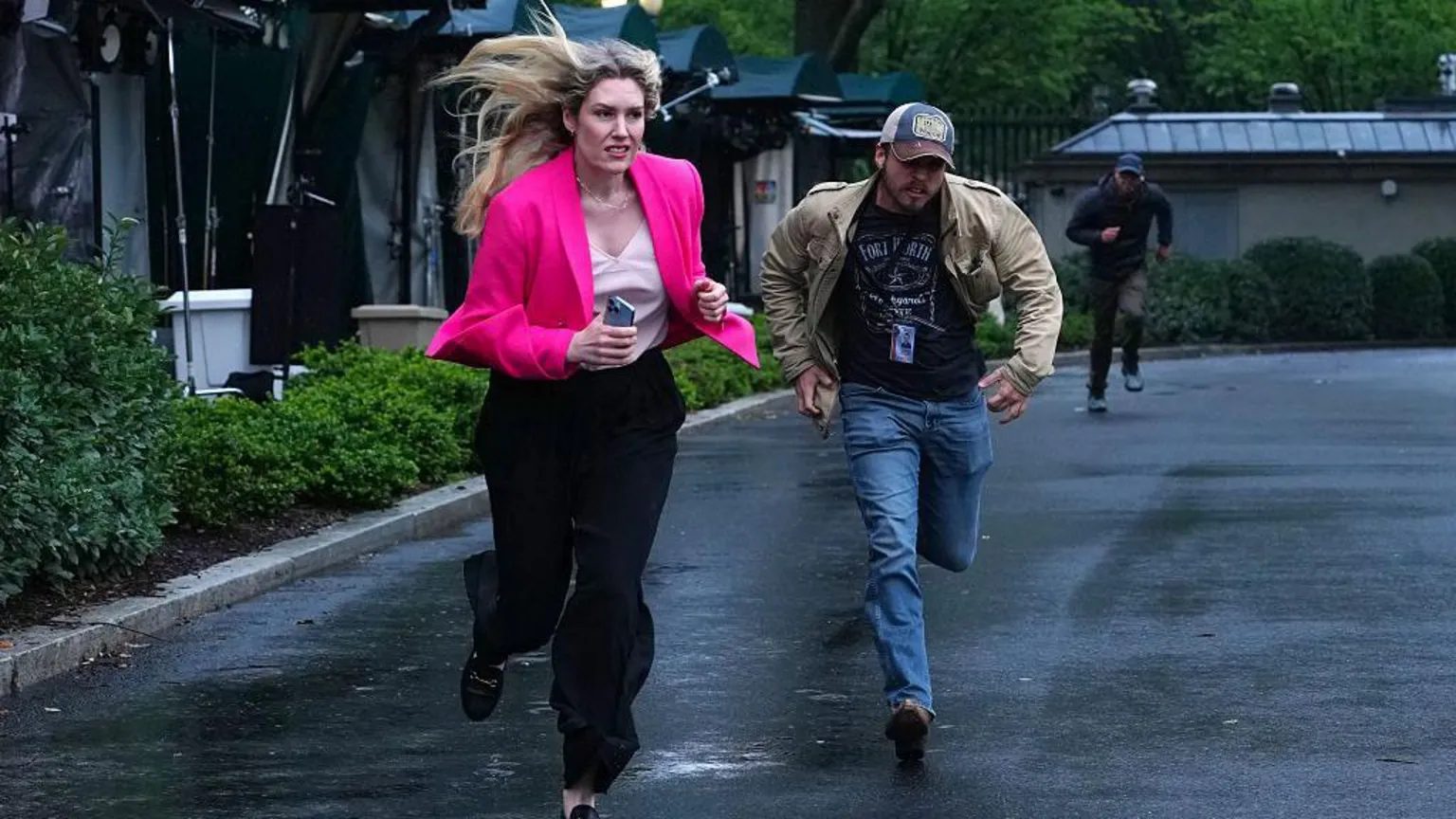
WASHINGTON — Gunfire erupted outside the White House shortly before 6 p.m. on Saturday, May 23, 2026, leaving a suspected gunman dead after he opened fire on Secret Service officers at the busy intersection of 17th Street and Pennsylvania Avenue NW. The volley of shots sent reporters diving for cover, tourists screaming, and agents rushing to secure the residence where President Donald Trump was inside.
The early evening light had just begun to soften over the White House North Lawn when the first shot cracked through the air. A man pulled a revolver from a bag and began firing. Secret Service officers stationed at the nearby Eisenhower Executive Office Building returned fire in a rapid exchange. Within minutes, the suspect lay mortally wounded, a bystander was injured, and the most secure address in America became a sealed‑off crime scene.
The shooting did not come without warning. Law enforcement sources identified the suspect as Nasire Best, a 21‑year‑old American citizen living in Washington, D.C. Best was already known to the Secret Service and the Metropolitan Police Department: in July 2025, he had tried to gain entry to the White House, was arrested near the grounds, and subsequently spent time in a psychiatric facility. He had been living in the nation’s capital for 18 months. The attack comes exactly one month after a separate gunman opened fire at the White House Correspondents’ Dinner, raising fresh alarms about security lapses around the executive mansion.
President Trump, who was in residence at the time, later thanked the Secret Service on Truth Social for their “swift and professional action ,” noting the gunman had a “violent history and possible obsession with our Country’s most cherished structure.”
For Nasire Best, the final moments unfolded as a tragic culmination of untreated mental illness and fixation. To those who knew him from his previous arrest, he was a troubled young man whose obsession with the White House had grown over months. To Secret Service agents, he was a known threat. As he raised the revolver and began firing, he did not shout a political slogan or demand negotiation. Struck by return fire, he collapsed on the pavement and was pronounced dead at a local hospital. A bystander was also wounded but is expected to survive.
The core conflict is stark: a mentally disturbed individual with a prior breach attempt forced a gunfight with the Secret Service. On one side stood Best, armed and firing. On the other stood officers trained to neutralize any threat to the president. The stakes could not be higher — the life of Donald Trump inside the White House and the safety of every civilian in the public square. The tipping point came within seconds. But the deeper conflict remains unresolved: how did a man with a documented psychiatric history and a previous arrest walk up to the same complex a year later with a loaded revolver? For the Secret Service, the conflict is now internal — between their swift response on Saturday and the intelligence failure that allowed Best to get that close again.
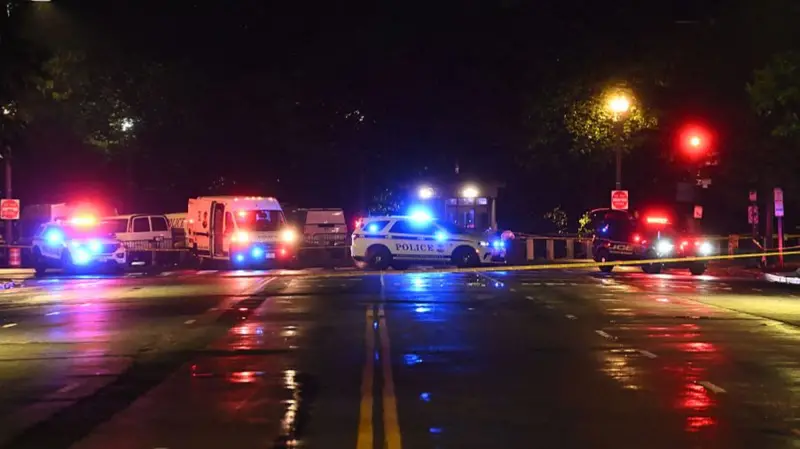

Police cars block streets outside the White House after Saturday's Shooting
Taxpayers fund the Secret Service to provide a hermetic shield around the president, is affected, yet twice in two months — the Correspondents’ Dinner shooting and now this — armed individuals have discharged weapons near the White House, raising accountability questions about whether Best’s July 2025 arrest was properly flagged, whether mental health intervention failed, whether a permanent buffer zone is needed, and highlighting gaps between mental health courts, local police, and federal security.
Carla Simmons, a Washington, D.C., tourist who saw the attack unfold, described the chaos, “I was buying a hot dog from a cart. Next thing, I hear bang‑bang‑bang, not like fireworks, heavier. People are screaming, ‘Shooter, shooter!’ I just ran. My hands are still shaking,” said Simmons.
Retired Secret Service agent Michael G. Rowan, now a presidential security consultant, said: “The agents on the ground did exactly what they were trained to do: end the threat. But the larger question is why this individual wasn’t on a permanent watch list that required daily check‑ins. You cannot have a known breach‑attempter walking around D.C. with a revolver. That’s a system failure upstream of the trigger.”
Dr. Lina H. Okonkwo, director of a D.C. behavioral health nonprofit and an expert in mental health policy, said the system failed long before he picked up a gun.
“We keep hearing ‘mentally disturbed’ after these shootings, but we never fund the follow‑up,” Okonkwo said. “Nasire Best spent time in a psychiatric facility after his 2025 arrest. Then what? Did he get a case manager? Was he on meds? Without community‑based care, we’re just waiting for the next tragedy.”
Road closures around the White House remained in place overnight as investigations continued. The Secret Service will conduct an internal after‑action review; the Metropolitan Police will investigate the shooting as a homicide of a suspect by law enforcement. On Capitol Hill, Senate Majority Leader John Thuneand House Speaker Mike Johnsonhave already praised the agents’ “decisive action,” but hearings are all but certain.
As retired agent Michael Rowan put it: “We got lucky Saturday. The president is safe. But luck is not a security strategy. Until we fix the front end, identification, tracking, and treatment of people like Nasire Best will continue to be inadequate. And next time, the bystander might not be just wounded.”
For now, the White House glows quietly under floodlights, the fence line patrolled by extra officers. But along Pennsylvania Avenue, the city holds its breath.