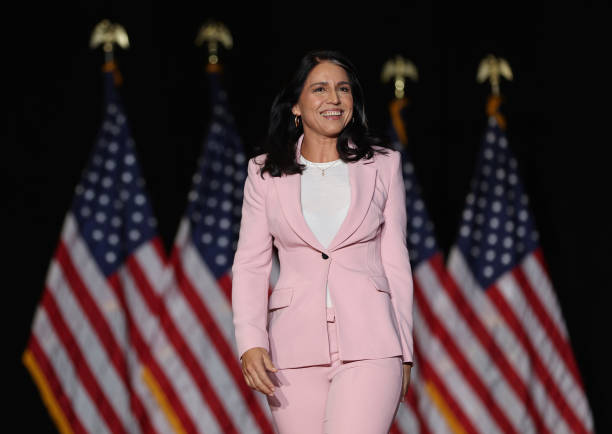
Tulsi Gabbard Ends Rocky Intelligence Tenure, Citing Husband’s Health Crisis
The former intelligence chief announced her resignation after months of political scrutiny, saying family responsibilities now outweigh her role in Washington.
The former intelligence chief announced her resignation after months of political scrutiny, saying family responsibilities now outweigh her role in Washington.

NAIROBI, KENYA — Tulsi Gabbard abruptly ended her politically contentious term in the Trump administration when she resigned as Director of National Intelligence, citing her husband’s deteriorating health as the reason. This move rocked Washington’s intelligence elite.
However, few Americans ever witnessed the intimate fight going on behind the national limelight, political censure, and intelligence briefings. Gabbard claims that as pressure grew in Washington, her husband’s deteriorating health transformed one of the nation’s most influential security roles into a difficult personal turning point that forced her to prioritize compassion over politics and family over authority.
Gabbard had taken up the position amid a turbulent period marked by intense political polarization, internal pressure, and escalating debates over American intelligence leadership. Critics questioned her political affiliation and leadership during her tenure in government, subjecting her to ongoing political and public scrutiny.
“'Leadership during difficult times will always face criticism. I focused on protecting national security and serving with integrity, even when political pressure intensified around the role,' said Gabbard in an interview.”
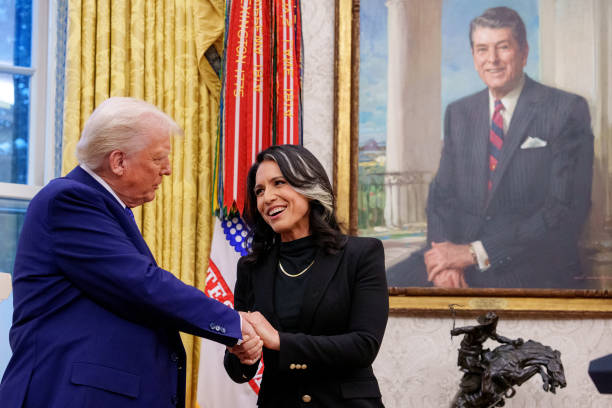

Tulsi Gabbard shakes hands with U.S. President Donald Trump in the Oval Office at the White House
Eventually, the strain inside Washington’s merciless political apparatus grew beyond politics alone. National expectations, criticism, and the unrelenting responsibilities of public office were on one side. Conversely, a very private situation was taking place away from the cameras.
Her departure now draws attention to the hidden emotional cost of power, the fact that public servants are frequently expected to appear strong while silently carrying personal suffering. Gabbard’s exit raises unanswered questions about political allegiance, leadership stability, and the extent to which Washington ultimately demands personal sacrifice from those in positions of authority.
“Leadership during difficult times will always face criticism. I focused on protecting national security and serving with integrity, even when political pressure intensified around the role.”