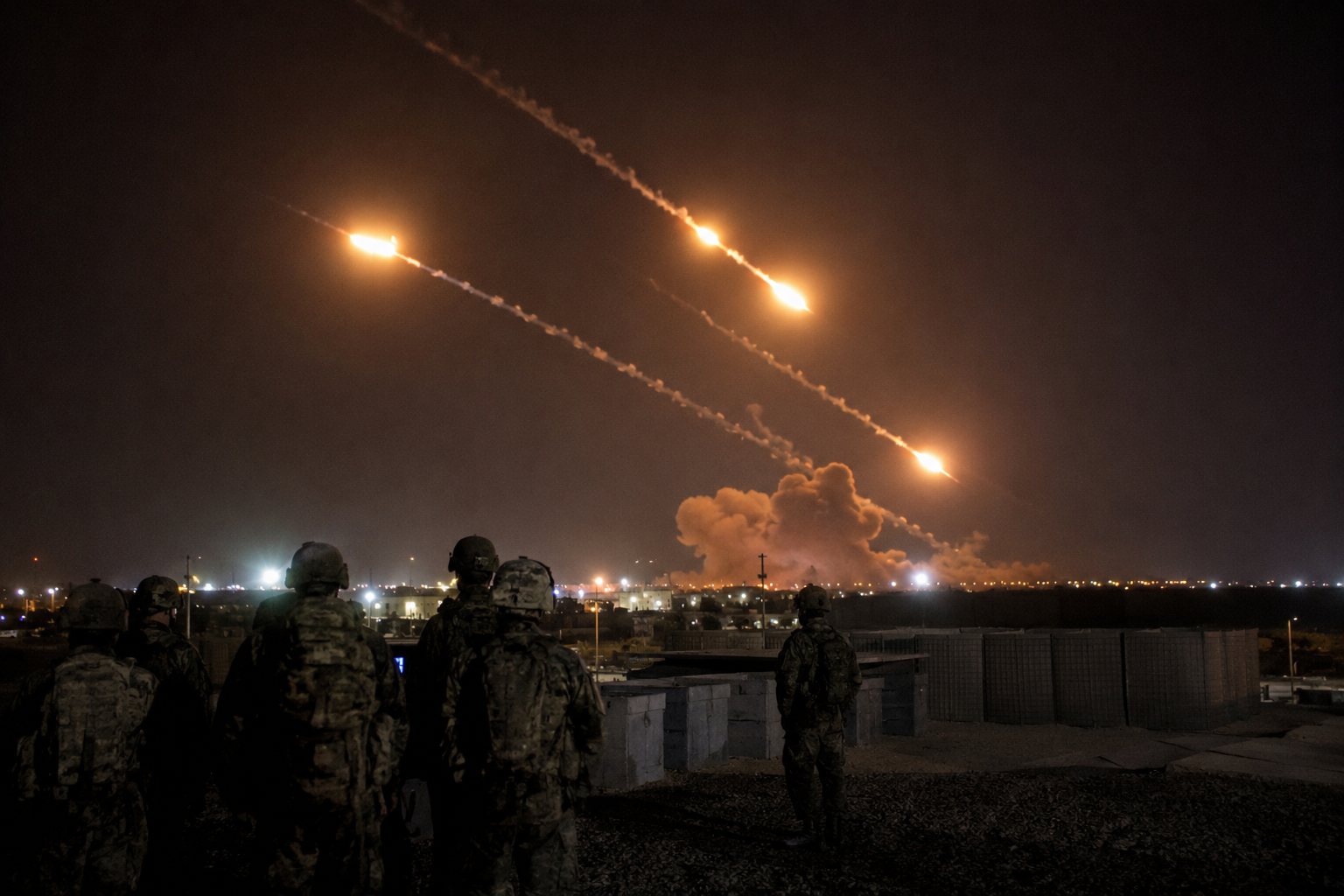
US troops injured in Iranian Missile Strike
Five Americans hurt in Kuwait base attack as Washington weighs possible deal with Tehran.
Five Americans hurt in Kuwait base attack as Washington weighs possible deal with Tehran.

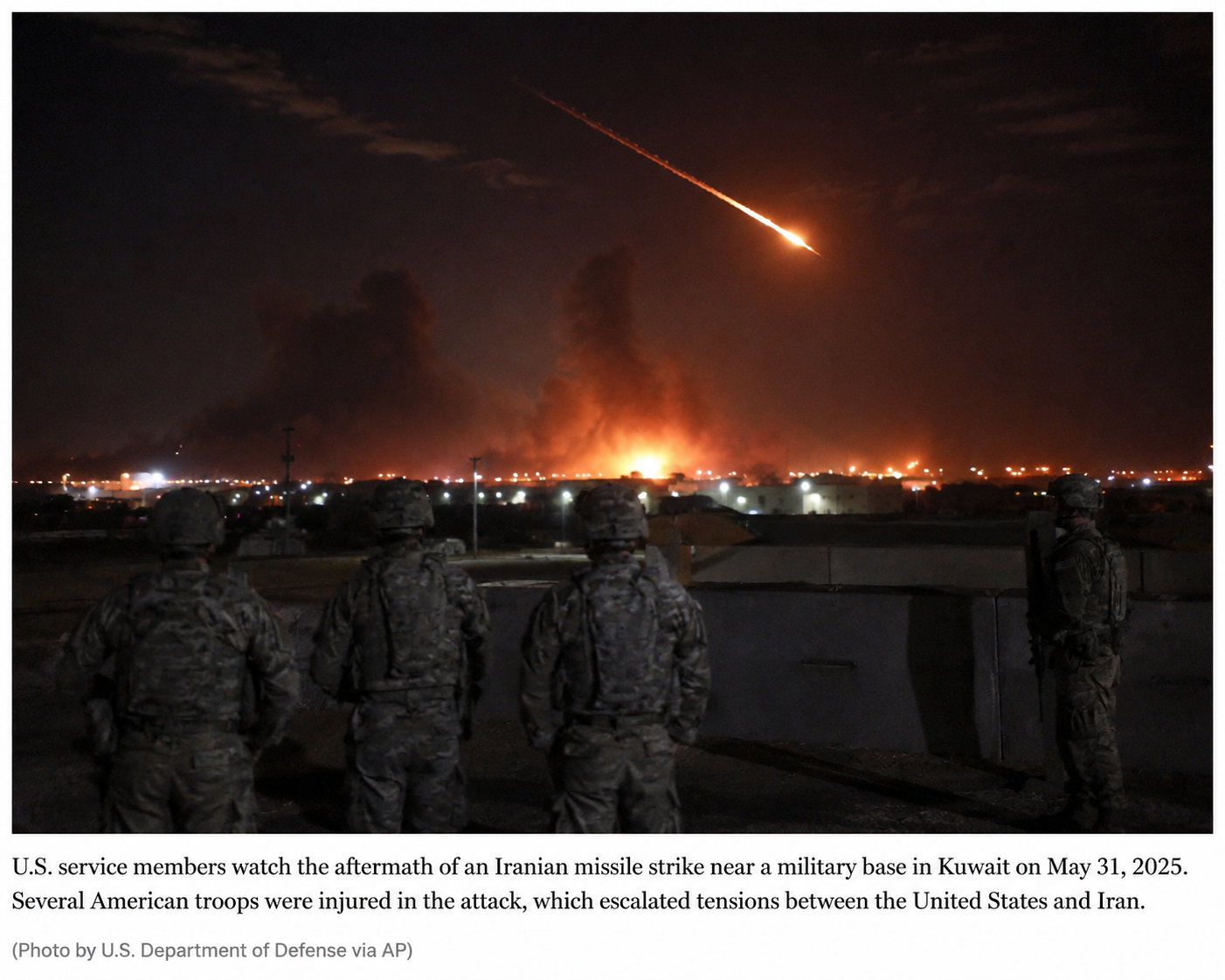
WASHINGTON — Several U.S. troops were injured after Iran launched a missile strike targeting an American military base in the Middle East on Sunday. The attack has escalated tensions between the two countries and raised concerns about a broader regional conflict. The invasion, which came amid growing hostilities following recent military confrontations between Washington and Tehran, prompted immediate security responses from U.S. forces and renewed international calls for restraint. Officials said the injured personnel received medical treatment, while analysts warned that the strike could further destabilize an already volatile region and increase the risk of direct military confrontation between the longtime adversaries.
Standing before reporters at the White House, U.S. President Donald Trump faced mounting pressure after several American troops were injured in an Iranian missile strike targeting a U.S. military base in the Middle East. The attack marked a dangerous escalation in tensions between Washington and Tehran, forcing Trump to balance demands for a strong response with concerns about drawing the United States into a wider regional conflict. As military officials assessed the extent of the injuries and allies called for restraint, the incident underscored the human cost of the long-running standoff, with injured service members and their families now confronting the consequences of a conflict that continues to reverberate far beyond the battlefield.
At the center of the dispute are two longtime adversaries: the United States, which maintains a significant military presence across the region, and Iran, which has repeatedly opposed U.S. influence and military operations near its borders. For President Donald Trump, the attack presents a critical test as he weighs how to protect American personnel without triggering a larger war. Beyond the geopolitical struggle, the human cost is already evident in the wounded troops receiving treatment and the families anxiously awaiting updates thousands of miles away. With regional stability, global energy markets, and the safety of both military personnel and civilians potentially at risk, the latest escalation has heightened concerns that a single strike could spiral into a broader confrontation with far-reaching consequences.

ChatGPT Image Jun 3, 2026, 06_22_40 PM
The missile onslaught comes amid years of strained relations between the United States and Iran, marked by disputes over regional influence, military activity, and security concerns across the Middle East. Tensions have repeatedly flared through proxy conflicts, economic sanctions, and military confrontations, with both countries accusing each other of destabilizing the region. The latest attack follows a period of heightened hostilities that has increased fears among international leaders that miscalculation or retaliation could trigger a broader conflict involving U.S. forces and Iran-backed groups operating across the region.
As U.S. officials assess the extent of the injuries and consider their response, attention is now focused on whether Washington will pursue diplomatic channels or retaliatory measures against Iran. Regional allies and international organizations have called for restraint, warning that further escalation could draw additional countries into the conflict. In the coming days, military and political leaders on both sides are expected to make critical decisions that could determine whether tensions ease or move the region closer to a wider and potentially more dangerous confrontation.