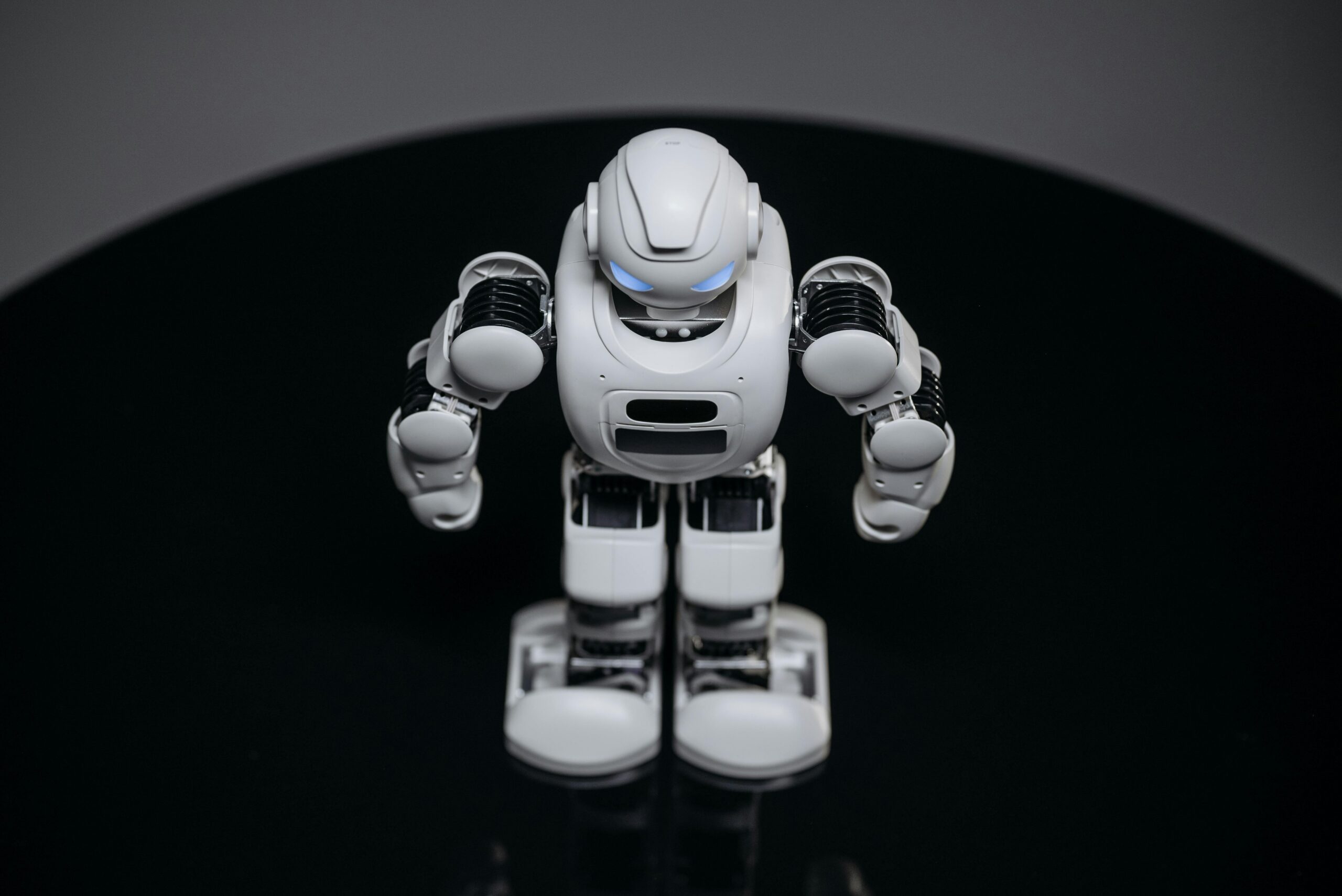
VC Bets On Building Humanoids, Sci-Fi Becomes Reality
Billions are invested in multipurpose robotics to make life, work easier
Billions are invested in multipurpose robotics to make life, work easier

SAN FRANCISCO — Once the province of sci-fi movies, robots, also known as humanoids, are now a reality. Venture-capital firms are investing billions in the new technology.
VC firms in the United States and China are leading funders of robotics startups. In the U.S., warehouse automation dominated the last funding cycle. Now, healthcare robotics is emerging as the next big thing.
In fact, financial investments in AI often outpace traditional industries as governments view it as a strategic priority.
VC investment in global robotics and physical AI hit $26 billion in 2025. By May 2026, more than $23 billion was raised, according to The Wall Street Journal.
What’s driving investment enthusiasm is the potential of multipurpose robots.
Research from other investment banks, including and , note the cost changes and the projected price of household humanoids that fuel interest.
Goldman Sachs research showed a 40% price decrease in humanoid components from 2023 to 2024, once manufacturers settled on parts, including motors and sensors.
Morgan Stanley projected that humanoids would cost $15,000 by 2050, though only 10% of households could afford them.
Currently, companies involved in leading humanoid testing include Tesla, Apptronik, Boston Dynamic, Figure AI and Agility Robotronics, exploring how robotics can be used in labor-intensive settings.
Tesla, headed by Elon Musk, is known for its Optimus humanoid, unveiled in September 2022, and used in its auto factories for repetitive or dangerous tasks.
“Our original goal was an 8-hour run, we wanted to run nonstop and fully autonomous,” said , CEO of Figure AI, in a post on X. “We’re now over 48 hours of nonstop autonomous operation without a failure to perform the use case.”
Tech firms, such as China’s Robotera, raised more than $200 million in May, while Apptronik pulled in $520 million in February to triple its valuation in a one-year span. The latter’s Apollo humanoid robot is running pilot programs with Mercedes-Benz and GXO Logistics.
As humanoids gain traction, many view it as a limitless market.
“We’re in a classic hype cycle, but what isn’t over-hyped is the fundamentals of the technology,” said David Crawley, founder of Ubiquity Robotics, a Silicon Valley firm, on a post on .
Caveats remain. Some tech experts have stated that humanoid legs present a major concern, due to their center of gravity and weight, leading to high maintenance costs.
What isn’t in question is robotic technology is evolving and an inevitable part of the future. As generative AI becomes more sophisticated, it allows models to navigate unseen rooms and adapt to new environs.
Fortune reports that a Bank of America global research study forecast the global humanoid robot population will reach 3 billion units by 2060 — surpassing the world’s roughly 1.5 billion cars on a per-capita basis. By that point, BofA estimates 62% of all humanoid robots, or roughly 2 billion units, will be deployed inside people’s homes.
Theoretical astrophysicist Stephen Hawking, acutely aware of science’s potential, noted: “Our future is a race between the growing power of our technology and the wisdom with which we use it. Let’s make sure that wisdom wins.”