
When Fame Pays: Should Athletes Earn More Than Everyone Else?
A growing debate over whether sports stars’ massive earnings are justified compared to essential workers in society.
A growing debate over whether sports stars’ massive earnings are justified compared to essential workers in society.

NAIROBI, KENYA — As the use of social media platforms such as Instagram, TikTok, and Snapchat continues to rise among young people in Kenya, experts, parents, and educators are expressing growing concern over how constant exposure to digital content is reshaping youth attention spans, behavior, and mental health in 2026. Teenagers and university students, particularly in urban areas like Nairobi, are spending several hours each day scrolling through short-form videos and online trends, a habit researchers say may be affecting concentration in classrooms, sleep patterns, and real-life social interaction.
“''Top athletes bring in millions through sponsorships'',said Daivid”
Mental health specialists have also warned that excessive social media use can increase anxiety, low self-esteem, and addiction to online validation, while supporters argue that these platforms still provide opportunities for creativity, communication, and self-expression. The debate has intensified as schools and families struggle to balance the benefits of technology with the growing psychological and behavioral effects being witnessed among today’s youth.
ForAmina Wanjiku , the story is more than just another headline—it is a reflection of the changing realities young people in Kenya face every day. As a journalist who closely follows youth culture and digital trends, she has witnessed how social media increasingly shapes attention spans, behavior, and even emotional well-being. Through her experiences interviewing students, athletes, and young professionals, Amina sees both the opportunities and dangers that come with constant online connection. Her perspective grounds the story in human experience, helping readers understand that behind every statistic or study are real people struggling to balance digital life with mental focus, relationships, and personal identity.
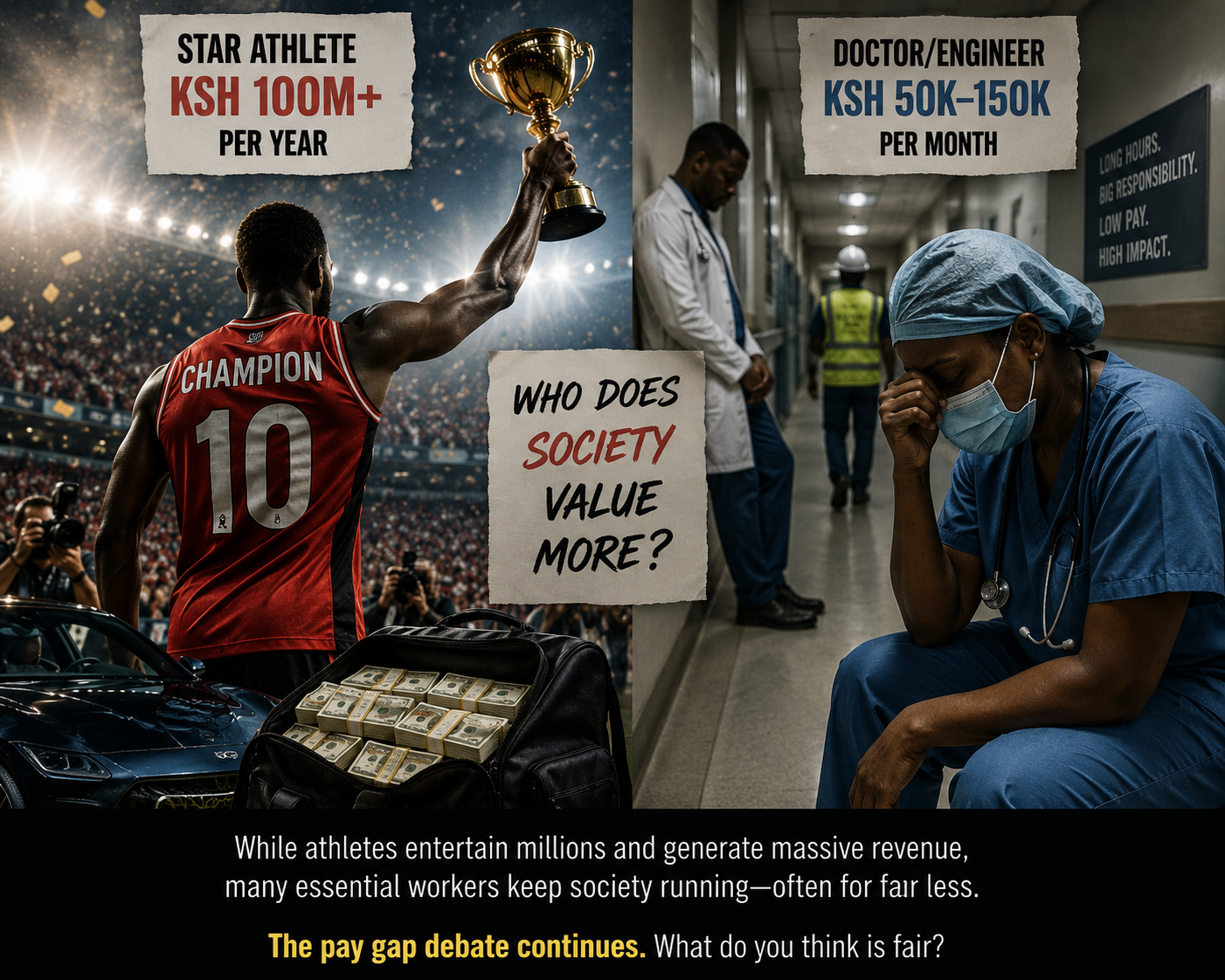
The growing debate over whether professional athletes deserve higher salaries than essential workers has created a sharp divide between those who view sports as a billion-dollar entertainment industry and those who believe society’s most critical professions remain undervalued. On one side are sports organizations, sponsors, and fans who argue that athletes earn massive incomes because they generate enormous revenue, fill stadiums, attract global audiences, and build profitable brands. On the other side are teachers, doctors, engineers, and ordinary citizens who question why individuals saving lives, building infrastructure, or educating future generations often earn far less despite their social importance. For Amina Wanjiku, the conflict reflects a deeper issue about what modern society truly rewards and values. As she interviews young athletes chasing fame and struggling professionals working long hours for modest pay, she sees the emotional and economic consequences of this imbalance firsthand. The debate matters because it influences how young people define success, which careers are respected, and how societies prioritize talent, labor, and public service in an increasingly entertainment-driven world.

ChatGPT Image May 27, 2026, 03_23_55 PM
The debate over athletes’ salaries has grown alongside the rapid commercialization of modern sports, where television deals, sponsorships, and social media have turned top athletes into global brands worth millions. In countries like Kenya, successful athletes are often celebrated as national heroes because their achievements bring pride, international recognition, and economic opportunities. However, the rising wealth in professional sports has also sparked criticism, especially as many essential workers continue to face low wages, difficult working conditions, and limited public recognition. This broader discussion reflects changing social values in an era where entertainment industries generate more money and influence than many traditional professions that society depends on every day.
As a public figure and sports journalist, Amina Wanjiku plays an important role in shaping public conversations around success, money, and social value in modern society. Her reporting reaches young audiences who closely follow sports culture and often view professional athletes as symbols of achievement and financial freedom. Therefore, debate over athletes earning far more than professionals such as doctors or engineers extends beyond sports—it influences cultural attitudes about which careers are respected, rewarded, and admired. Within the sports industry, the discussion raises questions about commercialization, celebrity influence, and the growing business power of entertainment. At the same time, the story remains sensitive because it touches on real workers whose contributions are essential to society. Balancing these perspectives is important to ensure the conversation remains thoughtful rather than dismissive of either athletes’ economic impact or the sacrifices made by other professionals.
As the debate continues to grow across sports programs, social media platforms, and public forums in Kenya and beyond, more pressure is building on institutions, employers, and policymakers to address widening pay gaps between entertainment careers and essential professions. For Amina Wanjiku, the conversation is far from over, especially as younger generations increasingly view sports and digital fame as faster paths to success and financial security. With major sporting events, sponsorship deals, and public discussions expected to intensify in the coming years, the issue is likely to remain at the center of broader conversations about fairness, value, and the future of work. What happens next may shape not only how athletes are rewarded, but also how society defines importance, ambition, and public contribution in a rapidly changing world.